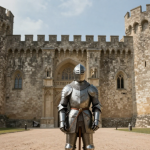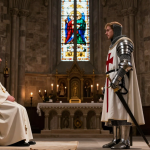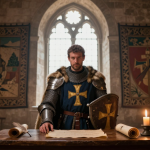

The Knights Templar dissolved in 1312, yet their archives survived through careful transcription by surviving brothers and later scholars, preserving documents that modern historians treat as the primary evidence for what the Order actually knew. The phrase forbidden knowledge sticks to them because medieval authorities accused them of heresy, but most of the so-called secrets reduce to practical expertise in banking, logistics, and esoteric theology that was simply unusual for the time. If you want to separate verified historical fact from centuries of folklore, start by examining the primary sources rather than relying on pop culture retellings, which often blend in fictional elements from novels and films. This guide helps you explore the Templar legacy by showing how to find trustworthy records and decode their hidden messages in their own writings.
Gather the Primary Sources Before Reading Any Interpretation
Your first step is locating the original documents that survived the suppression of the Order, which means accessing digitized archives held by institutions like the Bibliothèque nationale de France and the Vatican Library. The most critical collection includes the trial records of 1307 to 1314, where Grand Master Jacques de Molay and other leaders were questioned under pressure, and these transcripts are available online through university digital humanities projects. You should download at least three different transcriptions of the same interrogation to compare wording, because scribes sometimes altered details based on their own biases or the political climate of the moment. Without this baseline, any later interpretation you read is just speculation built on someone else’s summary.
Once you have the raw texts, focus on the documents labeled “Liber Sancti Sepulchri” and the rules of the Order as codified around 1200, which detail daily routines and spiritual obligations. These rulebooks reveal that the brothers followed a strict schedule of prayers, meals, and military drills, leaving little room for the wild esoteric gatherings that later legends claim they held. The language is practical and administrative, not cryptic, which tells you that their internal culture was about discipline and service rather than hidden rituals. If a secondary source quotes a “secret ritual” but you cannot find it in the primary rules, that quote is likely a later invention or a misreading of standard Catholic liturgy.
Do not skip the financial records, which are often overlooked by casual readers who only care about mystical secrets. The Templars were one of the first international banking networks, managing deposits and loans for kings and nobles across Europe, and their ledgers show meticulous bookkeeping practices that were advanced for the 13th century. Understanding this economic function explains why they attracted so much envy and suspicion from both secular rulers and rival religious orders, because controlling money was a form of power that threatened existing hierarchies. When you see references to hidden wealth in popular books, check the financial documents first to see if the “treasure” is actually just well-organized banking assets that were seized by the French crown.
Decode the Symbolic Language Without Over-Interpreting
The next stage involves analyzing the symbols and phrases used in Templar correspondence and architecture, but you must resist the urge to assign mystical meanings to every geometric shape. The cross worn on their tunics was a standard military emblem, similar to those used by other crusading orders, and its specific shape with eight points is traditionally linked to the virtues of charity and honesty rather than hidden pagan signs. If a source tells you that the eight-pointed cross encodes a secret message about the Holy Grail, ask for the specific manuscript where this claim originates, because most symbolic interpretations were developed in the 19th century by Romantic writers who loved mystery. Stick to contemporary sources from the 1200s and 1300s when interpreting symbols, as later generations often projected their own beliefs onto older artifacts.
Look at the church architecture associated with the Order, particularly the layout of chapels that were circular or octagonal in shape. These designs were common among Cistercian monasteries, which influenced Templar spirituality, and they served practical purposes like acoustics for chanting and structural stability, not necessarily secret rituals. For example, the Chapel of the Knights at Tomar in Portugal has an octagonal shape that is often cited as proof of hidden knowledge, but architectural historians note that it was built to accommodate specific liturgical functions and to symbolize the resurrection, a standard Christian theme. When you visit or study these sites, check the construction dates and local building traditions before accepting any claim about secret geometric codes.
The Trial of the Knights Templar remains shrouded in mystery, especially due to the debated meaning behind their famous seal. The most widely accepted explanation is that it represents sharing and humility, as the brothers were instructed to ride together to save on horses and show equality within the Order. Some modern theories suggest it hides a reference to the number two or duality in nature, but these are speculative leaps not supported by the primary texts from their era. Your job as a researcher is to distinguish between what the Templars themselves said the symbol meant and what later writers imagined it might mean, which requires careful reading of their own rulebooks and letters.
Separing Fact from Fiction in Modern Retellings
Once you have the primary sources in hand, you need a method for evaluating modern books, documentaries, and films that claim to reveal the truth about the Order. Start by checking the author’s credentials: are they a historian of the Middle Ages, a theologian, or a popular writer with no academic background? A historian will cite specific manuscripts and dates, while a popular writer might rely on vague references to “ancient wisdom” without providing a way to verify the claim. If a book makes a dramatic claim about forbidden knowledge, look for footnotes that point to archival documents; if there are none, treat the claim as entertainment rather than history.
On Get.factual they cover historical mysteries and secret societies — you can watch it right here.
Pay attention to the timeline of when certain myths first appeared, because many “secrets” were invented long after the Order was dissolved. For instance, the idea that the Templars protected a secret lineage or a sacred text did not become popular until the 19th century, when writers like Jules Verne and later Dan Brown used it as a plot device. By tracing the origin of a specific claim, you can often see that it is a product of literary trend rather than historical fact. This timeline check is a practical tool that helps you filter out the noise and focus on what actually happened in the 12th and 13th centuries.
Consider the motive of the person making the claim, as some modern groups use Templar imagery to sell products, join exclusive societies, or promote alternative religious beliefs. This does not mean every claim is false, but it means you should be extra skeptical when a source has something to gain from believing in hidden secrets. Ask yourself what practical evidence would convince them that they are wrong, and if they offer none, their argument is likely based on faith rather than fact. Keeping this critical distance allows you to enjoy the mystery of the Templars without being manipulated by those who profit from the legend.
Examine the Role of Banking in Their Survival
One of the most underappreciated aspects of the Templar legacy is their role in creating the infrastructure for modern international finance, which is a concrete form of knowledge that outlasted their physical existence. They developed a system where a nobleman could deposit money in Paris and withdraw it in Jerusalem using a simple letter of credit, a practice that reduced the risk of robbery during long journeys. This innovation was not mystical, but it was revolutionary for its time, and it explains why the Order had such widespread support among the European elite who depended on their services. When historians discuss what the Templars knew, they are often referring to this practical expertise in managing complex financial transactions across different currencies and political borders.
The fall of the Order in 1312 did not erase this financial network, because many of their practices were absorbed by other institutions like the Knights Hospitaller and later by secular banks. The concept of a check, a wire transfer, and international credit all have roots in the systems the Templars pioneered, meaning that their “knowledge” is still active in the global economy today. This continuity is a powerful argument against the idea that their secrets were lost or hidden; instead, they were integrated into the normal flow of commerce and daily life. By studying their ledgers, you can see how abstract financial concepts were made concrete through careful record-keeping and trust networks.
You can verify this legacy by looking at the evolution of banking terms and practices from the 14th century onward, which show a clear lineage from Templar methods to modern standards. For example, the use of double-entry bookkeeping, which the Templars employed to track debts and assets, became standard in Italian city-states shortly after their dissolution. This historical thread provides a solid foundation for understanding their impact, one that is based on verifiable economic history rather than speculative mysticism. If you are interested in the practical side of their legacy, focus your research on financial history rather than esoteric symbolism.
Investigate the Theological Context of Their Accusations
To understand why the Templars were accused of heresy, you need to grasp the theological debates happening in late 13th-century France, where the concept of “mystical knowledge” was becoming a sensitive topic. King Philip IV wanted to seize their assets to pay off his debts, and the Church was concerned about the power of monastic orders that operated outside standard episcopal control. The accusations of blasphemy, idolatry, and sodomy were likely exaggerated or fabricated to justify their dissolution, but they reflect genuine anxieties about what constituted proper religious belief at the time. Understanding this political and theological context prevents you from taking the accusations at face value as evidence of secret practices.
Study the writings of contemporary theologians like Thomas Aquinas and Bonaventure, who discussed the limits of permissible knowledge and the dangers of mixing sacred and secular power. These thinkers would have viewed any claim of hidden esoteric knowledge with suspicion, because it threatened the official hierarchy of the Church. The Templars were accused of deviating from these norms, but their actual practices, as seen in the trial records, were mostly standard Catholic rituals performed with intense devotion. The gap between the accusation and the evidence suggests that the “forbidden” aspect was more about political power than theological heresy.
You can deepen this understanding by reading secondary sources on the Inquisition’s methods during this period, which often involved pressure tactics and selective reporting of confessions. Many scholars argue that the Templars confessed to things they had not done because they were tortured or promised leniency, which makes their trial records a complex document to interpret. This nuance is crucial for anyone claiming to know the truth about their secrets, as it shows that even the most primary sources are filtered through human error and political manipulation. A careful reading of these nuances reveals a more human and historically grounded picture than the dramatic legends suggest.
Apply Critical Thinking to Modern Esoteric Claims
The final step in your research is applying a consistent standard of evidence to all claims about the Templars, whether they come from academic journals or social media posts. Ask for the specific source: what manuscript, what page, and what date? If the answer is vague, like “ancient records” or “hidden archives,” you are dealing with a myth rather than a fact. This simple question filters out most of the noise and leaves you with a manageable set of verifiable claims that you can investigate further. It also helps you build a personal database of reliable information that you can use to evaluate new claims as they emerge.

Be aware of confirmation bias, which is the tendency to seek out information that supports what you already want to believe. If you are fascinated by the idea of hidden secrets, you may unconsciously ignore evidence that contradicts this view. To counter this, actively search for arguments against your preferred theory and give them fair consideration. This balanced approach makes your conclusion more robust and less susceptible to criticism from skeptics who value empirical evidence over narrative appeal.
Keep a research log where you record each claim, the source you found it in, and your own assessment of its validity. Over time, this log becomes a valuable resource that allows you to see patterns in how Templar myths evolve and spread. You may find that certain names or symbols appear repeatedly in different contexts, which can help you trace the lineage of specific ideas. This methodical approach turns your curiosity into genuine knowledge, allowing you to participate in the ongoing conversation about the Templar legacy with confidence and clarity.
Integrate Your Findings Into a Coherent Narrative
After gathering and analyzing all the data, your last task is to synthesize the information into a coherent narrative that reflects the complexity of the historical reality. Avoid presenting the Templars as either purely heroic or purely villainous; they were human beings operating in a complex world with their own strengths and weaknesses. A balanced narrative acknowledges their contributions to finance and military organization while also recognizing the political forces that led to their downfall. This nuanced view is more satisfying than a simple binary, as it reflects the messy nature of history.
Consider how the legacy of the Templars has been used by different groups over the centuries, from the Catholic Church to modern occult societies. Each group has shaped the story to fit its own needs, which means there is no single “official” version of their secrets. By mapping out these different interpretations, you can see how the myth has grown and changed over time. This meta-analysis provides a deeper understanding of why the Templars continue to capture our imagination long after their physical disappearance.
Your final output should be a clear, well-sourced account that distinguishes between fact, interpretation, and fiction. Share this with others in a way that invites further discussion rather than closing the conversation. The story of the Templars is never truly finished, as new documents are discovered and new perspectives emerge. By staying engaged with the research, you become part of the ongoing process of uncovering the truth, which is the most authentic form of forbidden knowledge there is.

I’ve always been fascinated by how societies and organizations shape history and everyday life. Writing about the interplay between cultural movements and institutional structures lets me explore the stories that connect past and present. I love digging into archives and sharing insights that help readers understand our collective journey.