The historical impact of the Templar dissolution extended far beyond their immediate fate. Over the centuries, numerous myths and conspiracy theories have emerged, painting the Templars as guardians of secret knowledge or treasures. Tales of hidden archives, lost holy relics, and covert survival have fueled popular fascination and inspired countless works of fiction. Some theories even propose that the Templars continued operating underground, influencing political and financial systems in disguise.
Despite the lack of concrete evidence, the knights templar end gave rise to a mystique that endures in modern culture. This blend of fact and legend surrounding the post-dissolution era highlights the order’s profound and mysterious legacy, making the Templars a symbol of both medieval power and enigmatic secrecy throughout history.
Cultural and Popular Depictions
The Knights Templar have long captured the imagination of people around the world, becoming central figures in a variety of cultural and popular depictions. From medieval manuscripts to modern media, the stories of these enigmatic knights have been woven into countless narratives that fuel Templar myths. Books and novels often portray the Knights Templar as secret guardians of hidden treasures or ancient knowledge, blending historical fact with legend to create compelling tales that intrigue readers and perpetuate their mysterious aura.
In popular culture, the knights templar stories have been adapted into numerous movies, television series, and video games. These portrayals range from heroic crusaders to shadowy conspirators, reflecting the varied ways modern media interprets their legacy. The cinematic world, in particular, has embraced the mystique of the Templars, presenting them as pivotal characters in thrilling plots that often involve quests for sacred relics or battles against clandestine enemies. This persistent presence in entertainment solidifies their legendary status in the public psyche.
Moreover, the portrayal of the Knights Templar in popular culture continues to evolve, influencing how the general audience perceives them. The mix of historical elements and imaginative storytelling invites enthusiasts to explore the myths behind the order while enjoying engaging narratives crafted by authors and filmmakers. As a result, the Templars remain a potent symbol in modern media, bridging historical fascination with contemporary creativity.
Origins and Formation of the Knights Templar
The origins of the Knights Templar can be traced back to the tumultuous period of the Crusades in the early 12th century. As Christian forces sought to reclaim the Holy Land, a need arose to protect pilgrims traveling to Jerusalem from frequent attacks by bandits and hostile forces. This historical context of religious fervor and military conflict set the stage for the creation of the Knights Templar, a unique order of medieval knights committed to both martial and spiritual duties.
The formation of the Knights Templar officially began in 1119 when a French knight named Hugues de Payens, along with eight companions, took a solemn vow to protect Christian pilgrims in the Holy Land. These founding members, recognizing the dangers faced on the pilgrimage routes, established a monastic military order under the guidance of the Church. Their mission combined the discipline of monastic life with the demands of warrior knights, marking a significant development in the concept of medieval knights taking religious vows.
The initial mission of the Knights Templar was straightforward yet crucial: to ensure the safety of pilgrims traveling to Jerusalem and other sacred sites. This mission was supported by the Church’s endorsement and the backing of influential figures, which helped the order to grow rapidly. The Templar formation was characterized by a strict code of conduct, religious devotion, and military prowess, which earned them a reputation as formidable protectors during the Crusades.
As the Knights Templar gained prominence, their role expanded beyond their original mission. They became trusted warriors in the Crusades, skilled tacticians in battle, and administrators of a growing network of fortifications and estates. The order’s unique blend of martial discipline and religious purpose exemplified the spirit of the age and highlighted the significant role the Knights Templar played in medieval history. Their origins and formation remain a testament to the era’s complex interplay between faith and warfare.
Historical Background and Founding
The founding of the Templars occurred during a turbulent period in medieval history marked by religious fervor and military conflict. The Crusades origins trace back to a call by Pope Urban II in 1095, urging Western Christians to reclaim the Holy Land from Muslim control. This initiative created a surge of pilgrimages and military expeditions to Jerusalem, driven by deep societal and religious motivations. The dangerous journey to the Holy Land exposed pilgrims to numerous threats, including bandit attacks and warfare, necessitating a protective force.
Amid this backdrop, the Knights Templar were established around 1119 with the primary aim of safeguarding Christian pilgrims traveling through hostile territory. This formation was deeply intertwined with the era’s religious zeal and the desire to defend Christendom. The medieval history of the time was characterized by a volatile mix of faith, power struggles, and territorial ambitions, which further prompted support for such a dedicated military-religious order. The founding of Templars not only addressed these immediate security needs but also symbolized the broader mission to defend the Christian faith during the Crusades.
Their emergence reflected the complicated social dynamics of the period—where knights, monks, and nobles united under a common religious cause. The Knights Templar quickly became a prominent force, reflecting the intertwined nature of faith and warfare that defined this chapter of medieval European and Near Eastern history.
Initial Purpose and Mission
The original goals of the Knights Templar were deeply rooted in protecting Christian pilgrims traveling to the Holy Land. Founded during a time of intense religious conflict, their primary mission was to ensure the safety of these pilgrims from bandits and hostile forces on the treacherous routes to Jerusalem. This protective role was crucial, as many pilgrims faced significant dangers along the way.
The Templar mission extended beyond mere protection; it was part of a broader spiritual and military objective tied to the ongoing holy wars. The Knights became defenders of the faith, not only escorting pilgrims but also engaging in battles to secure and maintain Christian-held territories in the region. Their commitment to this cause made them a pivotal force during the Crusades, blending religious devotion with martial prowess.
In essence, the Knights Templar were established to guard the pilgrims’ journey, offering safe passage and peace of mind in a hostile environment. Through their dedication, they contributed significantly to the stability and accessibility of the Holy Land for Christian worshippers. Their mission embodied a unique blend of religious duty and military service, marking the foundation of their enduring legacy in medieval history.
Roles and Responsibilities of the Knights Templar
The Knights Templar were more than just medieval knights engaged in battles; they embodied a complex and multifaceted institution with diverse roles and responsibilities that spanned military, financial, and religious spheres. Their activities extended across medieval Europe and the Holy Land, where they became influential figures in shaping the era’s political, social, and religious landscape.
At the heart of the Templar roles laid their military duties. As elite warriors, the Knights Templar were tasked with protecting Christian pilgrims traveling to the Holy Land and defending key territories during the Crusades. Their reputation for discipline, bravery, and formidable combat skills made them a critical military force. They operated as heavily armed cavalry and were often on the front lines of battles, ensuring that Christian interests were safeguarded in hostile environments.
Beyond the battlefield, the Knights Templar fulfilled numerous religious responsibilities. They lived under a strict monastic rule, combining the life of a warrior with the devotion of a monk. This commitment involved regular prayers, attendance at Mass, and upholding vows of poverty, chastity, and obedience. Their religious duties were integral to their identity, shaping their conduct and unifying them under shared spiritual goals and values.
In addition to their military and religious functions, the Knights Templar were pioneers in medieval financial services. They developed an early form of banking that included safeguarding assets, issuing letters of credit, and facilitating transfers of funds across different regions. This financial network brought stability and security to pilgrims and nobles alike, enhancing the economic power of the Order and expanding their influence across European kingdoms.
Across medieval Europe, the Templars established numerous fortifications, farms, and commanderies which served as administrative centers for managing their estates and resources. These roles required strategic oversight and logistics, reflecting a highly organized institution adept at balancing military campaigns with economic and spiritual governance. The Knights Templar’s ability to integrate these diverse responsibilities illustrated their unique position as religious warriors who were also skilled administrators and financiers.
In summary, the Knights Templar embodied a rare combination of military prowess, religious dedication, and financial acumen. Their multifaceted roles were crucial to their lasting legacy as medieval knights who were defenders of faith, guardians of pilgrims, and innovators in medieval society’s complex fabric.
Military Role in the Crusades
The Templar knights were a crucial component of the Crusader forces, known for their disciplined military strategy and unwavering dedication during the holy wars. Established to protect pilgrims and defend the Christian territories in the Holy Land, the Templars quickly evolved into a formidable fighting force. Their military contributions extended beyond mere guardianship, as they played a leading role in several key campaigns throughout the Crusades.
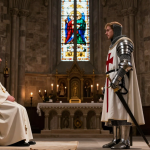
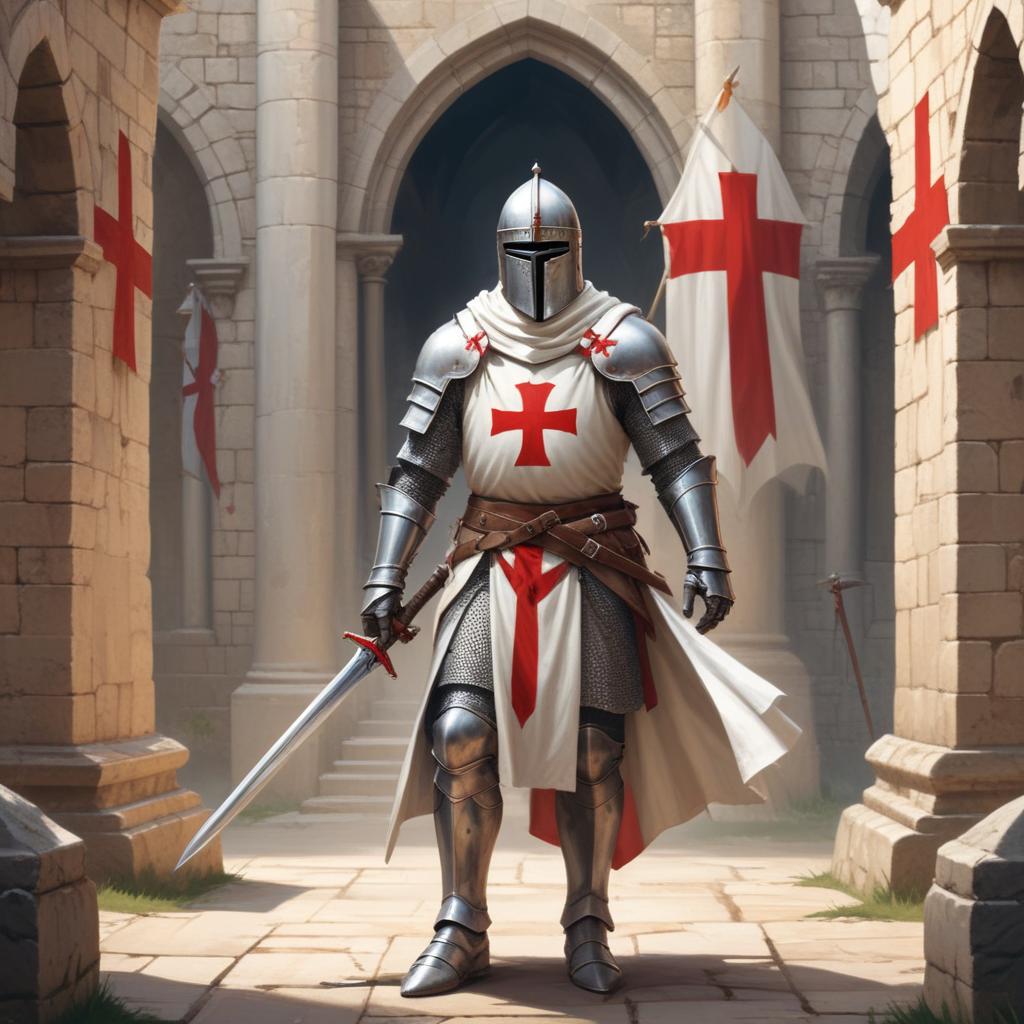
With their distinctive white mantles adorned with a red cross, the Templar knights were often at the forefront of battle. They were instrumental in organizing and executing coordinated assaults, utilizing advanced tactics that leveraged their heavy cavalry and well-trained troops. Their effectiveness in siege warfare and open battles significantly bolstered the Crusader forces’ capacity to hold strategic positions and launch offensives against Muslim armies.
Throughout the Crusades, the Templars participated in major military engagements such as the Siege of Acre and the Battle of Hattin. Their disciplined formations and commitment to their cause often turned the tide in critical moments. Moreover, the Templars’ role was not limited to fighting; they also managed fortifications and supply lines, ensuring sustained operations during the protracted holy wars. Their enduring legacy as elite warriors highlights their profound impact on the military history of the Crusades.
Financial and Banking Influence
The Knights Templar were pioneers in the realm of medieval finance, developing one of the earliest systematic banking networks that greatly enhanced their power and influence across Europe and the Holy Land. Through their innovative approach to managing knight templar wealth, they established a secure method for pilgrims and nobles to deposit funds in one location and withdraw them in another, thereby reducing the risks associated with carrying large sums of money on dangerous journeys.
This early form of Templar banking allowed the order to accumulate significant financial resources, which they used not only to fund their military campaigns but also to invest in properties, lend money to monarchs and nobles, and administer estates. Their financial role was critical in maintaining the stability and expansion of their religious and military missions, making them indispensable collaborators to many rulers despite the order’s vow of poverty.
The Templars’ sophisticated system included written records, letters of credit, and a network of secure facilities, demonstrating a highly developed understanding of financial principles for their time. This financial acumen enabled them to act as early bankers and money managers, positioning the order as one of the most influential and wealthy organizations in medieval Europe. Their control over vast wealth and banking services was a cornerstone of their enduring legacy and power.
Religious Duties and Code of Conduct
The Templar code was deeply rooted in the religious vows taken by its members, who committed themselves to a life of poverty, chastity, and obedience. These vows distinguished them as monastic knights, a rare blend of warrior and monk devoted not only to martial prowess but also to spiritual discipline. Their religious duties extended beyond battlefields, encompassing rigorous prayer routines and participation in ecclesiastical ceremonies, reflecting their sacred mission to protect Christian pilgrims and uphold the Church’s cause.
This monastic lifestyle shaped the daily life of the Templars profoundly. Each day was structured around their spiritual mission, with fixed periods of worship, meditation, and communal living within the order’s fortified compounds. The strict adherence to their code reinforced a sense of unity and purpose, imbuing every action with religious significance. This disciplined existence was crucial to maintaining the order’s moral and ethical standards, setting them apart from secular warriors and embedding a deep sense of devotion in their collective identity.
Ultimately, the Templar code and religious vows were not just rules but the foundation of their existence. As monastic knights, their spiritual mission transcended mere combat; it was a lifelong commitment to serving God through both faith and action. This dual role defined their legacy, influencing not only their internal conduct but also their enduring mystique in history.
Legacy and Impact of the Knights Templar
The Knights Templar left an indelible mark on history, their legacy intertwined with both fact and myth, shaping cultural perceptions and inspiring countless narratives. The Templar legacy extends beyond their medieval crusading origins to influence historical scholarship, cultural symbolism, and modern popular imagination. Their historical impact is evident not only in the military and financial innovations they introduced but also in the enduring fascination they evoke today.
Historically, the Knights Templar were pioneers in establishing one of the earliest forms of a banking system, which significantly impacted medieval economics. Their extensive network of fortifications across Europe and the Holy Land influenced military architecture and defense strategies. The order’s dissolution in the early 14th century was a pivotal event that echoed through subsequent centuries, symbolizing the complex intersections of power, religion, and politics in medieval Europe.
Culturally, the Templar legacy is rich and multifaceted. Their iconic red cross on a white mantle has become an enduring emblem, often adopted and adapted by various groups throughout history. The myths surrounding their supposed secret knowledge, hidden treasures, and mysterious rituals have permeated literature, art, and folklore. This cultural influence has amplified their mystique, making them subjects of fascination in medieval studies as well as popular culture.
Modern perceptions of the Knights Templar are shaped largely by their portrayal in novels, films, and conspiracy theories. From Dan Brown’s best-selling works to countless documentaries and fictional retellings, the Templars embody a symbol of enigmatic power and lost wisdom. This continuous cultural presence highlights how their historical narrative has been reimagined to reflect contemporary values and curiosities, often blending fact with fiction.
In summary, the Knights Templar’s historical impact and cultural influence create a complex legacy that resonates to this day. Their role in shaping medieval history, combined with the rich tapestry of myths and modern reinterpretations, ensures that the Templar legacy remains a compelling subject for historians, artists, and enthusiasts worldwide. This enduring fascination underlines the powerful connection between historical events and their lasting impressions on collective memory and identity.
Post-Dissolution Influence
Following the Templar dissolution in the early 14th century, the knights templar end sparked widespread shock and speculation across Europe. Although the order was officially disbanded by Pope Clement V under pressure from King Philip IV of France, the abrupt cessation of such a powerful and wealthy organization left a lasting vacancy in the medieval Christian world. Many former members were arrested, tried, and executed or imprisoned, while their properties were seized by the crown or transferred to other knightly orders.
The historical impact of the Templar dissolution extended far beyond their immediate fate. Over the centuries, numerous myths and conspiracy theories have emerged, painting the Templars as guardians of secret knowledge or treasures. Tales of hidden archives, lost holy relics, and covert survival have fueled popular fascination and inspired countless works of fiction. Some theories even propose that the Templars continued operating underground, influencing political and financial systems in disguise.
Despite the lack of concrete evidence, the knights templar end gave rise to a mystique that endures in modern culture. This blend of fact and legend surrounding the post-dissolution era highlights the order’s profound and mysterious legacy, making the Templars a symbol of both medieval power and enigmatic secrecy throughout history.
Cultural and Popular Depictions
The Knights Templar have long captured the imagination of people around the world, becoming central figures in a variety of cultural and popular depictions. From medieval manuscripts to modern media, the stories of these enigmatic knights have been woven into countless narratives that fuel Templar myths. Books and novels often portray the Knights Templar as secret guardians of hidden treasures or ancient knowledge, blending historical fact with legend to create compelling tales that intrigue readers and perpetuate their mysterious aura.
In popular culture, the knights templar stories have been adapted into numerous movies, television series, and video games. These portrayals range from heroic crusaders to shadowy conspirators, reflecting the varied ways modern media interprets their legacy. The cinematic world, in particular, has embraced the mystique of the Templars, presenting them as pivotal characters in thrilling plots that often involve quests for sacred relics or battles against clandestine enemies. This persistent presence in entertainment solidifies their legendary status in the public psyche.
Moreover, the portrayal of the Knights Templar in popular culture continues to evolve, influencing how the general audience perceives them. The mix of historical elements and imaginative storytelling invites enthusiasts to explore the myths behind the order while enjoying engaging narratives crafted by authors and filmmakers. As a result, the Templars remain a potent symbol in modern media, bridging historical fascination with contemporary creativity.

I’ve always been fascinated by how societies and organizations shape history and everyday life. Writing about the interplay between cultural movements and institutional structures lets me explore the stories that connect past and present. I love digging into archives and sharing insights that help readers understand our collective journey.