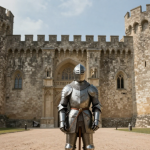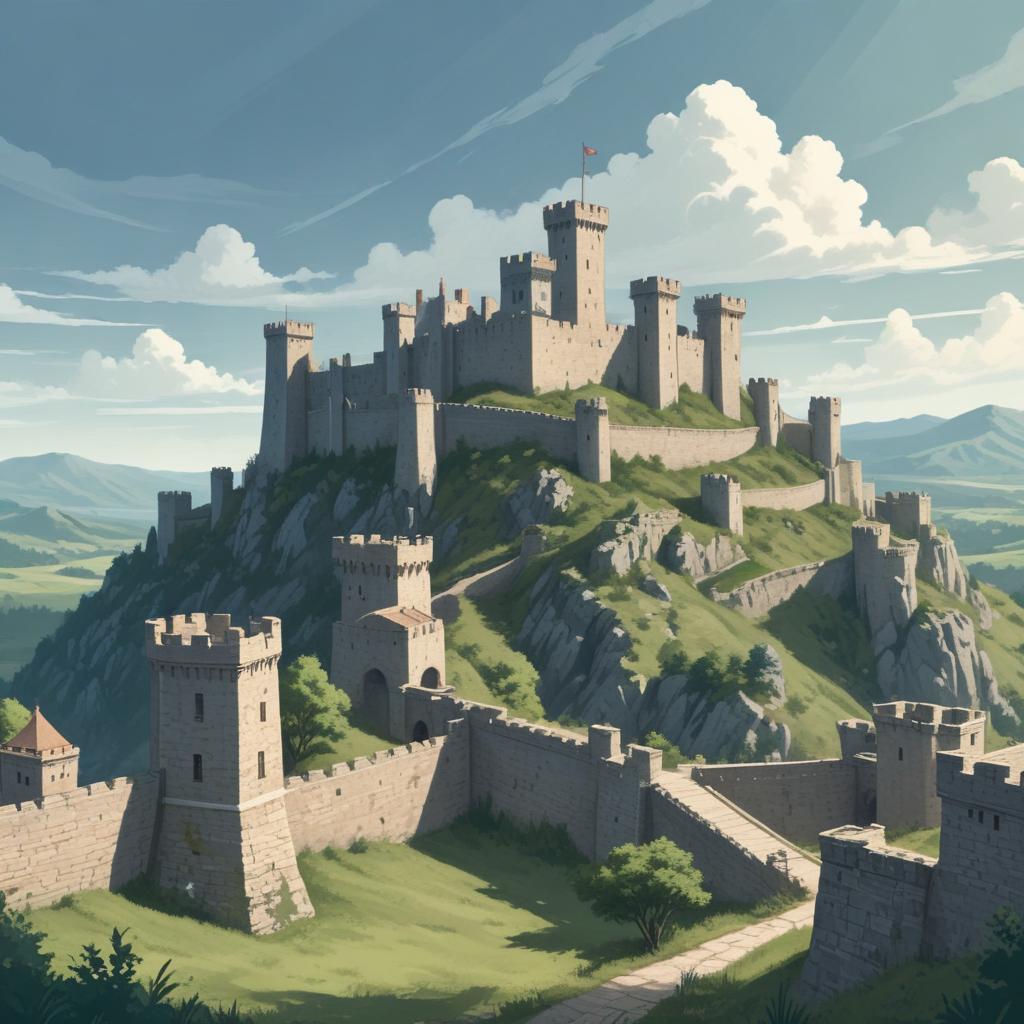
Overview of Knights Templar Castles and Strongholds
The Knights Templar, a medieval Christian military order founded in the early 12th century, played a pivotal role in the construction of numerous castles and strongholds throughout Europe and the Holy Land. These Knights Templar castles were not merely defensive structures; they were strategic fortifications that symbolized the order’s power, wealth, and influence during the Crusades. Established to protect Christian pilgrims traveling to Jerusalem, the Templars quickly grew in prominence as warriors and financiers, and their architectural legacy reflects their multifaceted role in medieval history.
Templar strongholds were ingeniously designed to serve both military and administrative functions. Their locations were carefully chosen for tactical advantage, often positioned on high ground or along key trade routes and pilgrimage paths. This allowed the Knights Templar to secure the areas essential to the success of the Crusades and maintain control over crucial territories. The castles featured thick stone walls, massive towers, and intricate defensive systems such as moats, drawbridges, and murder holes, making them formidable obstacles to any attacking force.
Beyond their defensive purpose, these castles were centers of Templar administration and economic activity. They housed garrisons of knights and soldiers, stables, storage for weapons and supplies, and sometimes even chapels and living quarters. The architectural sophistication of Knights Templar castles also reflected their understanding of military engineering and their access to resources. Their strongholds served as symbols of Templar history and influence, reinforcing the order’s reputation as both fierce warriors and capable rulers of medieval fortifications.
The impact of Knights Templar castles extended beyond the battlefield. In medieval Europe, the presence of these fortresses helped stabilize regions prone to conflict and facilitated the spread of Templar ideals and Christianity. During the Crusades, these strongholds acted as bastions of Christian power in the Holy Land, supporting military campaigns and offering refuge to pilgrims. The enduring remnants of these castles continue to captivate historians and visitors alike, providing invaluable insights into the strategic and historical significance of the Knights Templar in shaping medieval military architecture and inspiring legends through the centuries.
Purpose and Functions of Templar Castles
Templar castles served crucial castle functions that were central to the order’s military defense and administrative operations. These formidable strongholds were strategically positioned to control key territories and trade routes, ensuring the Templars could efficiently fulfill their missions. Primarily, Templar castles were built to function as defensive bastions against enemy forces, featuring thick walls, fortified towers, and well-designed battlements to repel sieges and attacks.
Beyond their military role, these castles acted as vital logistical hubs. They stored weapons, food supplies, and provisions required to support extended military campaigns and sustain the resident knights. The castles also functioned as command centers where leaders planned missions, coordinated troop movements, and managed regional security. Their strategic uses extended to controlling passages that were essential for maintaining communication and supply lines across vast and often hostile territories.
Additionally, protection of pilgrims was a key function of Templar castles. Situated along pilgrimage routes, these strongholds offered safety and refuge to travelers journeying to the Holy Land. The Templars’ commitment to safeguarding pilgrims from bandits and hostile forces intertwined with their broader military and administrative duties, reinforcing the order’s role as both warrior monks and protectors. This multi-faceted purpose made Templar castles indispensable to their overall mission, blending military strength, governance, and humanitarian aid.
Architectural Features of Templar Strongholds
Templar castles and strongholds are renowned for their distinctive castle architecture and fortress design, which combined both defensive strength and functional efficiency. One of their hallmark features was the use of thick stone walls, often reinforced with buttresses, to withstand sieges and cannon fire. The strategic placement of towers, typically rounded or polygonal, allowed for optimal vantage points to monitor the surrounding areas and defend against attackers, a clear testament to advanced medieval structures and Templar engineering.
Another notable element was the integration of concentric defenses—multiple layers of walls that created a formidable barrier against invaders. Gatehouses were heavily fortified with portcullises and murder holes, enabling defenders to repel assaults effectively. Internally, the castles were designed to support prolonged occupancy during sieges, featuring water cisterns, storage rooms, and chapels representative of the Templar’s dual military and religious roles.
The Templars also excelled in utilizing natural terrain, often constructing their fortresses on elevated ground or rocky outcrops to maximize defense. Their engineering techniques extended to innovative drainage systems and the use of arches and vaults for structural integrity. These sophisticated designs in castle architecture not only exemplified medieval military ingenuity but also reflected the technological prowess and strategic mindset of the Templar order.
Famous Knights Templar Castles and Their Locations
The Knights Templar, a medieval Christian military order, established numerous castles and fortresses across Europe and the Holy Land, many of which remain notable Templar castles and key historical landmarks to this day. These Templar stronghold locations were strategically chosen during the Crusades to defend Christian territories and serve as bases for military operations. Their architectural design and placement reveal much about the medieval warfare tactics and geopolitical significance of Crusader fortresses in Europe and beyond.
One of the most renowned is the Krak des Chevaliers, situated in present-day Syria. This castle exemplifies the military genius of the Templars, boasting massive walls, a labyrinthine layout, and extensive defenses. Built in the 12th century, Krak des Chevaliers was pivotal in securing Crusader control over the region, acting as a formidable bastion against Muslim forces. Its preservation provides invaluable insight into medieval castles in Europe, despite its Levantine location, illustrating the geographic breadth of Templar influence.
In Europe, the Castle of Tomar in Portugal stands out as a significant Templar stronghold location. Constructed in the 12th century, the castle not only functioned as a fortress but also as the headquarters of the Knights Templar in Portugal. Reflecting Gothic and Romanesque architectural styles, Tomar castle highlights the blend of spiritual and military roles undertaken by the Templars. Its position near key trade routes underscores its strategic importance during the Middle Ages.
Another pivotal example is the Château Pèlerin (Castle of the Pilgrim), located on the coast of modern-day Israel. Established by the Templars in the early 13th century, this Crusader fortress was designed to defend the coastal approaches to the Kingdom of Jerusalem. With its robust curtain walls and imposing towers, Château Pèlerin became a symbol of Templar resilience during the tumultuous period of the Crusades.
Further north, the Templar Castle of Château de Chinon in France served both military and administrative functions. Positioned on the banks of the Vienne River, Chinon’s castle was a crucial stronghold during the Hundred Years’ War and later housed important Templar archives. Its mixed-use role illustrates how medieval castles in Europe were adapted to diverse needs beyond mere defense.
These notable Templar castles and their strategic locations tell the story of the Knights Templar’s extensive reach and sophisticated military prowess. From the Crusader fortresses in the Holy Land to formidable European medieval castles, each site holds a unique historical context that continues to fascinate scholars and visitors alike.
Castle of Tomar in Portugal
The Castle of Tomar stands as one of the most iconic and best-preserved Templar castles in Portugal. Founded in the 12th century by the Knights Templar, this formidable Templar fortress in Portugal was strategically positioned to defend the newly won Christian territories during the Reconquista. Its profound historical significance extends beyond military purposes, symbolizing the spiritual and political power the Templars wielded in medieval Portugal.
Architecturally, Tomar Castle showcases a blend of Romanesque and Gothic styles, highlighted by its robust walls, imposing keep, and intricate defensive features. The castle complex includes the Convent of Christ, a UNESCO World Heritage site, famed for its unique Manueline architecture that flourished during the Age of Discoveries. The castle’s design reflects the dual role of the Templars as both monks and warriors, incorporating religious symbolism alongside practical fortifications.
As one of the key Portuguese castles, Tomar Castle is more than a military stronghold; it is a vital piece of Portuguese heritage and a treasured historical landmark. It attracts scholars and tourists alike who admire its historical narratives and architectural grandeur. Its preservation allows a glimpse into the medieval era’s complex socio-political dynamics, making it an essential site for understanding the legacy of the Knights Templar in Portugal.
Montségur Castle in France
Montségur Castle stands as one of the most iconic French Templar castles, deeply intertwined with the history of the Cathars. Located atop a remote rocky peak in the Languedoc region, it served as a formidable Cathar fortress during the medieval period. Notably, while Montségur is often associated with the Cathars, it is also believed to have had connections to the Knights Templar, who were rumored to have used it as a refuge during times of persecution.
The castle’s dramatic history is marked by the infamous siege of 1243-1244, where the Cathars withstood a prolonged and brutal attack by French royal forces. Despite their valiant defense, the fortress eventually fell, culminating in the mass execution of hundreds of Cathar survivors who refused to renounce their faith. This event sealed Montségur’s legacy as a symbol of resistance and tragedy within medieval European history.
Architecturally, Montségur Castle exhibits the typical features of a medieval stronghold designed for defense and isolation. Its strategic vantage point offered panoramic views of the surrounding plains, essential for spotting advancing enemies. The fortress includes thick stone walls, a keep, and limited access points, all contributing to its defensibility. Today, the ruins of Montségur remain a powerful testament to the enduring legacy of the French Templar castles and the Cathar fortress heritage.
Krak des Chevaliers in Syria
Krak des Chevaliers stands as one of the most iconic Crusader castles and a formidable example of medieval military architecture. As a Syrian fortress, it was pivotal in the Crusader states’ defense system during the 12th and 13th centuries. The strategic importance of Krak des Chevaliers lay in its commanding position atop a hill, overlooking key routes between the Mediterranean coast and the interior of Syria. This vantage point allowed the Templar military stronghold to control regional movements and serve as a deterrent against enemy advances, particularly from Muslim forces during the Crusades.
The robust architecture of Krak des Chevaliers greatly contributed to its enduring legacy. Built and expanded primarily by the Knights Templar, the castle features massive stone walls, double concentric ring fortifications, and intricate defensive mechanisms like moats, towers, and gates designed to withstand prolonged sieges. Its layered defenses made it one of the most impregnable Crusader castles, capable of resisting even the most overwhelming assaults in its time.
Historically, Krak des Chevaliers was more than just a military base; it was a symbol of Crusader power and resilience in the Levant. Acquired by the Knights Hospitaller after the Templars, the castle played a crucial role in the region’s turbulent history before eventually falling in 1271. Today, Krak des Chevaliers stands as a testament to the engineering skills and strategic military thinking of the Crusaders, continuing to attract historians and visitors fascinated by its legacy as a legendary Templar military stronghold and Crusader castle in Syria.
Legacy and Influence of Knights Templar Strongholds Today
The enduring legacy of the Knights Templar castles is evident not only in the annals of history but also in the tangible influences these strongholds have on modern architecture, heritage preservation efforts, and cultural tourism. These medieval fortresses, renowned for their strategic design and robust construction, have inspired generations of architects and historians, leaving an indelible mark on both the physical and cultural landscapes.
Architecturally, many contemporary designers draw upon the characteristic features of Templar castles—thick walls, imposing battlements, and intricate stonework—to evoke a sense of strength and permanence in their work. The Templar legacy of fortification principles continues to inform restoration projects and new constructions aiming to blend historic aesthetics with modern functionality. This fusion offers a compelling narrative that connects past and present architectural practices.
In terms of castle preservation, the influence of the Knights Templar is profound. Numerous efforts to conserve and restore these sites have spurred wider recognition of their historical and cultural importance. Preservationists often cite the Templar castles’ exemplary state of defense architecture as a critical motivation to safeguard medieval heritage sites globally. These initiatives not only protect the physical structures but also promote awareness of the Templar legacy within communities and among scholars.
Furthermore, the Templar legacy plays a vital role in cultural tourism. Castles once inhabited by the Knights Templar attract millions of visitors annually, eager to experience firsthand the mystique and grandeur of these ancient strongholds. Tourism driven by historical influence has become a significant economic resource for regions with Templar sites, encouraging sustainable tourism practices that emphasize education and preservation over commercial exploitation. This dynamic relationship between historical heritage and tourism fosters a deeper appreciation of the Templars’ contributions to medieval history.
In conclusion, the Knights Templar castles serve as more than relics of a bygone era; they are active agents in shaping modern architectural styles, heritage preservation standards, and cultural tourism industries. Their legacy continues to inspire and inform, ensuring that these magnificent stone fortresses remain relevant and revered in contemporary society.
Preservation and Archaeological Efforts
Ongoing preservation and archaeological projects play a crucial role in maintaining the structural and historical integrity of Knights Templar castles and strongholds. These efforts prioritize castle preservation by stabilizing ancient walls and repairing damage caused by centuries of weathering and human activity. Restoration projects are meticulously planned to respect the original architecture and materials, ensuring that the essence of these medieval fortifications remains intact for future generations.
Archaeological sites associated with the Templars undergo continuous study and excavation, uncovering vital historical artifacts and information about the daily life and military strategies of the order. These discoveries not only enrich our understanding of the Templar heritage but also inform ongoing heritage conservation plans. Conservationists collaborate with historians and archaeologists to develop sustainable ways to protect these sites from environmental threats and modern development.
Many restoration projects involve local communities and international experts who work together to document and safeguard the castles. Educational programs and guided tours are also established at these locations to raise public awareness about the significance of Templar strongholds. This combined approach of scientific research, practical restoration, and community engagement ensures that the legacy of the Knights Templar endures through well-preserved and thoroughly studied castle sites.
Cultural and Tourism Impact
Templar castles serve as iconic landmarks that attract countless visitors worldwide, playing a pivotal role in Templar tourism. These historic strongholds offer more than just architectural marvels; they provide deep insights into medieval history and the legacy of the Knights Templar. As key cultural heritage sites, they are meticulously preserved and presented to engage tourists and history enthusiasts alike.
Popular historical tours allow visitors to explore the grandeur and strategic importance of these castles, often accompanied by expert guides who bring to life the stories, legends, and mysterious aspects tied to the Templar order. Such tours emphasize the castles’ roles in medieval defense and their impact on contemporary culture, enriching visitor experiences through multimedia exhibits and interactive displays.
Visitor engagement is further enhanced by reenactments, educational workshops, and special events that celebrate the cultural heritage of the Templars. These activities foster a deeper connection between the public and the sites, making each visit not only informative but immersive. As a result, Templar tourism significantly contributes to local economies and raises awareness of these historic treasures, ensuring their legacy endures for future generations.

I’ve always been fascinated by how societies and organizations shape history and everyday life. Writing about the interplay between cultural movements and institutional structures lets me explore the stories that connect past and present. I love digging into archives and sharing insights that help readers understand our collective journey.