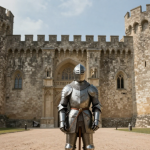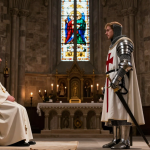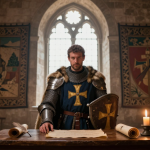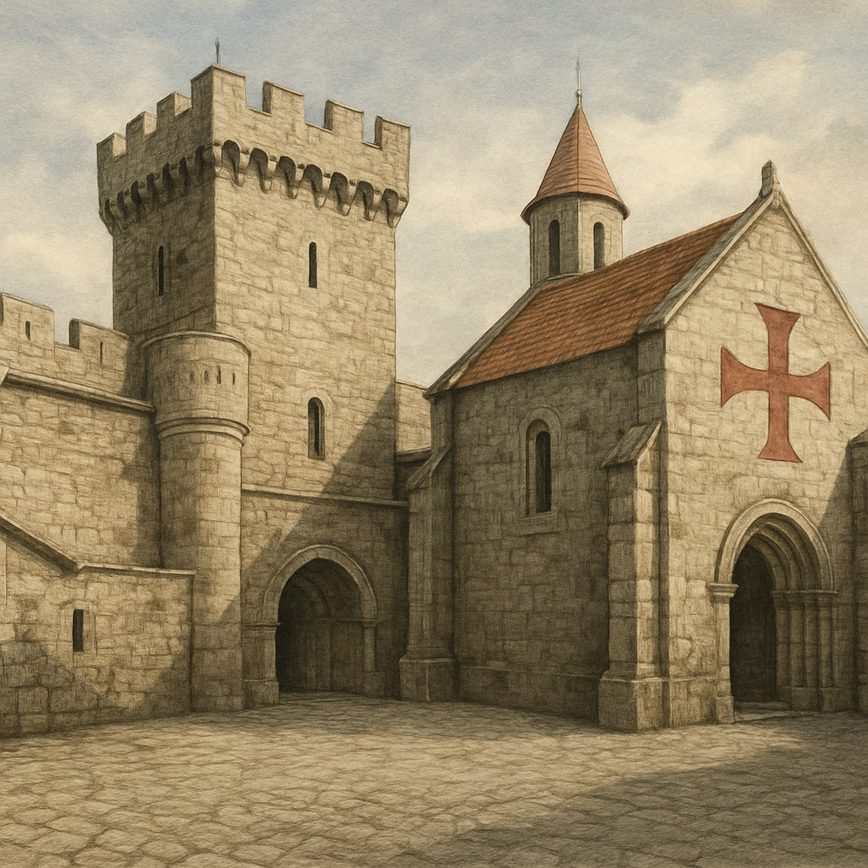
The Templar legacy, however, extends far beyond these geopolitical shifts. Stories surrounding their treasure, secret rituals, and supposed guardianship of holy relics gave rise to a rich tapestry of myth. These narratives have fueled conspiracy theories that portray the Templars as keepers of forbidden knowledge or part of hidden societies influencing world events from behind the scenes. Modern interpretations often blend fact and fiction, reflecting society’s broader fascination with secret histories and enigmatic orders.
Popular culture has embraced the Templar mythos, with countless books, movies, and video games drawing upon their dramatic storylines to explore themes of mystery and adventure. This cultural revival both preserves and transforms the historical image of the Knights Templar, making them a symbol of intrigue long after their formal end. Their historical impact thus persists, bridging medieval history with contemporary storytelling and symbolizing the complex interplay of truth, myth, and interpretation in our understanding of the past.
Redistribution of Wealth and Property
Following the dissolution of the Knights Templar, their vast wealth and extensive properties became a significant point of contention and redistribution across Europe. The considerable assets amassed by the order over the years—ranging from castles and farms to financial reserves—were confiscated and reassigned, primarily by the ruling monarchies and the Church. In many cases, the order’s wealth was transferred to the Knights Hospitaller, who were seen as the rightful successors in the realm of military-religious orders, thereby continuing to influence the political and military landscape of the time.
The redistribution of Templar assets was complex and varied by region, with some kingdoms seizing the opportunity to bolster their own coffers while others tried to maintain the existing balance of power. This process reshaped the territorial and economic map, as former Templar properties were integrated into the holdings of nobles and ecclesiastical authorities. The reallocation of order wealth had lasting historical consequences, as it not only affected the financial power of the Church but also altered the social and political dynamics within European states.
Ultimately, the dissolution and subsequent redistribution marked the end of an era for the Templars, but the influence of their amassed wealth continued to ripple through history, underpinning the rise of other factions and fueling ongoing conflicts. The fate of the Templar assets exemplifies how the collapse of a powerful order can lead to a major realignment of property and power across regions for decades to come.
Templars in Modern Culture
The story of the Knights Templar has transcended its medieval origins to become a rich tapestry of Templar myths that captivate the modern imagination. Over centuries, these legendary warrior monks have been woven into numerous conspiracy theories, often depicting them as guardians of secret knowledge or mysterious treasures. Such narratives have provided fertile ground for authors, filmmakers, and artists who have drawn inspiration from the Templars’ aura of mystique and power.
In popular culture, the Knights Templar frequently appear as enigmatic figures involved in shadowy plots or heroic quests, fueling their status as symbols of both heroic chivalry and hidden danger. This duality perpetuates the allure surrounding their image, blending historical fact with elements of fiction. From blockbuster novels to video games and movies, the Templars serve as a versatile icon for storytelling, embodying ideals of honor, faith, and secrecy.
The enduring nature of legends about the Templars—ranging from their purported preservation of holy relics to secretive survival beyond their historic dissolution—attests to their powerful place in the cultural imagination. These myths continue to evolve, shaping contemporary understandings of medieval history through a lens often tinted by intrigue and speculation, ensuring the Knights Templar remain a perennial source of fascination worldwide.
Background of the Knights Templar
The Knights Templar, a renowned order deeply entrenched in medieval history, originated in the early 12th century during the fervent period of the Crusades. Founded circa 1119 by a group of French knights, their mission was to protect Christian pilgrims traveling to the Holy Land, which was fraught with danger and instability. These medieval knights quickly became a formidable military and religious force whose influence extended far beyond their original purpose.
The Templar origins trace back to the aftermath of the First Crusade when the Kingdom of Jerusalem was established. The order was initially endorsed by King Baldwin II of Jerusalem and formally recognized by the Catholic Church at the Council of Troyes in 1129. Their symbol, a simple red cross on a white mantle, soon became synonymous with their valor and dedication. As devout warriors, the Knights Templar swore vows of poverty, chastity, and obedience, mirroring monastic traditions yet embracing the role of fierce combatants for the Christian cause.
The mission of the Knights Templar evolved rapidly as the Crusades intensified. Beyond safeguarding pilgrims, the order undertook the defense of the Crusader states and engaged in numerous battles throughout the Holy Land. Their disciplined fighting tactics and strict military organization earned them a reputation as elite warriors among the medieval knights. Additionally, the Templars amassed wealth and resources through donations and establishing an early form of banking, which helped fund their campaigns and operations extensively.
The rise of the Knights Templar is closely linked to their strategic role in the Crusades. As the conflict between Christian and Muslim forces escalated, their prowess on the battlefield and organizational skills made them indispensable allies to European monarchs and the church hierarchy. The order built and maintained numerous fortifications, safe houses, and religious sites, further entrenching their presence in the politically volatile region. Their influence reached across Europe, where they gained powerful patrons, enabling the Templars to expand both militarily and economically.
In summary, the Knights Templar’s history is a compelling tale of faith, warfare, and ambition during one of the most turbulent periods in medieval Europe. Their founding as protectors of pilgrims, dedication to their religious mission, and ascent as a leading military force during the Crusades define their unique legacy among the medieval knights. Their story remains a critical chapter in understanding the complex dynamics of the Crusades and the broader history of medieval Europe.
Formation and Growth
The Knights Templar was formed in the early 12th century as a religious military order during the Crusades, a period marked by intense conflict in the Holy Land. Originally established to protect Christian pilgrims traveling to Jerusalem, the Templar formation was characterized by a unique blend of religious devotion and martial prowess. Comprised mainly of Crusader knights, the order rapidly gained recognition for their disciplined approach and staunch commitment to both faith and battlefield strategy.
As one of the earliest medieval military orders, the Knights Templar quickly expanded beyond their initial role of defense. Their growth was fueled by royal patronage, papal endorsements, and an expanding network of land grants and financial privileges across Europe. This expansion enabled them to amass considerable wealth, which was reinvested into further bolstering their military capabilities and political influence. The Templars’ ability to combine monastic discipline with effective military organization set them apart, allowing the order to grow in power and prestige over subsequent decades.
The order’s impressive success also stemmed from its innovative structure and international reach. Members took vows of poverty, chastity, and obedience, living communal lives dedicated to their sacred mission. Their properties, spread across nations, were managed through a sophisticated administrative system that supported the order’s campaigns and charitable activities. Through these means, the Knights Templar became one of the most formidable and influential Crusader knights’ organizations of the medieval period, impacting both military and economic spheres of the time.
Role in the Crusades
The Knights Templar played a pivotal role in the Crusades as a premier military religious order, uniquely combining martial prowess with financial acumen. Their Templar role on the battlefield was crucial in the Crusades battle efforts, as they formed an elite fighting force dedicated to the defense of the Holy Land. They were instrumental in securing key strongholds and fighting against Muslim forces to maintain Christian control in the region.
Beyond their battlefield contributions, the Knights Templar undertook the vital responsibility of protecting Christian pilgrims traveling to sacred sites in the Holy Land. This protection was essential in ensuring safe passage against brigands and hostile forces, reinforcing their reputation as both warriors and guardians of faith. Their military presence not only provided security but also helped stabilize the region during turbulent times.
Financially, the Templars established an early form of banking, allowing pilgrims to deposit funds in Europe and withdraw them in the Holy Land, which greatly reduced the risk of robbery during travel. This innovative financial network supported the Crusades by funding military expeditions, maintaining fortifications, and supplying troops. The Templars’ dual role as financiers and fighters set them apart from other military religious orders, making them a formidable and influential force throughout the Crusades.
The Downfall and Dissolution Process
The downfall of the Knights Templar was a complex process fueled by a mixture of political intrigue, financial greed, and religious authority challenges. Central to this dramatic collapse was King Philip IV of France, who harbored deep resentment and enormous debts towards the order. The Templars, once revered for their military prowess and vast wealth, had accumulated significant financial influence, which made them a tempting target for the crown’s ambitions. By leveraging these debts, King Philip IV orchestrated a campaign to dismantle the powerful military and religious order.
The political pressures that converged upon the Templars were multifaceted. King Philip IV sought not only to erase his substantial debts but also to consolidate power by weakening a rival institution that operated beyond his direct control. The Templars’ independence and secretive nature bred suspicion, and rumors of heresy, blasphemy, and other accusations were inflamed, providing Philip with a pretext to act against them. These charges, while largely unproven, swayed public opinion and gave the king the leverage needed to initiate arrests and trials.
On Friday, October 13, 1307, the downfall of the Knights Templar began in earnest when King Philip IV ordered the mass arrest of Templar knights across France. Many were tortured to extract confessions under duress, and the scandal quickly spread throughout Christendom. The fear and chaos created by these actions pressured the papacy, which had initially been reluctant to intervene decisively against the order.
Pope Clement V, under significant influence from King Philip IV, issued the papal decree Pastoralis Praeeminentiae in 1307, which instructed all Christian monarchies in Europe to arrest Templar members and seize their assets. This decree marked a critical turning point in the order dissolution, as it both legitimized the king’s actions and paved the way for the formal disbanding of the Knights Templar. While the pope sought to ensure a fair inquiry, the overwhelming political pressure and changing sentiment within the church undermined the order’s survival.
Ultimately, the dissolution of the Knights Templar was finalized in 1312 at the Council of Vienne. The order was officially disbanded, their properties confiscated and redirected to other religious orders, primarily the Knights Hospitaller. The Templar downfall was not merely a result of their alleged transgressions but rather a calculated political maneuver by King Philip IV, backed by a compliant papacy eager to avoid confrontation and preserve church authority. This event remains a significant example of how political power and religious influence can intersect to reshape history.
Arrest and Charges
In the early morning of October 13, 1307, King Philip IV of France orchestrated a sweeping and coordinated arrest of the Knights Templar across his kingdom. This mass Templar arrest was driven by Philip’s determination to seize the order’s vast wealth and neutralize their power, which he viewed as a threat to his authority. Agents of the king rounded up Templar members simultaneously, ensuring that the order was incapacitated all at once. The imprisoned knights were then subjected to intense interrogations, often under duress and torture, to extract confessions and justify the king’s harsh actions.
The charges brought against the Templars were grave and controversial, centering primarily on accusations of heresy. They included allegations of secret rituals, denial of Christ, idol worship, obscene conduct during their initiations, and various acts considered sacrilegious by the Church. These heresy charges became the foundation of the templar trial that followed. The prosecution aimed to portray the order as morally and spiritually corrupt, undermining their once-revered status and eroding public support. However, the legitimacy of these accusations remains debated among historians, many of whom believe they were fabricated or exaggerated to serve King Philip IV’s political and financial ambitions.
The templar trial itself became a prolonged legal and ecclesiastical saga, involving the pope, many Templar leaders, and representatives of the French crown. Ultimately, these proceedings led to the dissolution of the Knights Templar and the confiscation of their assets, marking the end of one of the most powerful military orders of the medieval period.
Trials and Confessions
The trials of the Knights Templar represent a dark chapter in medieval history, marked by intense scrutiny and coercion. Conducted primarily under the auspices of the Church, these Templar trials aimed to investigate the alleged heresies and misconduct within the order. Central to this process was Pope Clement V, whose role was pivotal in both orchestrating and overseeing these proceedings. Under his authority, the Church sought to unravel what was perceived as a growing threat posed by the Templars’ secretive practices and considerable wealth.
One of the most notorious aspects of the trials was the use of forced confessions. Many knights, subjected to severe torture and psychological pressure, admitted to various charges that ranged from idolatry to blasphemy. These confessions, while often extracted under duress, became the cornerstone of the Church’s case against the order. The medieval inquisition’s methods were ruthless, reflecting the era’s harsh approach to justice and heresy.
Pope Clement V’s involvement was marked by a delicate balance between political maneuvering and religious duty. While he initially showed some reluctance to condemn the knights without solid evidence, the mounting pressure from French King Philip IV eventually swayed his decisions. The Templar trials ended with the dissolution of the order, a result that echoed the broader struggles between secular powers and the Church during the medieval period.
Official Dissolution by the Church
Pope Clement V officially disbanded the Knights Templar through the issuance of a papal bull, a formal decree by the papal authority that marked the end of this once-powerful order. The papal bull, known as Vox in excelso, was promulgated in 1312, declaring the order’s dissolution in response to the mounting pressure and accusations against the Templars. This decree not only terminated the existence of the order but also aimed to bring an official and religious closure to the turbulent saga surrounding the Knights Templar.
The order dissolution was largely influenced by political and economic motives, with Pope Clement V balancing the interests of King Philip IV of France, who had aggressively pursued the Templars. Through the papal bull, the Pope sought to reassert control and avoid further destabilization in Christendom. The implications were significant: many Templar assets were transferred to the Knights Hospitaller or seized by monarchs, while former members were either absorbed into other orders or faced imprisonment and persecution.
The Pope order formally ended one of the most enigmatic chapters in medieval history. While the Knights Templar end was marked by controversy and tragedy, the papal bull remains a pivotal document that symbolizes the authoritative closure imposed by the Church. It underscores how the papacy could wield its spiritual and temporal power to reshape political landscapes and curtail threats perceived against its realm and influence.
Legacy and Historical Impact
The dissolution of the Knights Templar marked a dramatic turning point in medieval society, leaving a legacy that has resonated through history and culture alike. The abrupt disbandment of this powerful and enigmatic order not only reshaped the political and religious landscapes of the time but also planted seeds for myth and conspiracy theories that continue to captivate modern imaginations.
On the History Matters channel, they cover the fall of this medieval order in detail, and you can watch it right here.
During the Middle Ages, the Templars were instrumental in the Crusades, wielding influence that extended beyond the battlefield into matters of finance and diplomacy. Their sudden suppression under charges of heresy disrupted medieval power structures, creating a ripple effect felt across kingdoms and the Church. Many historians argue that the swift downfall of the Templar order exposed underlying tensions between emerging centralized monarchies and the Church’s authority, marking a shift in how power and wealth were controlled.

I’ve always been fascinated by how societies and organizations shape history and everyday life. Writing about the interplay between cultural movements and institutional structures lets me explore the stories that connect past and present. I love digging into archives and sharing insights that help readers understand our collective journey.