Historical Background of the Knights Templar
The Knights Templar history is deeply intertwined with the complex and turbulent era of the Crusades. Founded in the early 12th century, the Templar order emerged from the necessity to protect Christian pilgrims traveling to the Holy Land amidst the volatile backdrop of the Crusades. The Templar origins date back to 1119, when a group of knights pledged to defend pilgrims on the road to Jerusalem, forming what would become one of the most famous and powerful military orders in medieval history.
The early history of the Knights Templar witnessed rapid growth in both influence and resources. After receiving the endorsement of the Catholic Church, the order gained significant privileges, enabling them to establish a vast network of fortifications and financial operations across Europe and the Holy Land. Their role extended beyond mere warriors; they became bankers and administrators, helping to shape the Crusades timeline through their strategic military engagements and logistical support. This combination of martial prowess and economic power positioned the Templars as key players in the ongoing struggle for control over the Holy Land.
Key events in the Knights Templar history reflect their rise to prominence. Their involvement in crucial battles such as the Siege of Acre (1189–1191) and the Battle of Hattin (1187) illustrated their dedication and battlefield expertise. The order also played an instrumental role in protecting Crusader states and securing key territories. However, their success and growing wealth eventually led to political tension, especially with monarchs and the papacy. The complex relationship between Templar power and papal authority set the stage for dramatic episodes later in their history, including their sudden dissolution in the early 14th century.
Understanding the formation, early history, and pivotal moments of the Knights Templar is essential to grasp the broader dynamics of the Crusades timeline. As defenders of Christendom and pioneers of early medieval financial systems, the Knights Templar left an indelible mark on history, their legacy echoing through the centuries in both fact and legend.
Founding and Purpose of the Knights Templar
The Templar founding dates back to the early 12th century during the aftermath of the First Crusade. Established around 1119 by a small group of Crusader knights led by Hugues de Payens, the Knights Templar was created as a military order with the primary goal of protecting Christian pilgrims traveling to the Holy Land. This unique combination of religious dedication and martial prowess defined the order’s mission from its inception.
The newly formed military order pledged to live under a strict monastic rule while simultaneously fulfilling military duties. Their purpose was clear: to safeguard the routes and pilgrims in the war-torn regions around Jerusalem and other key Christian sites. Recognized and officially endorsed by Pope Innocent II in 1139, the Templars quickly gained support across Europe, allowing them to grow in strength and influence.
Initially, the Templar knights served as elite protectors and fighters in the Crusader states, tasked with defending the Holy Land from Muslim forces and ensuring the security of Christian interests. Their disciplined martial skill and organizational structure set them apart from typical knightly groups, making them a formidable military order. Over time, their role expanded beyond mere protection, but their founding mission remained the cornerstone of their identity.
Growth and Influence During the Crusades
The Knights Templar experienced significant growth and expansion throughout the duration of the Crusades, both geographically and politically. Initially founded in Jerusalem to protect Christian pilgrims, their influence rapidly extended across Europe and the Levant. The order established a vast network of fortifications, commanderies, and estates, leveraging their growing military and economic power. This Templar expansion was instrumental in securing key positions throughout the Crusader states, strengthening the Christian foothold in the Holy Land.
Politically, the Templars gained considerable autonomy and influence. They answered directly to the Pope, bypassing local secular and ecclesiastical authorities, which allowed them to negotiate with kings, nobles, and other religious leaders as independent players. Their unique position enhanced their role as mediators and power brokers within the complex political landscape of the Crusades. The order’s military prowess, combined with their extensive wealth, made them indispensable to the Crusader cause and a significant force in medieval military affairs.
Over time, the Templar order evolved beyond a purely military entity into a complex institution involved in banking, diplomacy, and governance. Their influence reached far beyond the battlefield, shaping the political dynamics of both the East and Europe during this turbulent period. Ultimately, the Knights Templar’s growth during the Crusades marked a pivotal chapter in medieval history, illustrating the intersection of religious zeal, military strategy, and political power.
Relationship Between the Knights Templar and Papal Authority
The relationship between the Knights Templar and papal authority was a uniquely intricate and pivotal dynamic in medieval Christendom. Established in the early 12th century, the Knights Templar were originally founded to protect Christian pilgrims traveling to the Holy Land. Their close association with the Catholic Church and especially the Pope afforded them privileges that set them apart from other military and religious orders. At the heart of the connection between the Knights Templar and church was the delicate balance of independence and subordination to papal control.
One of the most defining aspects of this relationship was the extensive privileges granted to the Templars by successive popes. These privileges included exemptions from local ecclesiastical authority, the ability to collect their own taxes, and the right to conduct their own legal proceedings. This papal favor was designed to empower the Templars to operate across Christendom without interference, helping them maintain their strict discipline and military focus. Moreover, these exemptions created a direct line of authority from the Pope, rather than the local bishops, cementing the order’s special status. This direct papal protection was crucial in enabling the Knights Templar to build a powerful network of castles, fortresses, and financial institutions throughout Europe and the Holy Land.
However, this autonomy came with expectations of loyalty and service to the Church. The Pope and Templars maintained a symbiotic relationship where the order provided military and financial support to the Church’s broader goals, especially the Crusades. The papal authority could, and did, exert control when necessary; for instance, Pope Clement V’s dissolution of the order in the early 14th century was a stark reminder of the limits of even the most privileged religious-military organization. Nonetheless, for two centuries, the Knights Templar thrived as one of the few institutions that operated under the direct auspices of the Pope, illustrating the close, albeit complex, interplay between papal authority and the Templars.
In conclusion, the relationship between the Knights Templar and papal authority was marked by mutual benefit and strategic cooperation. The Templars enjoyed unprecedented privileges that allowed them to flourish, while the Pope leveraged their military and financial strength to extend the Church’s influence. This nuanced balance of privileges and control underpinned the distinctive role the Knights Templar played within the medieval Church and highlights the intricate dynamics of power within Christendom during this era.
Papal Bulls and Support for the Templars
The Knights Templar, as a prominent religious and military order during the medieval period, received significant endorsement and privileges through various papal bulls issued by the Catholic Church. These important papal documents served as formal church endorsement, granting the Templars unique rights and protections that were crucial to their development and influence.
One of the earliest and most important papal bulls was “Omne Datum Optimum,” issued by Pope Innocent II in 1139. This bull granted the Templars the right to freely collect taxes and tithes and exempted them from the authority of local bishops. It allowed them to operate independently under the direct protection of the papacy, a privilege that elevated their status within Christendom and ensured their autonomy.
Another key document was the bull “Milites Templi,” issued in 1144 by Pope Celestine II, which reinforced many of the rights established in the previous papal bulls and further affirmed the Templars’ role in crusading efforts. These privileges included the authority to build fortifications and maintain their own clerics, solidifying their position as a powerful ecclesiastical and military force.
Through these papal bulls, the church endorsement was not only a symbol of divine approval but also a practical framework that enabled the Knights Templar to amass wealth, recruit members, and establish a vast network across Europe and the Holy Land. The privileges granted by the papal bulls were fundamental to the order’s rise and continued influence during the Crusades.
Tensions and Conflicts with the Papacy
The relationship between the Knights Templar and the papacy, initially marked by mutual support and cooperation, gradually deteriorated into a complex web of papal conflicts. Several factors contributed to the growing tensions that ultimately led to the Templar suppression. The Order’s accumulation of wealth and power became a source of unease within the Church hierarchy, feeding fears of an independent entity operating beyond papal control. Additionally, the Templars’ financial influence and banking operations stirred resentment among secular and church authorities alike, leading to suspicions about their intentions and alliances.
Church disputes over jurisdiction and authority further exacerbated the situation. The Templars’ exemption from local ecclesiastical oversight often put them at odds with bishops and archbishops, leading to accusations of arrogance and insubordination. Politically, the shifting allegiances in Europe, particularly with the French crown under Philip IV, intensified the papal conflicts. The French king’s desire to seize Templar assets and undermine papal authority aligned to create a perfect storm against the Order.
Ultimately, these tensions culminated in the dramatic crackdown on the Knights Templar in the early 14th century. With allegations of heresy and other charges often considered dubious, the papal authority capitulated to secular pressure, endorsing the suppression of the Order. This marked a significant turning point in medieval church politics, illustrating how internal and external conflicts within Christendom could dismantle even the most powerful institutions.
Legacy of the Knights Templar and Papal Influence
On the Get.factual channel, they cover the mysteries of the Knights Templar in depth, and you can watch it right here.
The legacy of the Knights Templar remains one of the most fascinating and enduring chapters in medieval history. Their influence extended far beyond their military prowess and financial acumen, shaping European culture, politics, and religious thought for centuries. The Templar legacy is not merely confined to their battlefield achievements or their vast economic networks but is deeply intertwined with the exercise of papal authority that both empowered and ultimately condemned them.
The papal impact on the Knights Templar was profound and multifaceted. From their founding in 1119 under the direct auspices of the Pope, the Templars enjoyed unprecedented privileges that shielded them from local secular powers and placed them directly under papal jurisdiction. This status allowed the order to grow rapidly in power and wealth, influencing political dynamics across Europe and the Holy Land. The papal endorsement not only legitimized their military campaigns but also enabled the establishment of an early form of international banking, which was revolutionary for its time.
However, the historical influence of papal authority on the Templars was a double-edged sword. While it facilitated their rise, it also sealed their fate. The dramatic downfall of the order in the early 14th century came under Pope Clement V, whose actions were heavily influenced by the political pressures exerted by King Philip IV of France. The papal trials and dissolution of the order left an indelible mark on history, illustrating how papal power could be wielded to dismantle even the most powerful institutions.
Despite their suppression, the Templar legacy continued to captivate imaginations and inspire legend. The papal narratives constructed during and after their trials shaped much of the historical perception of the Knights Templar, blending fact with myth. This complex relationship between the papacy and the Templars underscores the enduring historical influence of both, highlighting how religious authority and knightly valor were intertwined in medieval Europe’s political and spiritual landscapes.
In summary, the Templar legacy is inseparable from the papal impact that shaped their rise and fall. The historical influence of papal authority created a framework within which the Knights Templar operated, thrived, and ultimately faced extinction. This dynamic relationship continues to be a critical element in understanding the broader history of medieval Christendom and its institutions.
Cultural and Religious Impact
The Knights Templar have left an enduring cultural legacy that permeates modern society, woven through myths, symbols, and religious significance. As a medieval military order with a sacred mission, their story has been embellished over centuries, creating powerful myths that continue to fascinate and inspire. These legends often portray the Templars as guardians of secret knowledge and sacred relics, fueling countless books, movies, and conspiracy theories that contribute to their mystique.
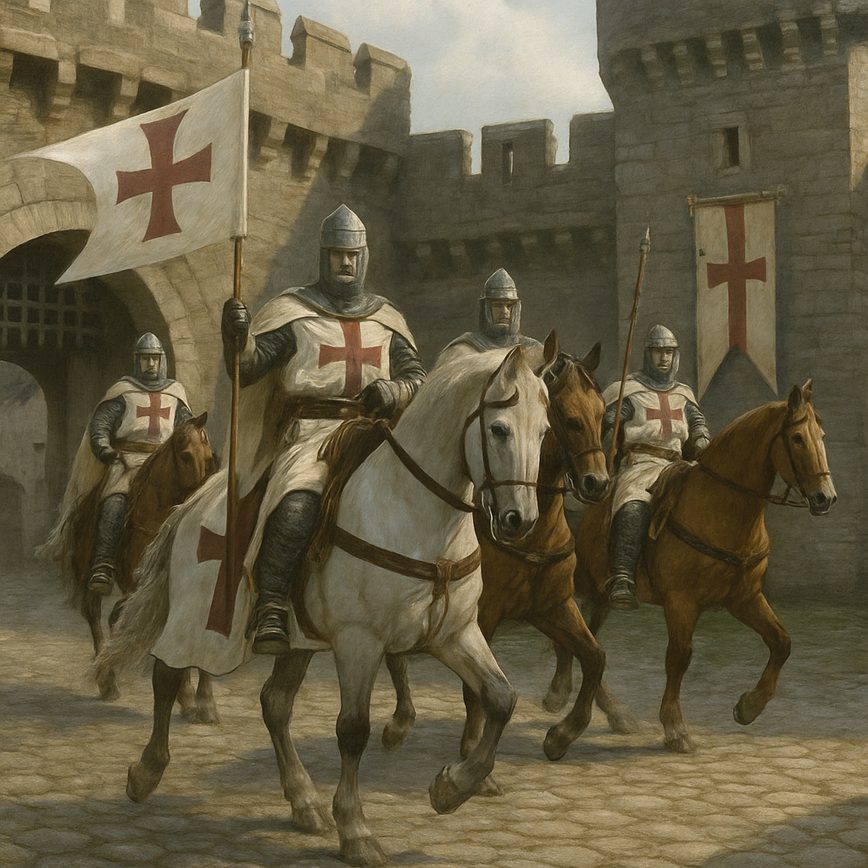
Their symbols, such as the red cross and the Templar seal, have transcended their original religious and military meanings to become iconic emblems in popular culture. These marks often appear in art, literature, and even modern organizational logos, symbolizing ideals like courage, faith, and mystery. This symbolic presence keeps the essence of the Templars alive, influencing everything from architecture to fashion.
Religiously, the Knights Templar are remembered for their deep connection to the Catholic Church and their role in the Crusades, which shaped Christian history and the relationship between Europe and the Holy Land. Their legacy includes a reminder of the complex interplay between faith, power, and politics during medieval times. In modern spirituality, the Templars are sometimes revered as emblematic of devotion and sacrifice, reinforcing their lasting religious impact. Thus, the cultural and religious influences of the Knights Templar continue to resonate, bridging history with contemporary imagination and belief.
Influence on Church Policies and Orders
The rise and eventual fall of the Knights Templar had a profound impact on subsequent church policies and the formation of military orders. As the first major military order sanctioned by the papacy, the Templars set a precedent for blending monastic life with martial responsibilities, influencing church policy regarding the legitimization and oversight of military-religious groups. Their unique position directly under papal authority gave the Church a model of centralized control over such orders, which was reflected in later reforms seeking to regulate and integrate these organizations more closely with church hierarchy.
The dramatic suppression and dissolution of the Templars also led to more cautious papal approaches in managing military orders. The scandal and political fallout underscored the need for clearer governance structures and stricter oversight to prevent abuses of power and ensure accountability within these groups. This influenced papal reforms aimed at balancing the autonomous nature of military orders with the church’s administrative control, thereby shaping the policies that governed subsequent orders like the Hospitallers and Teutonic Knights.
Ultimately, the legacy of the Templars prompted the church to develop refined policies that emphasized ideological conformity and loyalty to the papacy, alongside military objectives. This dual focus was central to the church’s strategy in leveraging military orders to advance its spiritual and temporal goals while maintaining doctrinal purity and institutional discipline through ongoing papal reforms.

I’ve always been fascinated by how societies and organizations shape history and everyday life. Writing about the interplay between cultural movements and institutional structures lets me explore the stories that connect past and present. I love digging into archives and sharing insights that help readers understand our collective journey.