Historical Background of the Knights Templar
Today’s Knights Templar focus on faith-centered service and creating leaders who care
Stephen Whitmore, Right Eminent Grand Commander of the regional group of Knights Templar — providencejournal.com
The Knights Templar history begins in the early 12th century, during a period marked by religious fervor and military campaigns known as the Crusades. Founded around 1119 CE by a small group of knights, the Order of the Knights Templar was established with the primary mission of protecting Christian pilgrims traveling to the Holy Land after the First Crusade successfully captured Jerusalem. Their origins are closely tied to the volatile political and religious landscape of medieval Europe and the Near East, where control over sacred territories was fiercely contested.
Initially formed as a monastic military order, the Knights Templar combined the discipline of religious life with the rigor of knightly warfare. They were officially endorsed by the Catholic Church in 1129, which granted them special privileges, including exemption from local laws and direct accountability only to the pope. This endorsement helped to elevate their status and attract substantial support and resources.
The role of the Knights Templar in the Crusades was multifaceted. They were not only formidable warriors on the battlefield, but also skilled administrators who managed extensive estates across Europe and the Levant. Through these holdings, the Templars financed military operations and maintained a network of fortifications critical to defending Christian territories. Their participation in key battles and sieges cemented their reputation as elite soldiers of Christendom.
The historical context of the Knights Templar’s emergence is defined by the broader conflicts of the Crusades, a series of religious wars initiated by European Christians aimed at reclaiming Jerusalem and the Holy Land from Muslim rule. The Crusades shaped medieval geopolitics and fostered cross-cultural exchanges, but also led to significant social and economic upheaval. Within this turbulent environment, the Knights Templar were both protectors and financiers of Crusader ambitions, reflecting the intertwined nature of faith and warfare during this era.
Overall, the Knights Templar history is emblematic of the medieval Church’s efforts to exert influence beyond spiritual matters, extending into military and political realms. Their origins, Crusader involvement, and historical setting illustrate how religion, power, and military necessity combined to forge one of the most enduring legends of medieval Europe.
Founding and Mission
The Knights Templar were founded in the early 12th century, around 1119, during the height of the Crusades. Their creation was prompted by a need for a dedicated military order to protect Christian pilgrims traveling to the Holy Land. This group of knights pledged to defend these vulnerable travelers on their perilous journeys, a mission that distinguished them from other medieval orders. The original purpose of the Knights Templar was deeply intertwined with their mission statement: to serve as both monks and warriors, combining religious devotion with martial prowess to safeguard the interests of Christendom.
The Templar founding was marked by the vision of establishing a disciplined and devout brotherhood committed to protecting pilgrims and holy sites under constant threat. Initially composed of a small number of knights, the order quickly grew in prominence due to their unwavering dedication and effective military strategy. Their mission extended beyond mere protection; the Knights order established a network of fortifications and a financial system that supported their efforts and lent stability to the regions under their influence.
Throughout medieval society, the Knights Templar were recognized not only as fierce warriors but also as spiritual guardians. Their establishment represented a unique fusion of piety and martial responsibility, positioning them as a vital force in the defense and expansion of Christian territories. This dual nature of their mission made the Templar founding a significant moment in the history of medieval knighthood and religious orders.
Role During the Crusades
During the Templar Crusades, the Knights Templar played a critical military role, serving as formidable warriors dedicated to protecting Christian pilgrims and territories in the Holy Land. Established as a religious military order, their primary mission was to secure safe passage for pilgrims traveling to Jerusalem and to defend key strongholds amidst the ongoing holy wars. The Templars’ disciplined fighting skills and strategic fortifications significantly contributed to the Crusader states’ endurance against opposing forces.
Their military role extended beyond mere combat; the Templars developed advanced battlefield tactics, trained knights for specialized warfare, and maintained elite cavalry units, making them a feared and respected force on the battlefield. Their commitment to the religious cause imbued their military endeavors with a sense of divine purpose, strengthening their influence in the broader context of the holy wars. By blending martial prowess with religious devotion, the Templar Crusades became a symbol of militant Christianity.
Furthermore, the Knights Templar acted as protectors not only of pilgrims but also of Christian territories, establishing and managing a network of fortifications and safe houses across the region. This infrastructure facilitated the movement of supplies, intelligence, and reinforcements, bolstering the Crusaders’ resilience during prolonged conflicts. Their role during the Crusades underscored the intersection of military strategy and religious ideology, marking the Knights Templar as pivotal actors in shaping the outcomes of these historic religious conflicts.
Social Functions and Influence of the Knights Templar
| Aspect | Description | Impact |
|---|---|---|
| Economic Role | The Knights Templar established a network of financial operations throughout medieval Europe and the Holy Land, acting as early bankers. They managed assets, issued letters of credit, and facilitated safe transfers of money for pilgrims and nobility. | This financial influence enabled the Templars to accumulate vast wealth, fund construction projects, and support military campaigns, significantly shaping medieval economic systems. |
| Charitable Activities | Beyond warfare, the Templars provided care for pilgrims and the poor, running hospitals and hospices that offered medical aid and shelter. Their charitable works embodied Christian values of compassion and service. | These charitable contributions enhanced their social standing and forged strong community ties, reinforcing their role as protectors not only of territories but also of vulnerable populations in medieval society. |
| Political Influence | The Templars held considerable sway over political affairs, serving as advisors to monarchs and negotiating diplomatic matters. Their military prowess and wealth granted them unique leverage in secular and ecclesiastical circles. | This political engagement allowed the Templars to influence policy, maintain their privileges, and ensure their interests were protected, making them pivotal players in medieval power dynamics. |
The Templar social role extended far beyond their renowned military functions. Their integration into economic, charitable, and political spheres demonstrated their multifaceted influence in medieval society. Economically, they innovated financial services that supported commerce and pilgrimage activity. Charitably, they upheld a mission of care and protection that resonated across Christian Europe. Politically, their connections with royalty and the Church secured them a position of authority and negotiation power, illustrating their substantial impact on medieval governance and societal structure. The Knights Templar thus were not just warriors but vital social actors whose contributions shaped the fabric of medieval society in numerous enduring ways.
Economic Activities and Banking
The Knights Templar pioneered one of the earliest known banking systems during the medieval period, significantly influencing finance and trade. Their economic power stemmed not only from vast land holdings and donations but also from their ability to facilitate monetary transactions across different regions. Templar banking allowed pilgrims and crusaders to deposit funds in one location and withdraw them safely in another, reducing the risks of carrying large sums of money on dangerous journeys. This revolutionary concept laid the groundwork for modern banking practices.
Beyond safeguarding valuables, the Templars engaged in lending and credit services, which expanded their reach into regional economies. Their financial acumen enabled them to fund military campaigns, agricultural developments, and construction projects, thereby reinforcing their socio-political influence. This level of economic sophistication was rare at the time, positioning the Templars as vital players in medieval finance. Their network of commanderies acted as financial hubs that supported trade routes, ensuring efficient movement of goods and capital.
Through these activities, the Knights Templar demonstrated how a religious-military order could wield substantial economic power. Their banking innovations not only facilitated commerce but also contributed to the stability and growth of medieval economies. The legacy of Templar banking provides critical insights into the evolution of finance during a period often characterized by economic limitation and uncertainty.
Charitable Works and Religious Contributions
| Aspect | Description |
|---|---|
| Templar Charity | The Knights Templar were widely recognized for their extensive charitable activities, including aid to the poor, pilgrims, and the sick. They collected alms and provided financial support to communities, ensuring assistance was given where most needed. |
| Religious Influence | Religiously, the Templars held a significant role in advancing Christian ideals, protecting holy sites, and supporting the Crusades. Their order was dedicated to a spiritual mission that combined monastic discipline with military service. |
| Hospitals and Hospitality | The order established hospitals and hostels across Europe and the Holy Land, providing care and refuge for pilgrims traveling to sacred destinations. Their hospitality extended to both spiritual guidance and physical aid, often serving as safe havens. |
Legacy and Cultural Impact of the Knights Templar
On the History Hit channel, they cover the true history of the Knights Templar, and you can watch it right here.
The legacy of the Knights Templar extends far beyond their medieval origins, permeating modern culture and continuing to captivate the public imagination. As a symbol of bravery, sacrifice, and mystery, the Templar legacy has become deeply embedded in popular narratives, blending history with legend in ways that resonate strongly even today. This enduring fascination is reflected not only in historical accounts but also in cultural depictions ranging from literature and film to games and conspiracy theories.
The cultural impact of the Knights Templar is multifaceted. On one hand, they are remembered as elite warrior monks who played a pivotal role in the Crusades and the protection of pilgrims. On the other hand, they have become the subjects of myths involving hidden treasures, secret knowledge, and connections to esoteric societies like the Freemasons. This duality adds layers of intrigue and has fueled countless stories and theories in modern times.
In terms of modern influence, the Templars have inspired a vast array of creative works. Novels such as Dan Brown’s “The Da Vinci Code” brought the Templar legacy into bestseller lists worldwide, weaving secret history with thrilling fiction. Films and television series frequently revisit Templar themes, portraying them as guardians of ancient mysteries or agents in global conspiracies. This popular portrayal fuels a broader cultural dialogue about faith, power, and the unknown.
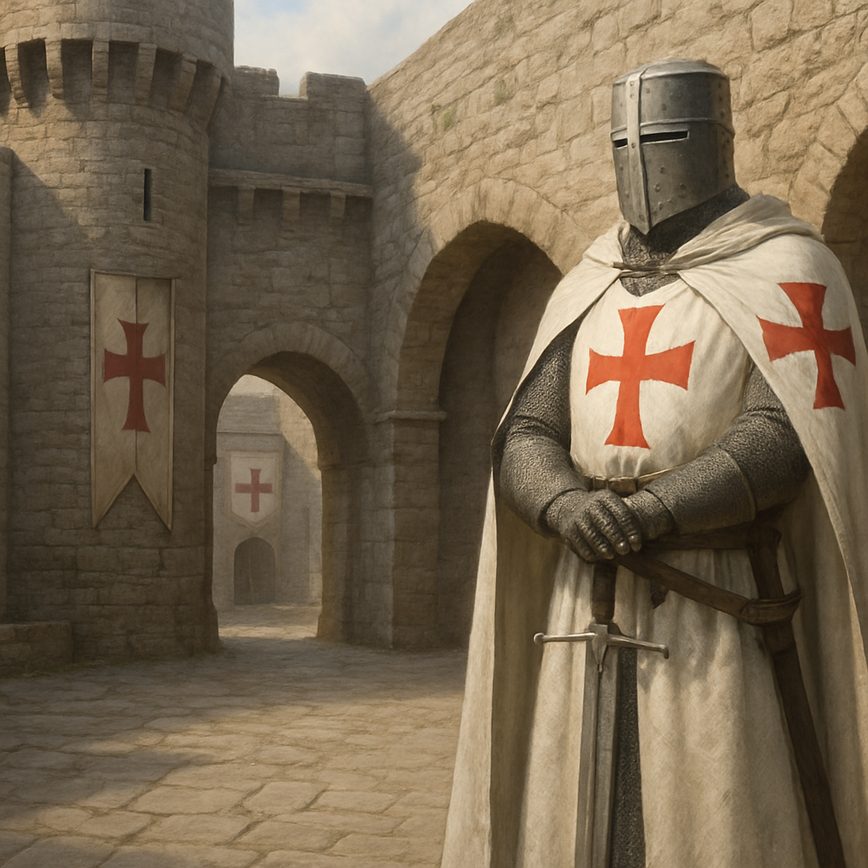
Moreover, the Knights Templar’s iconography—their distinctive red cross on white mantles, their heraldry, and architectural marks—continue to be powerful symbols. These images are often adopted by various groups seeking to evoke the Templars’ perceived chivalry and spiritual dedication. The influence even extends into tourism, with numerous sites across Europe associated with the Templars becoming important cultural heritage destinations, blending history with modern economic life.
In conclusion, the Templar legacy is alive and well in modern culture, enriched by centuries of storytelling and reinterpretation. Their cultural impact underscores not only how history can shape identity but also how legend can shape belief and inspire creativity. Whether as historical figures or mythic icons, the Knights Templar continue to hold a compelling place in popular imagination, ensuring that their story remains relevant long into the future.
Myths and Legends Surrounding the Templars
The Knights Templar have long been the subject of numerous Templar myths and legends that continue to captivate popular culture. These myths often blend historical facts with fictional and sometimes conspiratorial interpretations, creating a mysterious and almost mythical aura around the order. One of the most pervasive legends is that the Templars possessed secret knowledge or sacred relics, such as the Holy Grail or the Ark of the Covenant, which granted them extraordinary power.
Another common conspiracy theory suggests that the Templars were involved in occult practices or hidden rituals, fueling suspicions and fear that ultimately contributed to their dramatic downfall. These stories frequently portray the Templars as protectors of ancient secrets or even as a clandestine society influencing global events behind the scenes. Over time, such tales have woven their way into books, films, and video games, significantly shaping their cultural image as enigmatic warriors entwined with mystery and intrigue.
Despite the historical reality of the Knights Templar as a medieval Christian military order dedicated to protecting pilgrims and defending the Holy Land, it is these myths and legends that have immortalized them in the imagination of the public. The merging of factual history with popular culture continues to fuel fascination with the Templars, ensuring they remain a compelling subject for storytellers and conspiracy theorists alike.
Modern Interpretations and Scholarship
Contemporary Templar research has brought a nuanced understanding of the Knights Templar, moving beyond popular myths and legends. Modern historians and scholars apply rigorous historical analysis to reassess the true social functions of the order within medieval society. This scholarly approach reveals that the Templars were not merely a military or financial entity but played a multifaceted role that stretched across political, religious, and economic spheres.
Modern studies emphasize the complexity of the Knights Templar’s interactions with different social classes and institutions. Researchers highlight their roles as protectors of pilgrims, financiers for crusading efforts, and land managers who influenced local economies. These tasks underscored the Templars’ importance as both religious warriors and key social agents, deeply integrated into the fabric of medieval Europe.
Moreover, current scholarship often revisits the reasons behind the suppression of the Templars, considering the political and economic motivations underlying their downfall. By exploring archival sources, legal documents, and contemporary accounts, historians aim to disentangle fact from fiction. This comprehensive historical analysis has reshaped the narrative, showing the Templars as a pivotal institution whose social contributions have enduring relevance in the study of medieval history and culture.

I’ve always been fascinated by how societies and organizations shape history and everyday life. Writing about the interplay between cultural movements and institutional structures lets me explore the stories that connect past and present. I love digging into archives and sharing insights that help readers understand our collective journey.