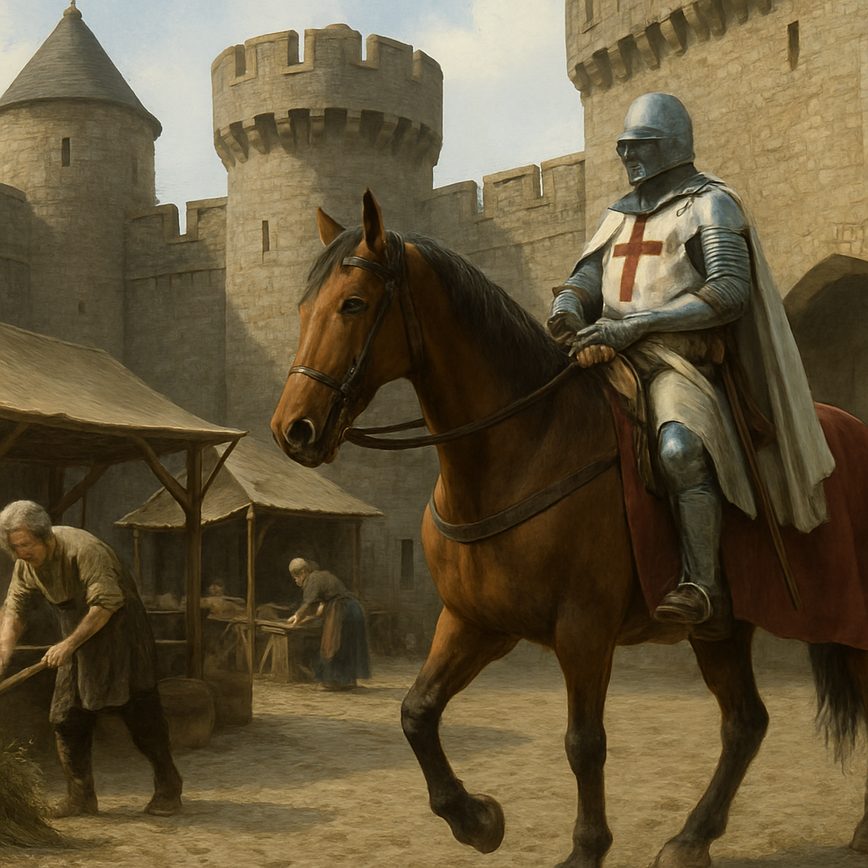
Introduction to the Knights Templar and Feudal Society
The Knights Templar, one of the most renowned military orders in medieval history, originated in the early 12th century during the era of the Crusades. Founded circa 1119, their initial purpose was to protect Christian pilgrims traveling to the Holy Land following the First Crusade. This group of knights swiftly evolved from humble beginnings into a powerful and influential order, deeply intertwined with feudal society and the system of knighthood that defined the Middle Ages.
In the broader context of feudal society, the Knights Templar held a unique and significant position. Feudalism was a hierarchical system where land was exchanged for loyalty and military service; within this structure, knights served as both warriors and vassals to the nobility. The Templars, while bound by strict religious vows of poverty, chastity, and obedience, functioned as a military force that answered not to any single lord but to the Pope. This gave them exceptional autonomy and influence within the medieval world.
The order’s dual role as monks and knights distinguished them from ordinary feudal knights. They combined devout religious commitment with military prowess, embodying the ideal of holy knighthood. Their members were expected to be paragons of chivalry, protecting the Christian faith and maintaining order on the volatile frontlines of the Crusader states. This distinguished role earned them widespread respect and considerable political and economic power, including vast landholdings across Europe granted by monarchs and nobles.
Historically, the Knights Templar became a symbol of the complex relationship between religion, military duty, and feudal loyalty. Their contributions to medieval history extend beyond battlefield victories to their role in shaping medieval finance and administration. They established early forms of banking and credit, supporting both warfare and pilgrimage. As knights operating within the feudal society framework, the Templars exemplified the intricate blend of warfare, faith, and feudal allegiance that shaped medieval Europe.
Understanding the Knights Templar within the context of feudal society not only highlights their origins and role but also illuminates the broader dynamics of medieval knighthood. As a pivotal military and religious institution, the Templars influenced the development of medieval society and left a lasting legacy in both history and legend.
The Role of the Knights Templar in Feudal Structure
The Knights Templar, one of the most renowned military orders of medieval times, occupied a unique and multifaceted position within the feudal hierarchy. Their role extended beyond mere warriors; they were integral players in the complex tapestry of feudal roles, combining military, economic, and religious responsibilities that defined their contribution to medieval society.
At the heart of their identity was their function as a military order. The Knights Templar were elite fighters sworn to protect Christian pilgrims traveling to the Holy Land and to defend key territories conquered during the Crusades. Their duties in medieval warfare were characterized by discipline, strategic prowess, and unwavering commitment to their cause. They operated under a strict code and hierarchy, answering directly to the Pope rather than local feudal lords, which gave them a degree of autonomy uncommon for feudal knights. This placed them in a distinctive position where they were both part of and separate from the conventional feudal military framework.
Economically, the Knights Templar were powerful feudal lords in their own right. They amassed considerable wealth through donations, land acquisitions, and banking activities. Their estates were managed by appointed officials who oversaw agricultural production and the collection of rents, reinforcing the Templars’ status within the feudal system as landowners and economic influencers. The income generated from these lands helped finance their military campaigns and charitable activities. This economic strength enabled them to maintain armies and fortifications essential to their military role.
Religiously, the Templars were monks as well as knights, which added another layer to their feudal roles. They took vows of poverty, chastity, and obedience, dedicating their lives to both spiritual service and martial duty. Their religious responsibilities included maintaining chapels, conducting prayers, and upholding the ethical standards of their order. This combination of monastic discipline and military efficiency was central to their identity and mission, distinguishing them from secular knights and feudal lords.
In summary, the Knights Templar functioned as a distinct entity within the feudal structure by integrating military order prowess, economic influence, and religious dedication. Their unique position allowed them to wield considerable power and influence during the medieval period, shaping the course of feudal society and medieval warfare.
Military Functions and Crusades
The Knights Templar were a formidable military force during the Crusades, playing a pivotal role in the numerous military campaigns that defined this era. As elite templar knights, they were highly trained warriors who combined religious dedication with skilled combat abilities, making them invaluable on the battlefield. Their participation in medieval battles showcased not only their bravery but also their strategic prowess, often turning the tide in favor of the Crusader states.
Throughout the Crusades, the Templar knights were renowned for their discipline, heavy armor, and mastery in mounted combat. They established a reputation as fearless fighters who could withstand sieges, lead charges, and secure key positions during assaults. The military campaigns they engaged in were marked by coordinated attacks and fortified defense tactics, which contributed significantly to the survival and expansion of Christian holdings in the Holy Land.
Moreover, the templar knights influenced medieval warfare through their innovative use of organizational structures and battlefield tactics. They often served as shock troops, leading frontal assaults with the support of other Crusader forces. Their presence on the battlefield also inspired a sense of unity and moral purpose, elevating the Crusader armies’ resolve. The legacy of the Knights Templar in military history is characterized by their dedication, discipline, and impactful participation in the Crusades’ complex and brutal military environment.
Economic Influence and Land Ownership
The Knights Templar were not only warriors but also astute managers of land holdings and wealth, which played a crucial role in their influence over feudal economies. Their extensive templar economy was built upon a network of estates and properties spread across Europe and the Holy Land. These feudal lands were acquired through donations, purchases, and strategic exchanges, allowing the Templars to generate income that supported their military and religious missions.
The order implemented sophisticated wealth management techniques to maximize the productivity of their lands. By leasing estates to vassals and overseeing agricultural production, the Knights ensured a steady flow of resources. This land-based revenue was vital in funding the construction of fortifications, equipping knights, and maintaining the order’s presence in critical regions. Their economic activities also extended to banking and financial services, further strengthening their financial base.
Through their control of vast land holdings, the Knights Templar became influential economic players within the feudal system. Their ability to manage and protect these assets allowed them to support not only their own missions but also the broader goals of the Crusades. The templar economy thus exemplifies how religious-military orders could leverage feudal land and wealth management to wield significant power and influence during the medieval period.
Interactions Between the Knights Templar and Feudal Lords
The relationships between the Knights Templar and feudal lords during the medieval period were complex and multifaceted, characterized by a mix of cooperation, conflicts, and a significant political influence that resounded throughout feudal society. The templar relations with feudal lords were often underpinned by mutual interests, particularly in the domains of land control, military support, and political alliances.
Cooperation between the Knights Templar and feudal lords was a cornerstone in the establishment of medieval alliances. The Templars, as a powerful military and religious order, provided vital military support to the lords in exchange for land donations and privileges. These alliances were strategic, reinforcing the feudal lords’ power base while enhancing the Templars’ militaristic and economic strength. Many feudal lords granted the Templars estates and castles, which not only bolstered the order’s influence but also served as fortified centers of power in regions that required defense against external threats.
However, the relationship was not devoid of conflicts. Tensions occasionally arose over territorial control and the autonomy of the Templars from feudal obligations. The Templars’ exemption from certain taxes and direct allegiance to the Pope often put them at odds with feudal lords who sought to assert their own political power over all landholders within their domains. This autonomy sometimes hindered the feudal lords’ ability to fully control their territories, leading to disputes and rivalries.
Politically, the Knights Templar wielded considerable influence. Their connections to the Church and their role in the Crusades elevated their status beyond that of simple vassals. Many feudal lords leveraged the Templars’ political power to gain favor in court or to strengthen their position against rivals. Conversely, the Templars used their alliances with powerful lords to safeguard their wealth and expand their reach in both Europe and the Holy Land. This symbiotic relationship significantly shaped the medieval power structure, blurring the lines between religious authority and feudal governance.
In summary, the interactions between the Knights Templar and feudal lords were characterized by a dynamic blend of cooperation and conflict, set against the backdrop of medieval alliances and political power struggles. The templar relations with feudal lords were key to the order’s success and longevity, influencing not only military campaigns but also the broader social and political landscape of the time.
Political Alliances and Conflicts
The Knights Templar were deeply entwined in the political power structures of medieval society, leveraging their military and financial strength to forge key templar alliances with influential feudal lords and monarchs. These alliances often positioned the Templars as pivotal players in the complex web of feudal conflicts that characterized the era. They served not only as warriors but also as diplomats and bankers, providing strategic support to rulers, which helped solidify their political influence.
Throughout their history, the Templars navigated the turbulent landscape of medieval politics by aligning themselves with powerful nobles who shared mutual interests. These alliances granted them protection and privileges, including land grants and autonomy from local authorities. However, such entanglements also embroiled the Templars in feudal conflicts where loyalties were tested, and rival factions sought to curb their growing influence.
Their involvement in crusades and regional disputes further enhanced their reputation as a formidable force balancing political power and military might. The templar alliances were not merely opportunistic but often strategic, aiming to maintain stability and control across territories but sometimes provoking jealousy and conflict among other feudal powers. This delicate interplay between alliance and rivalry defined much of the Templars’ legacy within medieval politics.
Religious Authority and Influence
The Knights Templar held a unique religious status within feudal society, combining martial prowess with deep spiritual authority. Recognized as warrior monks, the Templars operated under the strict rule of their order, which was closely aligned with the Christian Church. Their religious power was granted not only through their vows of poverty, chastity, and obedience but also through their direct affiliation with the papacy, which positioned them as an elite religious-military institution. This close papal relationship afforded the Templars considerable independence from local feudal lords and secular authorities.
The templar church functioned as a powerful spiritual hub, attracting numerous donations, privileges, and exemptions granted by both popes and monarchs. This reinforced the Templars’ influence across Christendom, as their religious mission was to protect pilgrims and fight in the Holy Land, intertwining their feudal responsibilities with ecclesiastical duties. Their embedded role in feudal religion meant they were viewed not just as soldiers, but as divine instruments upholding Christendom’s spiritual and temporal order.
Furthermore, the Templars’ papal relations allowed them to operate under the direct protection of the Church, avoiding interference from secular rulers. This elevated status helped the knights maintain their authority and expand their religious and financial influence throughout medieval Europe. In essence, the Knights Templar exemplified the fusion of religious power and feudal obligation, wielding significant influence shaped by their sacred mission and unwavering loyalty to the Church.

I’ve always been fascinated by how societies and organizations shape history and everyday life. Writing about the interplay between cultural movements and institutional structures lets me explore the stories that connect past and present. I love digging into archives and sharing insights that help readers understand our collective journey.