Overview of Knights Templar Training
The Knights Templar training was a rigorous and highly structured educational system designed to prepare medieval warriors for both combat and spiritual duties. Central to this education was the idea of creating elite knights who could uphold the order’s religious and military missions with unwavering dedication. The training encompassed a blend of martial skills, religious instruction, and the development of strong ethical values, ensuring that each Templar was equipped not only as a soldier but as a committed member of a sacred brotherhood.
From the outset, the Knights Templar training began with a formal initiation process that marked the candidate’s entry into the order. This Templar initiation was a solemn and symbolic ceremony where novices pledged their loyalty and obedience to the order’s rules and to God. The initiation served as both a spiritual commitment and a rite of passage, signifying the transformation from layman to warrior monk. Candidates were expected to demonstrate moral integrity, physical endurance, and a readiness to embrace the demanding lifestyle they would undertake.
Once initiated, the training regimen focused on medieval warrior education that integrated physical combat skills with religious studies. The Templars were trained in swordsmanship, horseback riding, and the use of various weapons. Simultaneously, they received education in theology, Latin scripture, and chivalric codes, which reinforced their spiritual responsibilities and connection to the Christian Church. This dual approach to education was unique and essential, as it prepared the Knights Templar to serve as defenders of the faith in both temporal and spiritual realms.
The overarching goal of the Knights Templar training was to produce knights who were disciplined, pious, and fearless in battle. The education system sought to instill a sense of brotherhood, duty, and sacrifice, which were fundamental to the order’s identity. Through this comprehensive training, the Knights Templar became renowned as formidable warriors and devout servants, embodying the ideal fusion of monastic devotion and military prowess.
Initiation and Early Training
The initiation ceremony was a pivotal moment for novice knights, marking their formal entry into the esteemed order. This ritual was imbued with symbolism and solemnity, designed to prepare the candidates both physically and spiritually for the challenges ahead. Novices were often required to fast and engage in prayer the night before, purifying their minds and bodies in anticipation. The ceremony itself could include vows of loyalty, the donning of the knight’s habit, and a symbolic ritual such as the dubbing of the knight with a sword tap on the shoulder, signifying their commitment to the order’s code of conduct.
Early training focused heavily on building physical endurance and combat skills, crucial for the demanding life of a knight. Novices underwent rigorous exercises that included weapons training, horseback riding, and basic battlefield tactics. These activities were aimed at developing strength, agility, and discipline. Alongside physical training, spiritual education was emphasized to instill virtues such as courage, honor, and piety. This dual approach ensured that the novice knights were not only formidable warriors but also men of deep faith and moral integrity.
Throughout this initial phase, the novice knights were guided by experienced mentors who provided instruction and support, helping them to integrate the martial and spiritual lessons. This balanced training laid the foundation for their lifelong dedication to the order’s mission and values, reinforcing their role as defenders of both faith and justice.
Martial Skills Development
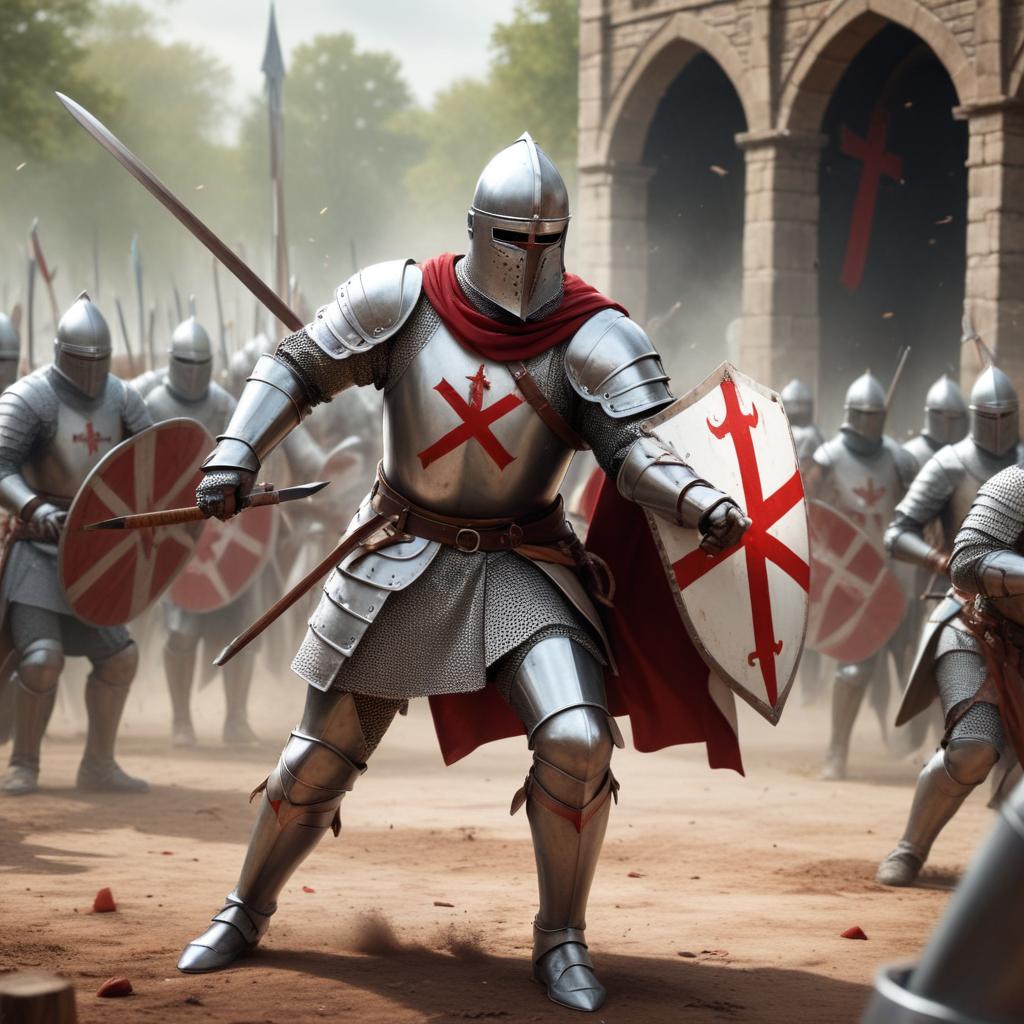
The Knights Templar underwent rigorous combat training designed to hone their knightly combat skills to the highest level. From their earliest days as novices, they were taught a wide range of martial disciplines, with a strong emphasis on swordsmanship, horseback riding, and battlefield tactics. Swordsmanship was a central pillar of their training, involving intensive drills with various bladed weapons to master precision, speed, and power. The knights practiced with real and wooden swords to perfect their strikes, parries, and thrusts, learning to adapt fluidly to different combat scenarios.
Horseback riding was equally critical, as mounted combat was a defining feature of their warfare style. Templar knights trained to maintain balance and control while wielding weapons on horseback, often engaging in simulated jousts and charges to improve their coordination and effectiveness. This skill was vital not only for offense but also for rapid maneuvering across the battlefield, allowing them to hold tactical advantages over their enemies.
Beyond individual combat proficiency, the Templars learned detailed battlefield tactics and formations designed to maximize their collective strength. They studied strategies for both offensive assaults and defensive stands, ensuring they could fight cohesively as a unit. These tactical lessons combined with their combat training ensured the knights remained disciplined, adaptable, and formidable in a wide range of combat situations, truly embodying the elite warrior ethos of the order.
Spiritual and Religious Education
The spiritual foundation of the Knights Templar was a critical component of their training and education. Central to the Templar spirituality was a deep commitment to their Christian faith, which guided every aspect of their conduct and duties. From the moment a recruit joined the order, they were immersed in rigorous religious education designed to strengthen their devotion, discipline, and understanding of their sacred mission.
Religious vows formed the cornerstone of the Templar identity. These vows—poverty, chastity, and obedience—were more than mere formalities; they symbolized the spiritual dedication required to serve both God and the order faithfully. The vow of poverty demanded a detachment from personal wealth and possessions, emphasizing communal life and selflessness. Chastity reinforced the Templars’ commitment to purity and spiritual focus, while obedience ensured a strict adherence to the order’s rules and hierarchy, reflecting their submission to divine and organizational authority alike.
In addition to these solemn vows, the Knights Templar engaged in daily religious practices that nurtured their spiritual life and reinforced their collective identity. Prayer, regular attendance at Mass, and participation in liturgical ceremonies were integral parts of their routine. These practices not only provided spiritual strength but also served as constant reminders of their sacred duties and the moral standards to which they were held.
Templar spirituality extended beyond personal piety to include acts of charity and service, reflecting the Christian ideal of loving one’s neighbor. This ethic of service influenced their approach to warfare and protection of pilgrims, framing their military role as a divine mission rather than mere combat. This spiritual and religious education was thus designed to create warrior-monks who viewed their martial prowess as a form of holy service, sanctified by their faith and religious obligations.
Through this comprehensive religious education, the Knights Templar developed a unique blend of martial and spiritual discipline. Their learning was deeply intertwined with Christian teachings, which shaped their worldview and daily conduct. The rigorous spiritual training ensured that every knight was not only a skilled soldier but also a devoted monk, persevering in religious commitment while fulfilling their roles as protectors of Christendom. This holistic approach to education underpinned the enduring legacy of the Templars as a religious and military order.
Religious Doctrine and Practices
The Knights Templar were deeply rooted in Christian doctrine, which formed the foundation of their religious education and way of life. As warrior monks, they adhered strictly to monastic rules that dictated not only their conduct but also their spiritual duties. Central to their training was the understanding and practice of the Christian faith, which emphasized obedience, chastity, and poverty as essential virtues.
Monastic rules for the knights were based largely on the Rule of St. Benedict, adapted to blend the rigors of military discipline with religious devotion. This rule structured their daily routine around prayer, chapel services, and communal living, fostering both spiritual growth and brotherhood. Their commitment to these rules reinforced the order’s unique identity as a religious and military fraternity.
Daily prayers formed a vital part of the knights’ schedule. They gathered multiple times a day for church services, including Matins, Lauds, Prime, Terce, Sext, None, Vespers, and Compline. These prayers not only punctuated their day but also reinforced their dedication to God and the church. The knights believed that their divine mission was continuously supported through these acts of worship and discipline.
In summary, the religious doctrines taught to the Knights Templar and the monastic rules they followed framed their existence as both soldiers and monks. Their daily prayers and church services were indispensable elements of their spiritual training, guiding their principles and actions throughout their service.
Moral and Ethical Training
The moral and ethical training of the Knights Templar was fundamental in shaping their behavior and guiding their actions both on and off the battlefield. Central to this education were the knightly virtues—qualities such as honesty, loyalty, and a steadfast commitment to service—which formed the core of their code of conduct. These virtues were not merely abstract ideals but active principles that the knights were expected to embody at all times.
Honesty was highly prized, ensuring that knights remained truthful in their dealings with comrades, superiors, and those they protected. This virtue fostered trust within the ranks and with the wider community, reinforcing the knights’ role as reliable defenders and leaders. Loyalty, another critical tenet, extended beyond simple allegiance to their order and superiors; it encompassed dedication to their mission and unwavering support of fellow knights, creating an unbreakable bond of brotherhood.
Service ideals were integral to the ethical framework of the Templars, emphasizing selflessness and a duty to protect the weak and uphold justice. This sense of service was deeply intertwined with their religious convictions, reinforcing their commitment to act righteously and with compassion. Together, these elements of moral and ethical training ensured that the knights conducted themselves with honor and dignity, reinforcing their revered status in medieval society and leaving a lasting legacy of principled chivalry.
Administrative and Strategic Education
The education that prepared knights of the Templar order for leadership roles went far beyond simple combat training. Central to the training regimen was a rigorous curriculum in Templar leadership, military strategy, and administration training, all designed to equip knights with the skills necessary to command and manage both men and resources effectively. As the order expanded, the need for competent leaders who could handle the complexities of wartime command and daily administration grew inevitably.
From early on, knights destined for leadership were taught the principles of military strategy, examining historical battles, siege tactics, and the efficient deployment of forces. This military education was not just theoretical; it was supplemented by practical exercises and war games that allowed future commanders to develop quick decision-making abilities and an acute understanding of battlefield dynamics. The study of tactics included both offensive and defensive operations, emphasizing the importance of discipline and coordination among troops for successful campaigns.
Equally significant was the administration training that underscored much of the Templar education for leadership. Command roles required knights to be adept administrators who could oversee finances, manage estates, and coordinate logistics critical to sustaining the order’s military and charitable missions. Leaders learned how to maintain meticulous records, budget resources effectively, and ensure the proper functioning of commandery operations, which was essential for maintaining the order’s extensive holdings across Europe and the Holy Land.
Leadership education also encompassed lessons in governance and diplomacy. Knights were trained to handle negotiations and alliances, which were vital for securing support and maintaining political relationships. This aspect of their education helped develop a cadre of leaders capable of navigating the complex political landscapes surrounding the Crusades and the order’s internal hierarchy. Thus, the combination of military strategy, administration training, and diplomatic skills formed a comprehensive education framework that produced competent Templar leadership.
In summary, the Templar training extended well beyond martial prowess. The order’s leadership education emphasized a blend of strategic military knowledge, practical administration, and governance skills. This preparation ensured that knights could rise to command roles and effectively lead Templar forces and manage the extensive resources entrusted to them, ultimately sustaining the order’s influence and operational success during its prime.
Military Strategy and Tactics
The Knights Templar underwent rigorous training in military strategy and battlefield tactics to effectively lead campaigns during the Crusades and other military endeavors. Their education emphasized battle planning, where knights learned to assess terrain, troop strength, and enemy weaknesses to devise comprehensive strategies that ensured victory. Siege warfare skills were also crucial, as many Templar campaigns involved the assault or defense of fortified cities and castles. They mastered the art of constructing and operating siege engines, setting blockades, and coordinating attacks to break enemy defenses efficiently.
Military leadership was a core component of their training. Templar knights were taught to inspire discipline, maintain order, and adapt quickly to dynamic battlefield conditions. They studied historical battles and campaigns for lessons on logistics, timing, and troop deployment. This deep understanding fostered the development of commanders capable of managing both knights and foot soldiers effectively, balancing aggressive maneuvers with strategic patience.
Through this comprehensive education, the Knights Templar became renowned for their formidable presence in battle, combining well-planned offensive tactics with defensive resilience. Their expertise in battle planning, siege warfare, and military leadership not only enhanced their success on the battlefield but also solidified their reputation as elite warriors and tactical innovators in medieval military history.
Order Administration and Governance
The education of Knights Templar extended beyond martial skills, placing significant emphasis on understanding the order’s hierarchical structure and governance. Central to their training was familiarization with the Templar hierarchy, which defined clear roles from the Grand Master down to local commanders. This organizational framework ensured efficient command and control, critical for managing the widespread estates and resources held by the order.
Knights were taught administrative skills necessary to oversee these extensive assets, including land management, financial accounting, and legal oversight. The order governance imparted a disciplined approach to stewardship, where knights learned to maintain records, handle revenues, and coordinate with other members and external authorities efficiently. This knowledge ensured that the Templar estates remained prosperous and supportive of their military and charitable missions.
Instruction also included adherence to the rules and regulations that governed the order’s operations. By ingraining a deep understanding of governance, knights could make informed decisions and maintain the order’s unity and integrity. The administrative training was essential for sustaining the logistical backbone necessary for the Templar’s expansive influence across Europe and the Holy Land.

I’ve always been fascinated by how societies and organizations shape history and everyday life. Writing about the interplay between cultural movements and institutional structures lets me explore the stories that connect past and present. I love digging into archives and sharing insights that help readers understand our collective journey.