The Knights Templar began as a modest brotherhood tasked with protecting pilgrims travelling to the Holy Land, yet within a generation they had fashioned a network that stretched from the Iberian Peninsula to the Levant and from the Low Countries to the Kingdom of Jerusalem. Their reputation for discipline, martial skill and unwavering loyalty attracted the attention of monarchs, merchants and the papacy, turning a religious order into a pan‑European institution. By the early thirteenth century the Templars operated hundreds of commanderies, each linked by a common set of rules, a shared emblem and a financial ledger that recorded deposits, loans and the movement of treasure. This article follows the evolution of that international web, examining how the order’s internal organization, banking practices and diplomatic ties created a prototype for modern transnational corporations.
Birth of a transnational order
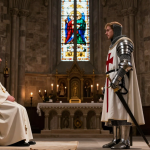
Founded in 1119 by French knights led by Hugues de Payens, the early order emphasized the Templar Vows and Discipline, taking vows of poverty, chastity and obedience while defending Christian pilgrims. Their first headquarters at the Temple of Solomon on Jerusalem’s Temple Mount gave the order its name and a sense of divine purpose that resonated with the Crusader states. Within a few years the order received papal endorsement from Pope Innocent II, granting it the right to collect tithes and to operate independently of local bishops. This papal backing was crucial; it allowed the Templars to bypass regional feudal obligations and to establish a legal identity that could be recognised in courts across Europe.
The rapid growth of the order was fueled by generous donations from nobles eager to secure spiritual merit for themselves and their families. By 1128 the Templars had already founded a house in England, and by 1139 they possessed a presence in France, the Holy Roman Empire and the Italian city‑states. Each new foundation was not an isolated monastery but a node in a coordinated system that reported to a central chapter in Jerusalem. This early framework set the stage for a truly international organization that could mobilise resources and manpower on a scale unmatched by contemporary monastic orders.
The preceptory system as an early franchise
Templar commanderies, also called preceptories, functioned much like modern franchise outlets, adhering to a standardized rulebook while adapting to local economic conditions. Each preceptory was overseen by a commander who answered to the Grand Master, and the commander’s duties included managing land holdings, recruiting knights and overseeing the storage of valuables. The order’s statutes required that every preceptory maintain detailed inventories of livestock, grain, wine and precious metals, creating a transparent accounting system that could be audited by traveling inspectors.
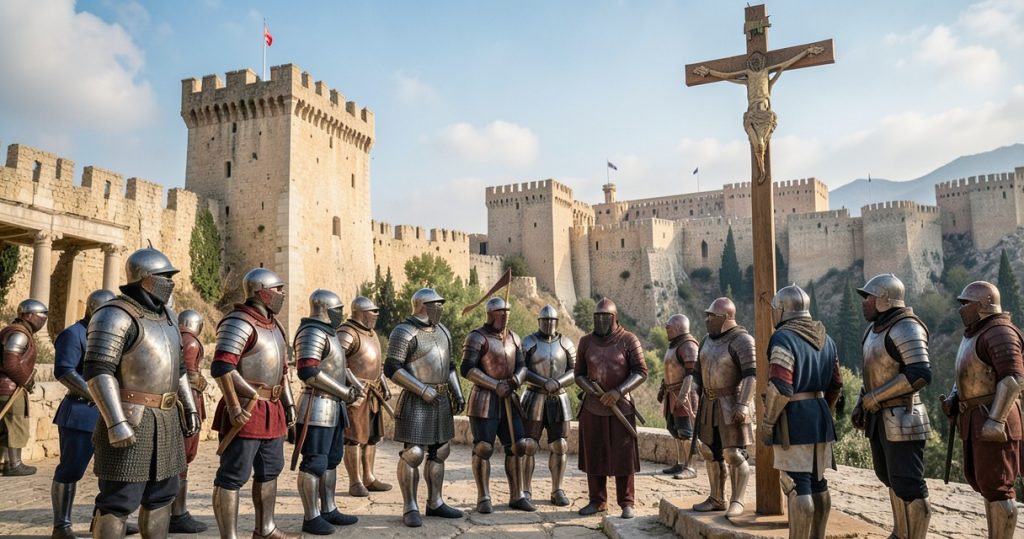
At its height the order operated roughly 300 preceptories, a figure derived from surviving charters and tax records in France, England, Portugal and the Baltic region. These sites acted as logistical hubs for crusading armies, providing food, horses and armaments to knights heading eastward. The uniformity of the preceptory model meant that a Templar in Spain could expect the same facilities and standards as a brother in Scotland, reinforcing a sense of shared identity that transcended national borders. This consistency also facilitated the rapid transfer of information and resources, a hallmark of the order’s international reach.
Banking and safe conduct across borders
One of the most enduring legacies of the Knights Templar reflects the purpose of the Knights Templar: the development of a primitive but highly effective banking system. Pilgrims and merchants could deposit gold in a Templar house in one city and receive a paper receipt that could be exchanged for the same amount in another house, often with a modest fee. This system reduced the risk of theft on long journeys and introduced a level of trust that was rare in medieval commerce. By the mid‑thirteenth century the order handled deposits estimated at several hundred thousand livres, a sum that dwarfed the revenues of many contemporary monasteries.

The Templars’ financial network extended to the courts of England, France and the Holy Roman Empire, where they acted as lenders to royalty and nobility. Records show that King Henry III of England borrowed large sums to fund his campaigns in France, and that the French crown used Templar credit to pay soldiers during the Albigensian Crusade. The order’s ability to move money quickly across borders, combined with their reputation for security, made them the preferred custodians of treasure for both secular and ecclesiastical patrons.
Royal alliances and diplomatic channels
Beyond their economic activities, the Knights Templar organizational structure fostered close relationships with the ruling houses of medieval Europe. Their loyalty to the papacy and their martial reputation earned them the trust of monarchs who often granted the order charters exempt from local taxes. In Portugal, the Templars received the island of Madeira as a fief, where they oversaw the early settlement and cultivation of sugar cane, laying the groundwork for the later Atlantic trade empire. In the Kingdom of Jerusalem, the order’s Grand Master served as a key advisor to the king, mediating disputes between Crusader factions.
Diplomatically, the Templars functioned as envoys, carrying messages between distant courts and the papal curia. Their network of safe houses allowed them to transport diplomatic correspondence under the protection of their white cross, a symbol recognised by both Christian and Muslim authorities. This role was particularly valuable during the periods of truce when trade and negotiation required reliable couriers who could cross contested territories without fear of arrest.
Suppression and the dispersal of assets
The order’s wealth and autonomy eventually provoked envy and suspicion among European rulers. In 1307 King Philip IV of France ordered the arrest of all Templars in his realm, accusing them of heresy, blasphemy and financial misconduct. The subsequent papal trial led to the dissolution of the order in 1312, and the confiscation of their properties by the Crown. Yet the network’s infrastructure did not vanish overnight; many preceptories were quietly transferred to the Knights Hospitaller, while others became the basis for emerging banking houses that continued to serve merchants and nobles.

Even after the official suppression, the Templar ledger system persisted in the form of private ledgers kept by former members and their associates. These documents reveal that the order’s financial practices influenced later institutions such as the Medici bank in Florence and the early joint‑stock companies of the Italian maritime republics. The dispersal of Templar assets thus contributed to the evolution of European finance, embedding the order’s methods into the fabric of commercial life for centuries to come.
Contemporary organizations that claim the heritage
In the modern era a variety of societies and fraternal orders have adopted the symbols and rituals of the medieval Knights Templar, positioning themselves as custodians of an ancient international tradition. The most visible of these groups are the Masonic bodies that incorporate Templar degrees into their ceremonies, linking contemporary brotherhood to the historic order’s ideals of charity, discipline and loyalty. In the United States, organizations such as the Order of the Knights of Malta and the modern Knights Templar of the United States maintain charitable programs that echo the medieval order’s support for pilgrims and the poor.
Beyond fraternal circles, scholarly associations and heritage foundations have created networks that map the locations of former Templar commanderies, fostering tourism and research across Europe and the Middle East. Digital platforms now allow members to share archival material, coordinate excavations and host conferences that examine the order’s impact on medieval society. These contemporary networks, while distinct from the original order, demonstrate how the concept of an international organization rooted in shared values continues to inspire groups dedicated to historical preservation and charitable work.

I’ve always been fascinated by how societies and organizations shape history and everyday life. Writing about the interplay between cultural movements and institutional structures lets me explore the stories that connect past and present. I love digging into archives and sharing insights that help readers understand our collective journey.