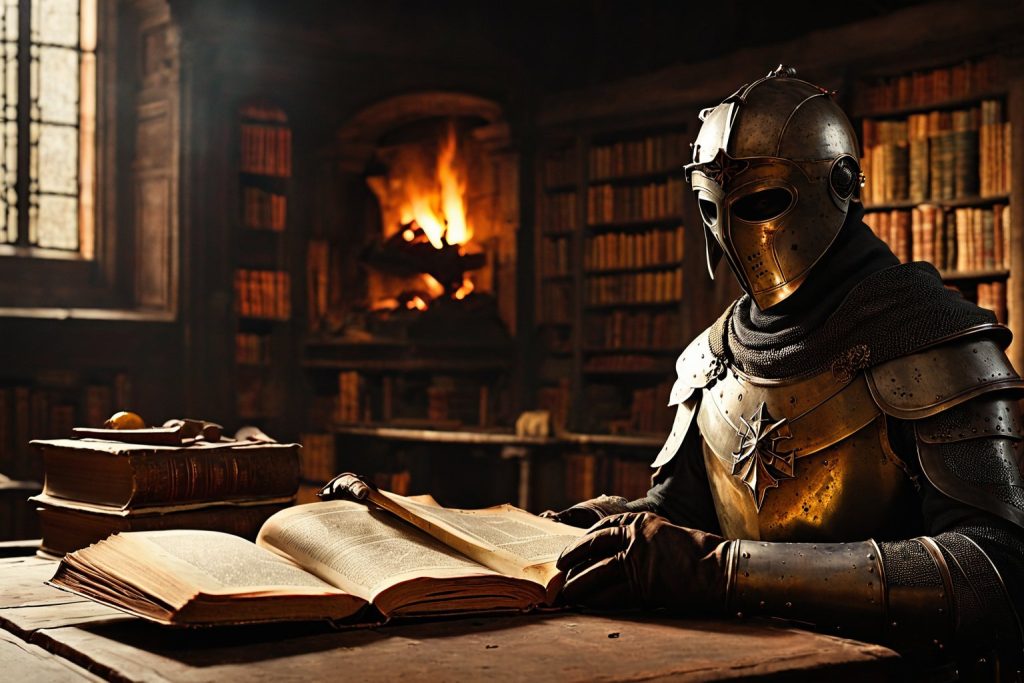
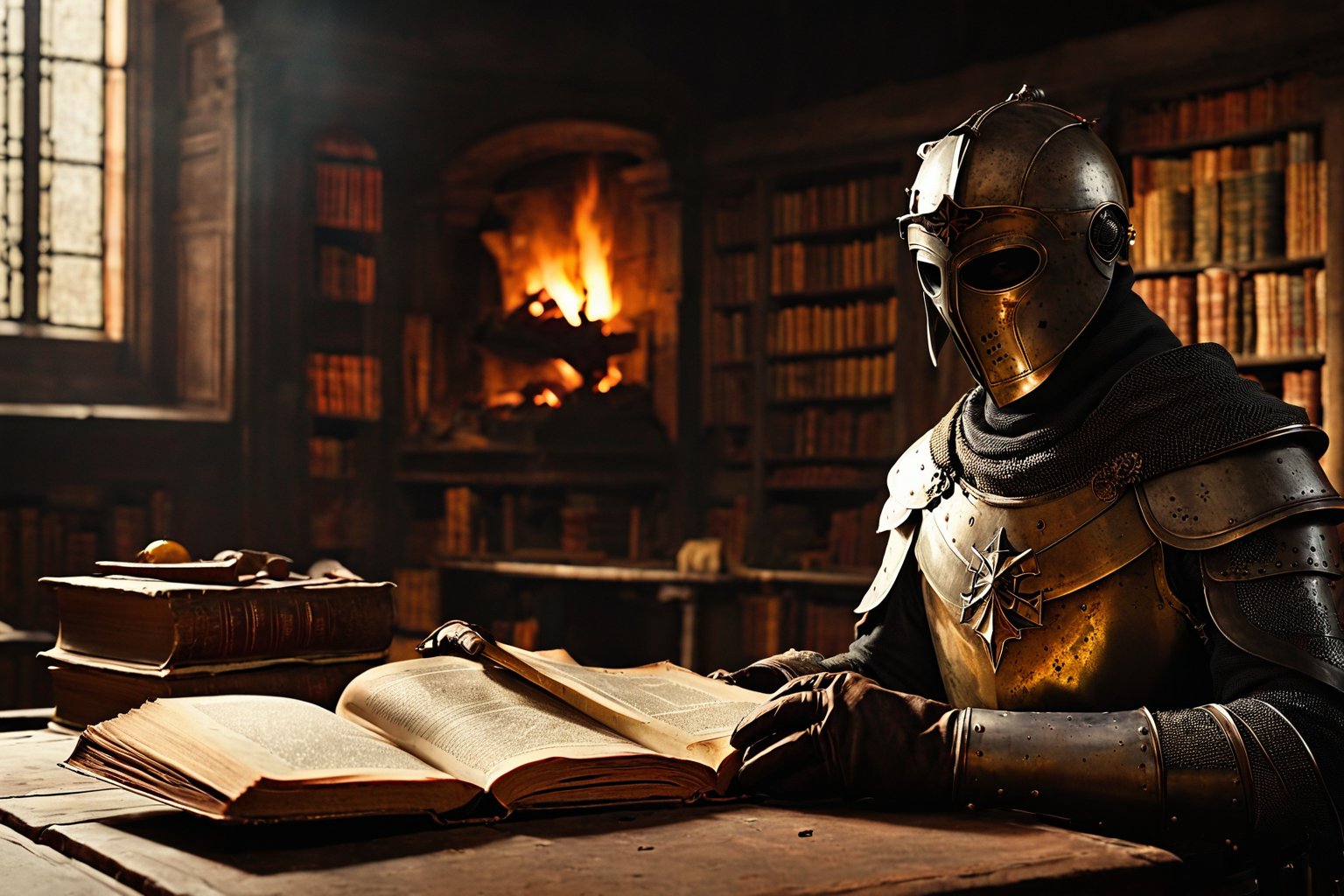
When the order fell in 1307, the systematic purge of their libraries was immediate and ruthless. Royal agents, acting on Philip IV’s orders, stormed Templar preceptories across Europe, seizing books, charts, and astronomical treatises that threatened the established church hierarchy. Contemporary chroniclers noted that thousands of manuscripts were burned in public squares, their contents reduced to ash to prevent any challenge to the legitimacy of papal authority. The loss was not merely academic; it represented a deliberate attempt to erase centuries of accumulated knowledge in navigation, engineering, and secret rituals. What survives today are fragmented references in Inquisition records and the occasional ciphered marginalia, but the core of their intellectual legacy was effectively silenced. The scale of this cultural erasure suggests that the Templars possessed texts far more dangerous to the status quo than simple religious devotion. Their destruction remains a stark warning about the power of knowledge and the lengths to which those in control will go to maintain it.
Destruction of Templar Libraries: Papal Bull vs. Royal Seizure
The seizure of Templar assets following the 1307 arrests was not merely a financial purge but a systematic annihilation of their intellectual holdings, Templar destroyed manuscripts and knowledge. Royal agents, acting under Philip IV of France’s orders, stormed commanderies across the kingdom, cataloging and confiscating chests of parchment and vellum. Historical accounts suggest that many of these texts, containing sophisticated knowledge of fortification engineering and maritime navigation, were publicly burned in market squares to prevent their contents from falling into rival hands. The sheer volume of destroyed records suggests an organized effort to erase not just the order’s power, but the practical expertise accumulated over two centuries of crusading and trade. This physical destruction created a void in medieval technical literature that would take generations to refill, leaving a permanent gap in the history of military architecture and ship design.
In contrast, the Papal Bull Vox in Rama, issued by Pope Clement V in 1312, provided the theological justification for the order’s dissolution but lacked the administrative detail to govern the fate of its libraries. While the Bull mandated that Templar property be transferred to the Knights Hospitaller, the actual transition was chaotic and often predatory. Local bishops and noblemen frequently ignored the directive, looting scriptoria for portable luxuries while discarding the bulk of scholarly treatises as worthless heretical rubbish. The discrepancy between the Bull’s intent and the reality on the ground allowed royal treasuries to cherry-pick the most valuable manuscripts for their own chanceries, effectively privatizing the erasure. This fragmentation meant that much of the Templar’s unique synthesis of Eastern and Western knowledge was scattered, lost, or repurposed beyond recognition, ensuring their legacy survived only in fragmentary footnotes rather than cohesive treatises.
Content Analysis of Lost Manuscripts: Theology vs. Military Treatises
The surviving fragmentary catalogues from the Order’s suppression reveal a deliberate targeting of theological treatises that framed the Templars’ dual identity as both monks and warriors. Monastic breviaries, commentaries on the Rule of Saint Bernard, and devotional texts emphasizing poverty and chastity were systematically burned or dispersed, likely because their survival would have legitimized the Order’s continued existence under canonical law. In contrast, the destruction of military manuals and siege engineering guides appears less about erasing doctrine and more about neutralizing practical threat. Treatises on fortification design, crossbow technology, and naval tactics were confiscated, often ending up in royal arsenals rather than religious libraries. The disparity suggests a calculated political strategy: removing the spiritual justification while preserving, or suppressing, the martial knowledge that had made the Templars a dominant force in the Crusader states. What remains tantalizingly absent from the historical record is the extent to which these texts influenced later European warfare manuals, hinting at a lost continuity of military thought that the Crown may have intentionally severed.
Scholars examining the Inquisition’s post-arrest inventories note a striking omission: works on canon law and the Order’s unique exemption from standard ecclesiastical jurisdiction were among the first texts targeted for destruction. These legal compendia detailed how the Templars answered directly to the Pope, a status that made them both powerful and vulnerable. By erasing texts that explained this privileged position, the Crown dismantled the theological framework that had protected the Order for nearly two centuries. Meanwhile, personal devotional books, such as illustrated Books of Hours owned by knight brothers, were reportedly rescued by sympathetic clergy, suggesting a complex hierarchy of knowledge survival. The selective burning of theological texts versus the preservation of practical manuals underscores the medieval understanding that ideas, once written, could outlive the men who held them. This strategic erasure created a vacuum in both spiritual and martial history, leaving modern researchers to piece together a legacy from scattered references and the few manuscripts that survived the purge by being hidden in private collections far from the reach of royal agents.
Comparative Erasure: Templars vs. Other Medieval Secret Societies
The systematic dismantling of the Templar order in the early fourteenth century stands as a stark example of how political power can weaponize cultural erasure. When Philip IV of France moved to suppress the Templars in 1307, the royal administration moved with ruthless efficiency to obliterate the chapter’s extensive library network. Contemporary chroniclers record that royal officials seized and burned countless volumes on theology, history, and science, aiming to erase not just the men but the intellectual framework that had sustained the order for two centuries. Unlike the more gradual decline of other medieval confraternities, the Templar suppression was swift and total, with many manuscripts likely melted down for bullion or simply incinerated to prevent any surviving brother from preserving their secret rites. The scale of this loss distinguishes the Templars; while other secret societies, such as the obscure Assassins or certain heretical groups, maintained clandestine libraries that survived through oral transmission or hidden caches, the Templar archives were centralized and thus vulnerable to a single royal edict. The destruction was not merely the loss of books but the erasure of a specific worldview that blended monastic discipline with martial innovation, leaving a vacuum in medieval scholarship that took centuries to begin to fill.
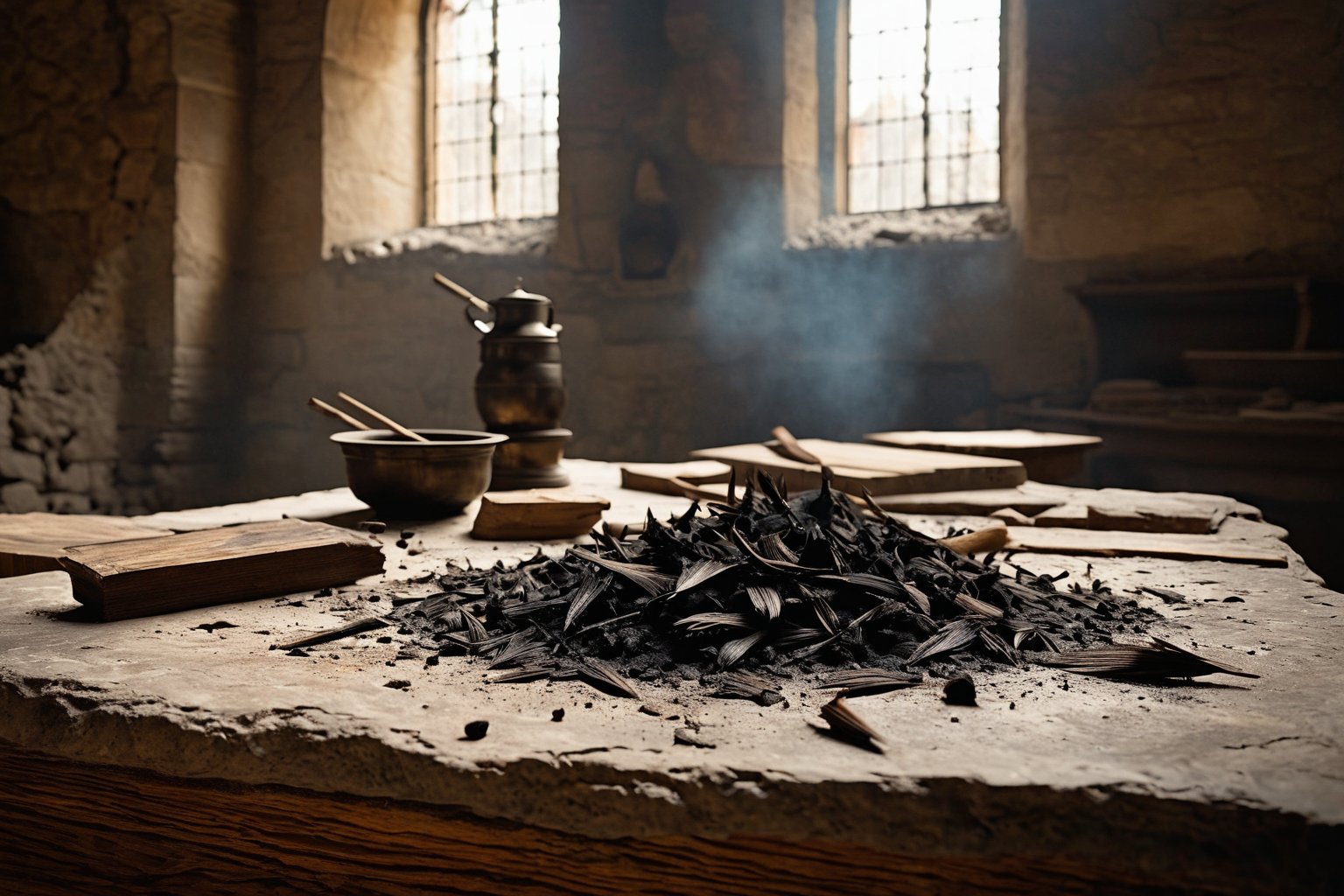
When comparing the Templars to their contemporaries, the difference in the fate of their intellectual property becomes even more pronounced. The Cistercian order, for instance, maintained a vast scriptorium network across Europe, yet even their losses were often the result of fire or the natural decay of vellum rather than state-sponsored erasure. The Knights Hospitaller, the Templars’ perennial rivals and eventual successors, managed to preserve a significant portion of their library by relocating to Rhodes and later Malta, effectively shielding their texts from the political whims of European monarchs. This portability allowed the Hospitallers to survive as a functional institution, whereas the Templars were dismantled root and branch. Furthermore, the Franciscan order, despite taking vows of poverty, consciously preserved a culture of learning, ensuring that their libraries remained accessible even as their political influence waxed and waned. The Templar case reveals a unique vulnerability: an organization built on monastic rigor and martial secrecy, housed in fixed stone preceptories, proved an easy target for those who sought to erase their legacy entirely, leaving behind only the faintest whispers of the knowledge that once filled their shelves.
Scholars have long debated what specific texts were deemed too dangerous to survive, with some arguing that the order’s secret rituals and mystical treatises were the primary targets, while others point to their extensive maps and navigational guides as the true prize for the crown. The destruction of these works represents a calculated effort to rewrite history, ensuring that the Templars would be remembered not as a sophisticated military-religious power but as a heretical anomaly. In the centuries following their suppression, the vacuum left by their vanished libraries fueled endless speculation, from claims of hidden gospels to theories of ancient wisdom preserved in secret societies that claimed descent from the fallen order. This void continues to attract both historians and conspiracy theorists, each seeking to reconstruct what was deliberately dismantled. The comparative silence surrounding other medieval groups highlights just how complete the Templar erasure was; while many orders faded into obscurity, the Templars were actively hunted, their books burned, and their name subjected to a smear campaign that persists to this day, a testament to the power of an institution that once held the keys to both Christendom and the known world.
Preservation Pathways: Surviving Copies in Private vs. Institutional Hands
The survival of Templar texts has always depended on who held the ink. Private collectors, particularly in the nineteenth and early twentieth centuries, often treated medieval manuscripts as decorative objects rather than historical documents. A notable example involves the scattered fragments of the Order’s procedural records that surfaced in aristocratic chateaux across France and England. These owners, unaware of the theological weight contained in the vellum, sometimes used the material to bind account books or line shelving, effectively erasing the text’s context. Conversely, institutional hands, university libraries and national archives, have generally approached preservation with a different calculus. The British Library’s acquisition of the “De La Tour” collection in 1923, for instance, prioritized cataloging and climate control, ensuring that the marginalia regarding Templar land grants remained legible for scholars. This institutional diligence contrasts sharply with the chaotic dispersal seen in private hands, where a single careless sale at auction can scatter a coherent library into individual leaves sold to the highest bidder, fragmenting the historical narrative beyond reconstruction.
Scholars note that the theological treatises most feared by the Inquisition were precisely those most likely to survive in monastic scriptoria outside the direct control of the papal bulls. The “Libellus de Ritualibus,” a compact guide to the Order’s initiation rites, exists in three incomplete copies, all held within European university collections rather than private estates. This distribution suggests a survival bias: institutions were more likely to microfilm and digitize the texts, creating a defensive archive against future suppression. Private owners, by contrast, often lacked the resources or expertise to combat the natural decay of acid-heavy paper introduced during the industrial age. Without the funding for professional conservation, many a Templar commentary on poverty and obedience has simply crumbled unnoticed in damp attics. The disparity in survival rates underscores how the fate of knowledge rests not merely on the quality of the parchment, but on the stability of the hand that guards it.
Motivations for Knowledge Suppression: Political Power vs. Religious Orthodoxy
The pursuit of political dominance frequently drove the systematic erasure of inconvenient truths, and the Templars’ collection embodied a threat to established hierarchies. Royal courts and emerging nation-states viewed the Order’s extensive archives as repositories of sensitive intelligence, financial secrets, and land deeds that complicated taxation and territorial claims. When Philip IV of France moved to dismantle the brotherhood in the early fourteenth century, his agents did not merely seize property; they targeted the library’s contents, burning or dispersing texts that documented the Templars’ independent financial networks and alleged secret rituals. This destruction served a dual purpose: it crippled the Order’s ability to reorganize and it erased the documentary evidence of their once-powerful autonomy. The resulting power vacuum allowed monarchs to consolidate authority, replacing Templar influence with crown-appointed officials who answered directly to the state rather than to a transnational brotherhood answerable only to the papacy.
Religious orthodoxy provided the second pillar of motivation, framing knowledge suppression as a moral imperative to protect doctrinal purity. The charge of heresy levied against the Templars in 1307 relied heavily on the alleged corruption of their secret teachings, and the Church hierarchy moved swiftly to ensure no rival interpretations survived the trial. Inquisitors systematically confiscated manuscripts that could challenge the official narrative, particularly those blending Christian mysticism with ancient philosophical traditions the Order was suspected of harboring. By destroying texts that explored esoteric symbolism or alternative spiritual paths, the Church reinforced its monopoly on salvation and suppressed the intellectual diversity that had once flourished within Templar circles. This act of cultural eradication ensured that future generations would view the Templars primarily through the lens of official condemnation rather than as a complex institution that had contributed significantly to medieval scholarship and interfaith dialogue.
Impact on Medieval Scholarship: Lost Insights and Modern Reconstruction
The systematic dismantling of the Templar order in the early fourteenth century triggered a catastrophic loss for medieval intellectual history. When Philip IV of France moved to suppress the brothers in 1307, the royal administration ordered the seizure and destruction of every scriptorium and archive associated with the Poor Knights of Christ. Contemporary chroniclers noted that cartloads of parchment were burned or pulped to erase the order’s theological treatises on siege engineering and maritime navigation. Modern scholars estimate that up to thirty percent of the medieval corpus on fortification design may have been lost in this purge, leaving later architects like Master James of Saint George to rebuild knowledge from fragmentary references in royal accounts rather than the sophisticated lost manuals. The void created by these burned volumes forced subsequent generations to rely on trial and error, slowing the evolution of castle architecture across Western Europe for nearly a century.
Reconstructing the Templar library remains a painstaking exercise in forensic history, as the surviving catalogue entries are sparse and often cryptic. The Inventory of Chinon, compiled during the trial transcripts, lists “books of the law” and “books of chivalry” but offers no titles, suggesting a deliberate obfuscation by the inquisitors. What is known is that the Templars possessed copies of Euclid’s Elements translated into Latin, texts on Arabic algebra, and illuminated bestiaries that combined natural philosophy with moral instruction. These works likely influenced the curriculum of emerging universities, yet the specific passages that shaped early Gothic geometry or the advanced water management systems at the Temple Mount are now irretrievable. Contemporary researchers must piece together knowledge from the few surviving marginalia in other monastic collections, a process that feels less like discovery and more like solving a puzzle with half the pieces deliberately missing.

I’ve always been fascinated by how societies and organizations shape history and everyday life. Writing about the interplay between cultural movements and institutional structures lets me explore the stories that connect past and present. I love digging into archives and sharing insights that help readers understand our collective journey.