Origins and Role of the Knights Templar
The Knights Templar history begins in the early 12th century during the Crusades, a series of religious wars aimed at reclaiming the Holy Land. Founded around 1119, the Templar origins lie in a small group of knights who dedicated themselves to protecting Christian pilgrims traveling to Jerusalem. This group, initially numbering just nine knights under the leadership of Hugues de Payens, quickly gained recognition and support from the Church and European nobility for their unique mission combining monastic life with martial prowess.
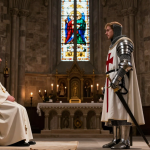
The primary purpose of the Knights Templar was twofold: to provide safety for pilgrims journeying through dangerous territories and to serve as a formidable military force in the Crusades. Unlike typical medieval knights, the Templars followed a strict code that involved vows of poverty, chastity, and obedience, aligning themselves more closely with religious monks than secular warriors. Their white mantles adorned with a red cross symbolized purity and sacrifice, reinforcing their spiritual commitment alongside their military duties.
Throughout their early history during the Crusades, the Knights Templar quickly distinguished themselves not only as fierce fighters but also as capable strategists and skilled financial administrators. Their participation in key battles, such as the Siege of Jerusalem in 1099 and subsequent campaigns, solidified their reputation within the complex and violent framework of medieval warfare. Additionally, their role extended beyond the battlefield, as they established a network of fortifications, commanderies, and even banking systems that supported their mission and expanded their influence across Christendom.
The evolution of these medieval knights from humble protectors to an influential military and religious order exemplifies the dynamic interplay of faith, warfare, and politics during the Crusades. The Knights Templar history is a testament to their adaptability and enduring legacy, which continues to captivate historians and enthusiasts alike.
Foundation and Early Missions
The Templar foundation traces back to the early 12th century, amidst the backdrop of the Crusades. Founded around 1119 by a small group of knights led by Hugues de Payens, the Knights Templar were established to provide protection to Christian pilgrims traveling to the Holy Land. Their mission was both religious and military: safeguarding these pilgrims from bandits and hostile forces during a time of great instability.
Initially, the Templars’ early missions focused on the safety and security of the pilgrimage routes, which were vital for the continuation of Christian worship in Jerusalem. They quickly gained the support of the Church and European nobility, thanks to their dedication and disciplined approach. This endorsement helped them grow in numbers and influence, allowing the order to expand its roles beyond simple guardianship.
Throughout the Crusades, the Knights Templar proved to be an elite fighting force, combining religious zeal with battlefield prowess. Their commitment to the cause of the Crusades and their expanding military responsibilities marked the beginning of their legendary status. The Templar foundation not only created a new type of warrior-monks but also laid the groundwork for their later pivotal role in medieval warfare and politics.
Religious and Military Objectives
The Knights Templar were unique in their fusion of spiritual devotion and martial prowess, embodying a powerful synthesis of religious mission and military objectives. Founded in the early 12th century, their primary goal was to protect Christian pilgrims traveling to the Holy Land, a task that demanded not only deep piety but also exceptional combat skills. This dual nature defined the Templar orders, as they were simultaneously monks and knights, bound by vows of chastity, poverty, and obedience, yet trained for battle and warfare.
Their religious mission was integral to their identity, with daily prayers and rituals reinforcing their commitment to God and the Church. This spiritual dedication justified and inspired their combat responsibilities, as they saw themselves as warriors of Christ, engaged in a holy struggle. The Templars’ military objectives were therefore not just about territorial conquest or defense but were framed within a divine mandate to reclaim and protect sacred lands. Their discipline, organization, and fierce loyalty made them formidable fighters and trusted protectors of Christian interests during the Crusades.
Balancing these intertwined roles required immense discipline and a clear sense of purpose. The Templar orders operated castles and fortifications, led troops into battle, and maintained a network of support across Europe and the Middle East. Their ability to combine religious fervor with practical military strategy made them a celebrated and feared force in medieval warfare, leaving a lasting legacy as both devout monks and masterful warriors.
Knight Templar Military Tactics and Equipment
The Knights Templar were renowned for their distinctive role in medieval warfare, combining disciplined military tactics with formidable knight armor that set them apart on the battlefield. Their strategy was not merely brute force; it was a combination of psychological warfare, formation discipline, and effective use of terrain that made Templar tactics highly successful during the Crusades.
One of the hallmark tactics of the Templars was their use of tight, disciplined infantry formations, which could act both offensively and defensively. These formations allowed the knights to maintain solid lines against cavalry charges or to push forward in coordinated assaults. As heavily armored cavalry, the Templars were often at the center of battle lines, where their presence would bolster the morale of Christian forces and intimidate opponents. Their battlefield roles extended beyond just fighting—they were often responsible for leading charges, securing strategic positions, and protecting vulnerable units during retreats.
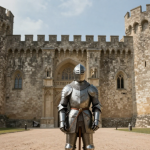
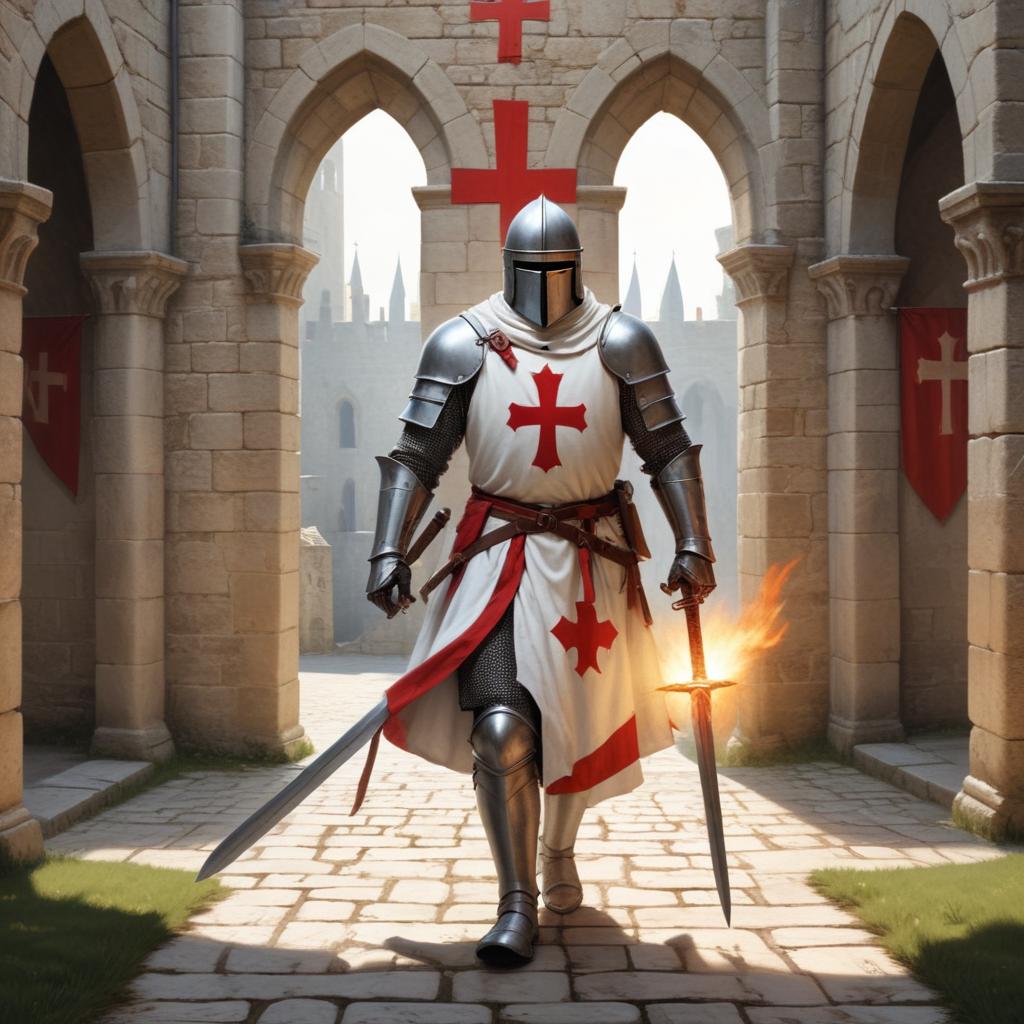
In terms of equipment, the Knights Templar wore iconic knight armor characterized by its practicality as well as symbolic design. Their white mantles emblazoned with a red cross were as much a psychological weapon as their physical armor, instilling fear and respect. The armor itself typically included a chainmail hauberk for flexibility combined with plate armor for enhanced protection, covering vital areas against arrows, swords, and lances. Helmets were usually conical, often featuring a nasal guard to protect the face.
Their armament was equally specialized for the demands of medieval warfare. The Templars favored weapons that complemented their heavy armor and battlefield roles—primarily swords, lances, and maces. The sword served as a versatile weapon suitable for close combat, while the lance was crucial during cavalry charges, used to deliver powerful, focused strikes. Maces were effective against armored foes, capable of delivering crushing blows that could dent or bypass armor.
Additionally, the Templar knights were trained extensively in horsemanship and combat tactics, making them effective shock troops and leaders in battle. Their military discipline, combined with their specialized armor and weaponry, allowed them to hold critical positions and execute complex maneuvers that often turned the tide in battles. By blending tactical ingenuity with superior knight armor and weaponry, the Knights Templar forged a legacy in medieval warfare that continues to fascinate historians and enthusiasts alike.
Battlefield Tactics and Formations
The Knights Templar were renowned for their disciplined approach to battle tactics and military formations during medieval warfare. Their success on the battlefield was largely due to their ability to coordinate tightly-knit units that operated with precision and unity. One of the most common battle tactics employed by the Templars was the use of a heavy cavalry charge. This involved a well-timed and powerful cavalry assault led by highly trained knights, aimed at breaking enemy lines with sheer force and momentum.
In addition to cavalry charges, the Templar warfare style emphasized the strategic use of military formations such as the shield wall and the wedge formation. The shield wall provided a defensive barrier, allowing infantry to hold positions firmly against enemy advances, while the wedge formation was designed to penetrate and disrupt enemy ranks effectively. These formations allowed the Templars to maintain flexibility on the battlefield and adapt to changing conditions quickly.
During sieges, Templar knights combined their combat skills with engineering prowess. They often used battering rams, siege towers, and undermining tactics to weaken fortifications. Their approach to siege warfare was methodical, focusing on cutting off supplies and forcing enemy surrender through attrition or precise assaults. The seamless integration of battle tactics and military formations in both open battles and sieges defined the formidable reputation of Templar warfare throughout the medieval period.
Armor, Weapons, and Horse Cavalry
The Knights Templar were renowned for their impressive Templar armor, which combined both protection and mobility essential for medieval combat. Their armor typically included chainmail hauberks, which were long shirts made of interlocking metal rings offering flexible defense against slashes and stabs. Over the chainmail, they often wore surcoats emblazoned with the distinctive red cross, symbolizing their order and serving as a form of psychological warfare by displaying unity and fearlessness on the battlefield.
In terms of medieval weapons, the Templars favored a versatile arsenal. Their primary weapon was the sword, designed for both cutting and thrusting. Complementing this were lances used during cavalry charges, maces to deliver crushing blows, and daggers for close combat. The Templars were also known to carry shields marked with the red cross, providing an additional layer of defense while allowing them to remain mobile and aggressive during battle.
The role of cavalry was central to Templar military tactics. Mounted on sturdy, well-trained horses, the knights could execute rapid maneuvers and powerful charges that often decided the outcome of battles. Their horses were armored to some extent, protecting them from enemy weapons, and were crucial for the swift movement across battlefields and during sieges. The combination of heavy cavalry equipped with advanced armor and weapons made the Knights Templar a formidable force in medieval warfare.
Impact of the Knights Templar on Medieval Warfare
On the channel TheTemplars they explain these battle tactics—you can watch it right here.
The Knights Templar significantly influenced medieval warfare through their innovative tactics and structured military organization, leaving a lasting imprint on the history of medieval military endeavors. Renowned for their discipline and strategic prowess, the Templars embodied a new approach to warfare that combined religious zeal with pragmatic battlefield effectiveness.
One of the core aspects of Templar influence was their pioneering use of coordinated infantry and cavalry maneuvers, which enhanced battlefield flexibility and responsiveness. The Templars were among the first to implement integrated units that could swiftly adapt to changing combat situations, setting a precedent in medieval military history for combined arms tactics.
Furthermore, the Templars revolutionized military fortification strategies. Their expertise in constructing and defending castles fortified against sieges changed the tactical landscape of medieval warfare. These fortresses served not only as defensive strongholds but also as bases for launching offensive operations, emphasizing the dual role of military engineering in Templar strategy.
The organizational model of the Knights Templar also contributed to their warfare success. Structured similarly to a modern military order, they maintained strict discipline, clear command hierarchies, and effective communication channels. This level of organization improved coordination during battles and campaigns, enabling the Templars to operate as a unified fighting force rather than disparate knights.
Additionally, the Templar influence extended to battlefield logistics and supply management, which were critical in sustaining prolonged military campaigns. Their ability to provision and equip their forces efficiently ensured sustained combat effectiveness, a vital innovation in the context of medieval warfare where supply lines were often vulnerable and disorganized.
In summary, the Templar influence on medieval military history is evident in their advancements in warfare tactics, organizational discipline, and logistical foresight. Their legacy persists in the way military orders and armies approached warfare during the Middle Ages, highlighting the significance of their contributions to the evolution of medieval warfare innovations.
Legacy in Crusader Battles
The Crusades stand as some of the most defining conflicts in medieval history, and the Knights Templar left an indelible mark on their outcomes. Among the many battles in which the Templar legacy played a critical role, the Siege of Acre (1189-1191) is often cited. Here, Templar knights were instrumental in organizing the defense and executing a disciplined counterattack that helped the Crusader forces eventually capture the city. Their combat skills and command structures boosted troop morale and effectiveness.
Another significant example is the Battle of Hattin in 1187. Although this battle is remembered as a devastating defeat for the Crusaders, the Templars’ steadfast resistance during the clash delayed the full collapse of the Crusader army, allowing some forces to retreat and regroup. This delay also underscored the Templars’ reputation as fierce and dedicated fighters, which became a cornerstone of their legacy during the Crusades.
The Templar knights’ impact extended beyond just combat. Their strategic use of fortifications and knowledge of battlefield tactics often gave Crusader armies the advantage. The cumulative effect of their contributions is evident in the extended campaigns of the Crusades, where their presence as elite warriors and leaders shaped the course of battles far beyond their numbers. This enduring battle impact cements the Templar legacy as a vital component of Crusader military success.
Influence on Later Military Orders
The Knights Templar established foundational precedents that deeply influenced later military orders and the broader tradition of knightly conduct. Their unique blend of religious devotion, military discipline, and administrative organization set a model that subsequent orders sought to emulate. The Templars’ structured hierarchy and code of conduct reinforced the ideals of loyalty, bravery, and piety, which became central to knightly traditions across Europe.
One of the key areas of Templar influence was their strict monastic rule combined with martial responsibilities, blending the spiritual and the martial in a way that redefined the role of knights. This synthesis inspired other military orders such as the Hospitallers and the Teutonic Knights, who adopted similar principles of combining religious vows with battlefield duties. The Templar focus on discipline and collective organization also influenced how these and later orders maintained cohesion and effectiveness in both warfare and governance.
Moreover, the Templars’ role in establishing fortifications and their innovative military tactics became a blueprint for defending Christendom in hostile territories. Their legacy extended beyond the battlefield to include a reputation for skillful diplomacy and strategic financial management, which helped sustain the military orders over time. This enduring influence ensured that the Templar contribution to military orders was not only tactical but also cultural, perpetuating the ideals of chivalry and service that remain integral to the knightly traditions today.

I’ve always been fascinated by how societies and organizations shape history and everyday life. Writing about the interplay between cultural movements and institutional structures lets me explore the stories that connect past and present. I love digging into archives and sharing insights that help readers understand our collective journey.