Historical Background of the Knights Templar
The Knights Templar, a strikingly influential order of medieval knights, were founded in the early 12th century during a time of great religious and military upheaval known as the Crusades. Established around 1119 AD, the order was created primarily to protect Christian pilgrims traveling to the Holy Land, a mission that would deeply intertwine their fate with the broader historical currents of the medieval period. The origins of the Knights Templar lie in the vision of a French knight named Hugues de Payens who, along with eight companions, sought to form a monastic brotherhood dedicated to ensuring the safety of these pilgrims along the dangerous routes leading to Jerusalem.
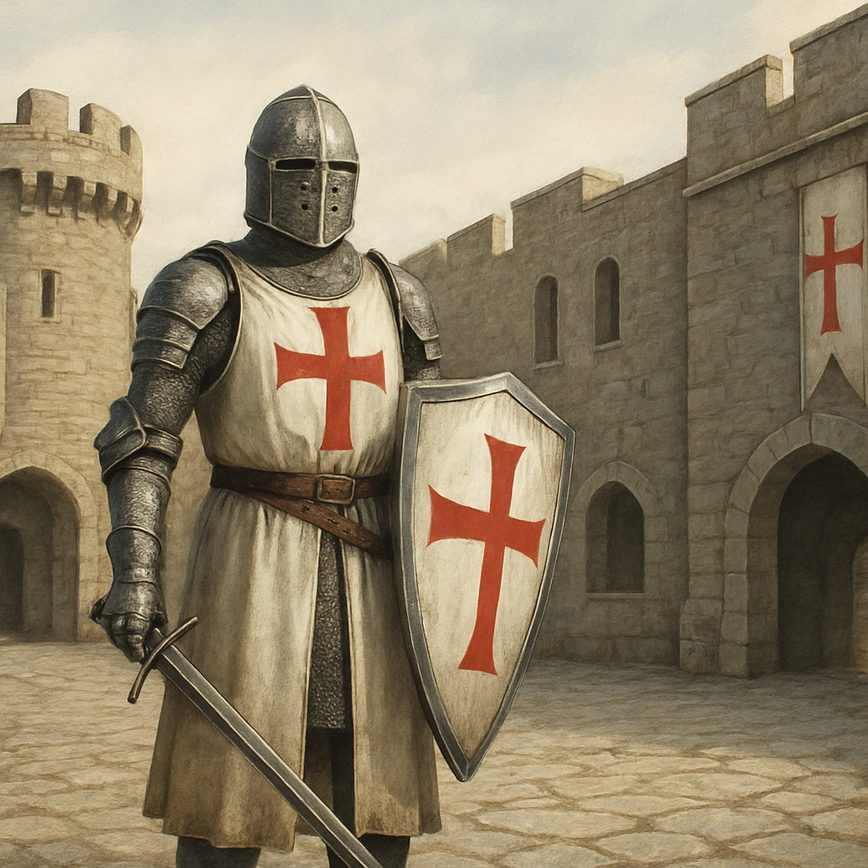
The foundation of the Knights Templar was initially modest, with the group receiving formal endorsement from the Church at the Council of Troyes in 1129, a decisive moment that gave them religious and military legitimacy. Their distinctive white mantles adorned with a red cross became symbols of their holy mission and commitment. Over the next few decades, the Knights Templar expanded rapidly, both in terms of numbers and influence, acquiring wealth, land, and political power across Europe and the Crusader states in the Middle East.
Their role in the Crusades was central and multifaceted. During these military campaigns aimed at reclaiming the Holy Land from Muslim control, the Knights Templar served not only as formidable warriors but also as skilled military strategists and defenders of Christian fortifications. Their disciplined approach and strict code of conduct exemplified the ideal of chivalry in the medieval era. The Order’s contributions were instrumental in many key battles and sieges. Beyond the battlefield, they also pioneered early forms of banking and finance, which helped support the logistics of the Crusades.
Throughout their early history, the Knights Templar quickly became intertwined with the ideals of medieval knighthood and chivalry. Their legacy influenced the development of knightly conduct and the ethos that defined the warrior class in medieval Europe. Despite facing eventual persecution and dissolution in the early 14th century, the history of the Knights Templar remains a fascinating and pivotal chapter in the story of medieval knights and the Crusades.
Formation and Mission of the Knights Templar
The formation of the Knights Templar traces back to the early 12th century during the time of the Crusades. Established originally to protect Christian pilgrims traveling to the Holy Land, the Templars quickly evolved from a simple religious order into a formidable military organization. The primary mission of the Knights Templar combined both religious devotion and military objectives. Their formation was deeply rooted in the desire to defend Christianity and secure safe passage for pilgrims, showcasing their dual role as monks and warriors.
The Templar goals were ambitious and multifaceted. On one hand, they were dedicated to a strict religious life, taking vows of poverty, chastity, and obedience, which aligned with their identity as a religious order. On the other hand, their mission demanded discipline and effective combat skills to protect the Crusader states and maintain Christian dominance in the region. The Templars were granted special privileges by the Church, including exemption from local laws and taxes, which enabled them to operate independently and focus fully on their sacred mission.
Throughout their existence, the Knights Templar maintained an impressive structure that balanced spiritual purposes with military imperatives. Their formation was not just about creating an army but building a brotherhood committed to a higher religious cause. This unique combination of spiritual dedication and martial prowess is what set the Knights Templar apart and heavily influenced the ideals of chivalry throughout medieval Europe.
Role in the Crusades and Military Campaigns
The Knights Templar played a pivotal role in the Crusades and various military campaigns throughout the medieval period. As one of the most formidable military orders, they were renowned for their discipline, combat skills, and strategic acumen in knight warfare. Their involvement in the Crusades was not merely as fighters but also as protectors of pilgrims traveling to the Holy Land. This unique role gave them an unparalleled reputation and influence in the realm of medieval warfare.
During the numerous Templar battles, the knights demonstrated advanced tactics that often gave them the upper hand against their adversaries. They were heavily armored and trained to fight both on horseback and on foot, which made them versatile soldiers in complex battle scenarios. Their organizational structure and emphasis on strict codes of conduct set standards for military discipline that were adopted by other medieval forces.
Moreover, the Templars’ military campaigns extended beyond direct combat; they built fortified castles and maintained supply lines that were critical to sustaining prolonged engagements. Their influence on knight warfare went beyond their active years, inspiring subsequent chivalric orders and shaping the conduct of medieval soldiers. The Knights Templar not only took part in crucial battles but also transformed the way warfare was conducted during the Crusades.
Knights Templar Principles and Code of Conduct
The Knights Templar were renowned for their strict code of conduct, which was deeply rooted in both their religious devotion and their martial responsibilities. This code of conduct was not merely a set of rules but a comprehensive ethical framework that guided their behavior on and off the battlefield. Central to the Templar principles was the fusion of faith, discipline, and service, which collectively shaped the Order’s identity and its members’ roles as warrior-monks.
At the heart of the Templar code was an unwavering commitment to chastity, poverty, and obedience, reflecting their monastic vows. These principles distinguished them from secular knights and instilled a sense of humility and spiritual purpose. The emphasis on poverty was particularly significant as it rejected worldly wealth and power, promoting a life dedicated to the protection of pilgrims and the defense of the Holy Land. This austere lifestyle was integral to the Templar ethos, reinforcing their dedication to a higher cause beyond personal gain.
In addition to their religious vows, the Templars adhered to medieval ethics that emphasized honor, loyalty, and courage—traits synonymous with chivalry. Their code of conduct required knights to be disciplined and virtuous, embodying the ideals of bravery in combat and respect for fellow Christians and adversaries alike. This moral compass guided their actions, ensuring that they maintained integrity and upheld justice during their campaigns.
The broader concept of chivalry was deeply influenced by the Templar principles, as the Order exemplified the ideal integration of spiritual values and martial prowess. Chivalry’s core tenets—honor, protection of the weak, and faithful service—were not only represented in Templar customs but also elevated through their rigorous standards. The Templars’ dedication to a code of conduct rooted in both religious devotion and ethical responsibility contributed significantly to the romanticized image of medieval knights as paragons of virtue.
Moreover, the Templar code of conduct emphasized communal living and mutual support among knights, reinforcing a brotherhood bound by shared beliefs and objectives. This solidarity was a vital aspect of their strength and resilience, as it cultivated trust and cooperation. Their disciplined approach to warfare and daily life served as an influential model for subsequent orders and helped to shape the evolution of chivalry throughout the Middle Ages.
In summary, the Knights Templar’s ethical and moral codes were foundational to both their Order and the broader ideals of chivalry. By intertwining Templar principles with medieval ethics, they established a rigorous code of conduct that underscored the spiritual and moral dimensions of knighthood. This legacy continues to be recognized as a defining influence on the chivalric tradition.
Religious and Moral Values of the Templars
The Knights Templar were profoundly shaped by their religious values, which were deeply embedded in their moral code and conduct. Central to their spirituality were the three solemn vows of poverty, chastity, and obedience. These vows were not mere formalities but served as the foundation for the Templars’ way of life and their unwavering dedication to their cause.
The vow of poverty required the Templars to renounce personal wealth and possessions, emphasizing communal living and reliance on the order’s resources. This spiritual commitment reinforced humility and self-sacrifice, distinguishing them from secular knights who might seek personal gain. By embracing poverty, the Templars demonstrated their total devotion to God and their mission.
Chastity was another crucial component of their moral code, guiding knights to abstain from marriage and sexual relations. This vow symbolized purity and spiritual focus, aligning the knights’ lives with religious ideals and enabling them to dedicate themselves wholly to their duties. It underscored the sacred nature of their role as warrior monks.
Obedience completed the triad of vows, requiring Templars to submit without question to the commands of their superiors and the Church. This vow fostered discipline, unity, and order within the ranks, reinforcing the collective strength of the order. The spiritual vows profoundly influenced the behavior of Templar knights, ensuring their lives were governed by faith and an unwavering commitment to their spiritual principles.
Influence on Medieval Chivalry and Knighthood
The Knights Templar had a profound chivalry influence that significantly shaped the ideals and practices of medieval knighthood. Their unique blend of martial prowess, religious devotion, and strict discipline contributed to the evolution of many elements that became central to the code of honor observed by knights throughout the Middle Ages. The Templar ethos emphasized not only bravery and combat skill but also loyalty, piety, and service—an integration of spiritual and martial values that helped define what it meant to be a true knight.
This influence extended beyond the battlefield, impacting the social fabric of medieval Europe. The social impact of the Templars’ conduct and their dedication to a higher moral and religious cause inspired the broader chivalric orders as well as secular knights. Their establishment of rituals, symbols, and ethical guidelines provided a template that other knightly orders sought to emulate. Thus, the Templars were instrumental in formalizing a chivalric ideal where honor was tied not just to martial success but to virtuous living and unwavering faith.
Ultimately, the Templar legacy helped crystallize the medieval concept of knighthood as a noble and sacred duty. Their example underscored the importance of integrating the spiritual dimension into the martial role, reinforcing a code of honor that elevated knights as protectors of both the realm and the church. This dual responsibility influenced medieval society and remains a hallmark of chivalric tradition to this day.
Legacy of the Knights Templar in Modern Chivalric Traditions
The legacy of the Knights Templar continues to profoundly shape modern chivalry, influencing contemporary knightly orders and permeating popular culture. As one of the most renowned medieval military and religious orders, their blend of martial prowess, spiritual dedication, and strict code of conduct laid foundational principles that resonate in chivalric traditions today. Many modern knightly orders draw inspiration from the Templar ethos, aiming to uphold ideals such as honor, courage, loyalty, and service to others.
In the realm of cultural influence, the Knights Templar hold a remarkable place. Their mysterious history, dramatic rise and fall, and symbolic iconography have sparked centuries of fascination, embedding themselves into the collective imagination through literature, film, and art. This cultural portrayal often emphasizes their role as paragons of chivalry, defenders of faith, and secret keepers, adding a layer of mystique that continues to attract enthusiasts and historians alike.
Modern chivalry, while adapted to contemporary values, often mirrors the structure and ideals championed by the Templars. Various knightly orders established today, whether fraternal or charitable, adopt rituals, insignias, and hierarchical frameworks reminiscent of the Templars. These organizations promote community service, ethical conduct, and the defense of human dignity, reflecting the enduring influence of the original order’s mission. The continued reverence for the Templar model underscores their vital role in defining the ethical and symbolic framework within which modern knighthood operates.
Moreover, the legacy of the Knights Templar extends into popular culture beyond formal institutions. Video games, novels, and movies frequently feature Templar characters and narratives, reinforcing their iconic status and perpetuating their ideals. This ongoing cultural dialogue keeps the spirit of Templar chivalry alive, adapting their story to address contemporary themes of justice, sacrifice, and valor. Through this multifaceted impact—spanning living traditions and mass media—the Knights Templar remain a pivotal influence on the concept and practice of modern chivalry.
Continuation in Contemporary Knightly Orders
Modern orders around the world often claim a direct heritage from the historic Knights Templar, preserving and revitalizing the chivalric values that once defined medieval knightly conduct. These contemporary knight organizations serve as a bridge, linking past traditions with present-day practices, thereby fostering a chivalric revival. By upholding codes of honor, charity, and service, these groups mirror the ethical framework and societal roles historically associated with the Templar legacy.
The Templar legacy inspires many of these modern orders to adopt symbolic rituals and hierarchical structures reminiscent of their medieval predecessors. Such practices reinforce a sense of camaraderie and dedication to noble causes, often involving charitable work and community service. In this way, these organizations not only celebrate the historical impact of the Templars but also actively contribute to contemporary social wellbeing, aligning their mission with the virtues of chivalry.
Moreover, modern knight organizations emphasize education and the promotion of historical awareness, drawing on the enduring mystique of the Knights Templar to engage new generations. Through public ceremonies, publications, and collaborative events, these groups sustain the spirit of knighthood, ensuring that the ideals of bravery, loyalty, and moral integrity continue to resonate in today’s society. This ongoing influence highlights the lasting relevance of the Templar heritage in shaping modern concepts of chivalry.
Representation in Popular Culture and Media
The Knights Templar have long held a captivating presence in popular culture and media, shaping modern perceptions of chivalry through their storied history and emblematic symbolism. Books, films, and television series often depict the Templars as the quintessential knights embodying the ideals of honor, bravery, and loyalty. This portrayal reinforces the romanticized image of chivalry in fiction, where the Templar symbolism serves as a powerful visual and thematic motif that connects contemporary audiences to medieval ideals.
In literature, various historical novels and fantasy works feature the Knights Templar as iconic characters symbolizing righteousness and mystical knowledge. Such representations broaden the scope of chivalry beyond battlefield valor to include a spiritual and moral dimension. Similarly, films like “Kingdom of Heaven” and “The Da Vinci Code” have popularized the Templars, mingling historical fact with legend and influencing how chivalry is imagined in mainstream media. The media’s fascination with Templar symbols—such as the red cross—adds layers of mystery and allure to the narrative of knighthood.
Through these diverse portrayals, the Knights Templar have become archetypal figures in the cultural imagination, epitomizing virtues that resonate with modern chivalric ideals. By weaving Templar symbolism into stories of heroism and moral struggle, popular culture sustains a vivid connection to the age of chivalry while adapting it to contemporary tastes and values.

I’ve always been fascinated by how societies and organizations shape history and everyday life. Writing about the interplay between cultural movements and institutional structures lets me explore the stories that connect past and present. I love digging into archives and sharing insights that help readers understand our collective journey.