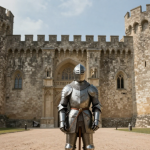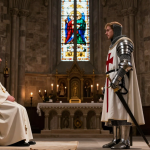
The Historical Background of the Knights Templar
The early 12th century was a time of great religious fervor and military activity in Europe and the Near East, largely shaped by the Crusades. These were a series of religious wars initiated by the Latin Church with the primary goal of reclaiming the Holy Land from Muslim rule. The First Crusade, launched in 1096, culminated in the capture of Jerusalem in 1099, but securing and defending these newly acquired territories proved to be a significant challenge.
In this crusades context, the need arose for organizations that could combine religious devotion with martial prowess. Thus, military monks emerged—warrior monks who took religious vows and dedicated themselves to protecting Christian pilgrims traveling to the Holy Land. They were warrior-monks unlike traditional monastic orders, blending pious life with military discipline and skills.
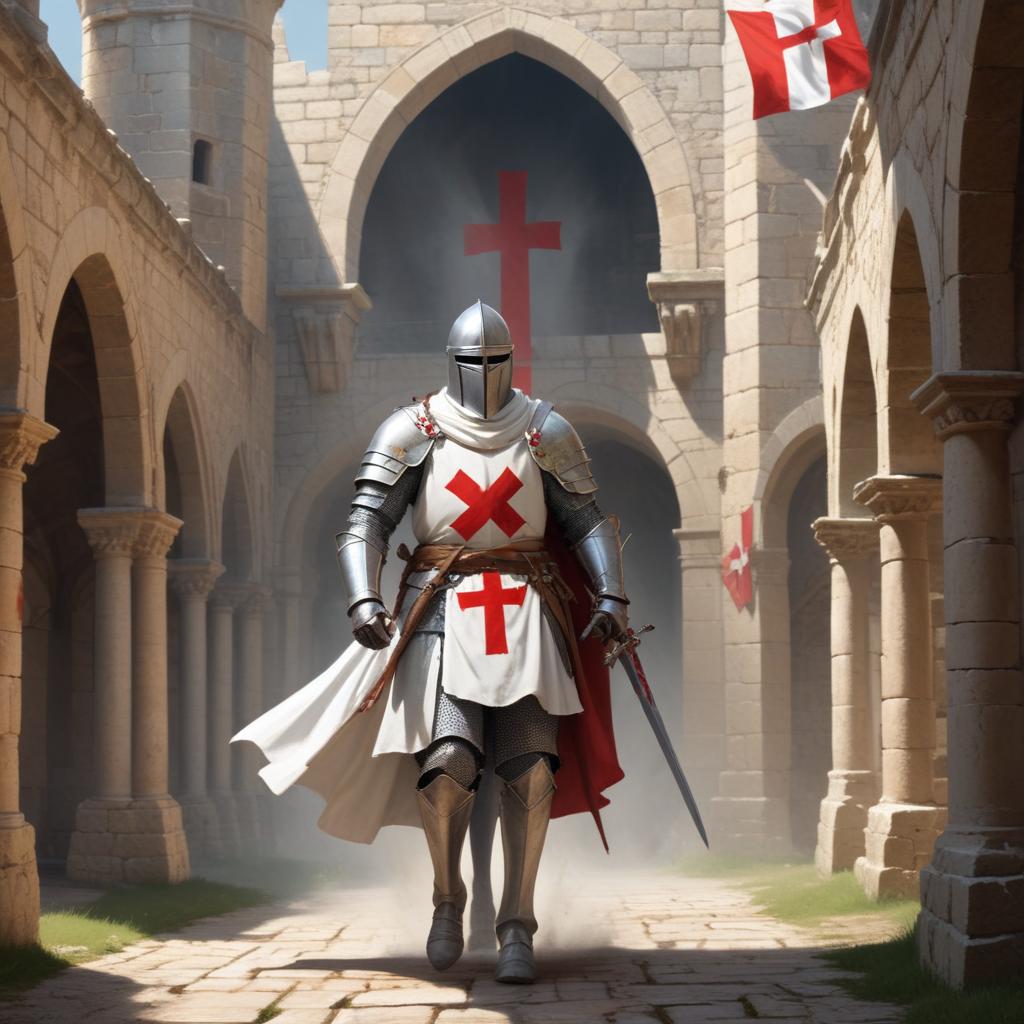
The Knights Templar were one of the most famous medieval orders founded in this turbulent period. Established around 1119, their initial mission was to safeguard Christian pilgrims in Jerusalem. The order quickly gained recognition and support from both religious and secular authorities due to their effective military role and strict religious code. Their distinctive white mantles emblazoned with a red cross became a symbol of their dedication and valor.
The rise of the Knights Templar and other military religious orders such as the Hospitallers and the Teutonic Knights marks a unique phenomenon in medieval history. These orders were crucial in the broader context of the crusades, acting not only as warriors but also as administrators, bankers, and diplomats. Their influence extended beyond the battlefield to shaping European politics and economics for centuries.
Understanding the Knights Templar history requires appreciating the complex social, political, and religious landscape of the early 12th century. The crusades created an environment where such military monks were not only necessary but revered as defenders of the faith and symbols of Christendom’s resolve in an era marked by conflict and transformation.
The Founding of the Order
The origins of the Knights Templar trace back to the year 1119, when a French knight named Hugh de Payens founded the order alongside eight like-minded warriors. This foundational moment marked the official establishment of the Templar founding, a small band of knights united by a singular mission. Their initial purpose was to protect Christian pilgrims traveling to the Holy Land following the successes of the First Crusade. These early members pledged themselves to a unique combination of monastic vows and military duties, setting the stage for what would become one of the most influential orders of the medieval period.
Hugh de Payens, the first Grand Master of the Knights Templar, gathered these original knights with a vision to provide armed escort and safety in a turbulent region fraught with political and religious conflicts. The group’s 1119 establishment was modest, yet significant—beginning as a humble fraternity dedicated to defending the vulnerable and maintaining Christian presence in Jerusalem. The commitment and bravery of these first members earned them the support of key church authorities, who recognized the strategic and spiritual importance of their mission.
The early years of the order were marked by austere living, dedication to faith, and readiness for combat. This dual focus on spirituality and military defense distinguished the Knights Templar, building their reputation and attracting more recruits. The founding of the order under Hugh de Payens established a powerful legacy, linking chivalry and religious devotion in a new and unprecedented way during the crusading era.
The Role of the Crusades
The Crusades, beginning with the First Crusade at the close of the 11th century, played a pivotal role in the creation of the Knights Templar. These military campaigns were launched with the primary goal of reclaiming the Holy Land from Muslim control. As thousands of Christian pilgrims journeyed to the sacred sites, they faced numerous threats including bandits and hostile forces. The increasing danger to pilgrims prompted the need for a dedicated force to ensure their safety and secure the routes to these holy places.
In response, the Knights Templar were established as a monastic military order tasked with protecting Christian pilgrims and their safe passage. Their mission went beyond guarding travelers; the Templars also took on the critical role of defending the Crusader states established in the Holy Land. These territories, gained through the Crusades, were fragile and constantly under threat from enemy forces, making the Templars’ military presence indispensable in maintaining Christian control.
Their dual purpose of safeguarding pilgrimage routes and bolstering the defense of Crusader states made the Knights Templar a formidable force during the turbulent period of the Crusades. Their efforts not only allowed for safer religious journeys but also helped to sustain the fragile Christian foothold in the Holy Land, highlighting the profound influence of the Crusades on their foundation and legacy.
Organization and Mission of the Knights Templar
The organizational structure of the Knights Templar was carefully designed to support their combined religious mission and military roles, creating a unique order that was both devout and formidable. Central to this structure were the knights, priests, and sergeants, each with distinctive duties that together upheld the Templar vows and their overarching aim to protect Christian pilgrims and territories.
At the heart of the Templar order were the knights, who took strict knightly vows of poverty, chastity, and obedience. These vows underscored their commitment not only to martial excellence but also to the spiritual ideals of the order. The knights served as the primary military force, armed and armored to defend the Holy Land and support Crusader campaigns. Their warrior ethos was blended with deep religious conviction, making them warrior-monks who zealously pursued both spiritual and martial objectives.
Complementing the knights were the priests, who provided the essential religious services within the order. Responsible for conducting masses, hearing confessions, and administering sacraments, the priests ensured that the spiritual well-being of the Templars was maintained. Their role was critical in reinforcing the Templar structure by inspiring faith and discipline amongst the members, thus strengthening their resolve in battle and in daily monastic life.
The sergeants formed a vital part of the Templar hierarchy as well, acting as both soldiers and support personnel. Unlike the knights, sergeants were lesser nobles or commoners who took simplified vows. Their military roles included duties such as escorting convoys, guarding fortifications, and engaging in combat when needed. Additionally, they managed logistical tasks vital to the order’s operations, facilitating the smooth functioning of the Templar infrastructure across Europe and the Crusader states.
Together, this tripartite organization created a disciplined and efficient military-religious order whose structure helped the Templars fulfill their dual mission. The religious mission centered on serving God through vows and worship, while the military roles focused on defending Christian lands and pilgrims. The integration of spiritual dedication with martial prowess embodied the essence of the Templar structure, setting them apart as a formidable force in medieval Christendom.
Vows and Code of Conduct
The Knights Templar were not only fierce warriors but also devout monks bound by strict religious vows. Upon joining the order, Templar knights took solemn vows of poverty, chastity, and obedience, which formed the spiritual foundation of their lives. These vows mirrored the monastic rules of medieval religious orders, emphasizing a life free from personal wealth and earthly attachments. Poverty required the knights to renounce all personal possessions and live communally, trusting entirely in the order for their needs. Chastity demanded the knights abstain from marriage and all forms of personal indulgence, dedicating themselves fully to their sacred mission. Obedience was absolute, ensuring that each knight submitted to the command of the Grand Master and the hierarchical structure of the order.
The Templar vows were reinforced by a rigorous code of conduct that governed every aspect of their behavior. This code combined the discipline of monastic life with the practical demands of military service. Knights were expected to maintain a high level of military discipline, demonstrating courage and skill in battle while adhering to the strict ethical standards of the order. Their daily routines included prayer, study, combat training, and duties in the community, all performed with precision and devotion. Breaches of conduct were met with severe penalties, underscoring the importance of unity and order within the ranks. This fusion of monastic rules and military discipline created a unique brotherhood of warrior monks dedicated to protecting Christendom and serving their spiritual cause with unwavering loyalty.
Military and Protective Duties
The Knights Templar played a crucial military role during the Crusades, especially in the protection of pilgrims traveling to the Holy Land. Their primary mission was to ensure the safe passage of Christian pilgrims who faced constant threats from bandits and hostile forces along the pilgrimage routes. To achieve this, the Templars established an extensive network of fortified castles and strongholds strategically positioned across the region.
These fortresses served as bastions of defense and bases for launching military campaigns against opposing forces. The Templar military role extended beyond mere escorting duties; they were seasoned fighters who contributed significantly to key battles and skirmishes throughout the Crusades. Their disciplined and well-trained knights formed an elite fighting force known for their courage and tactical prowess on the battlefield.
By defending key fortresses, the Knights Templar maintained control over critical territories and protected vital supply lines, which were essential for sustaining the crusader states. Their efforts in fortress defense helped to establish a sense of security in the volatile region and played a strategic role in the broader military campaigns initiated by the Crusaders. Overall, the Templar military role was integral to the survival and operations of the Christian forces in the Holy Land.
Legacy and Influence of the Knights Templar
The legacy of the Knights Templar has endured for centuries, extending far beyond their original role as a medieval Christian military order. Their impact is evident not only in history but also within modern cultural consciousness, surrounded by myths and legends that continue to fascinate people around the world. The Templar legacy is a unique blend of tangible contributions and enigmatic folklore, which together reinforce their prominent place in history.
Among the most significant tangible legacies left by the Templars are their innovative financial practices. Long before the establishment of modern banking systems, the Knights Templar developed sophisticated financial techniques designed to support their wide-reaching operations across Europe and the Holy Land. They pioneered early forms of banking, including issuing letters of credit that allowed pilgrims and nobles to deposit funds in one location and withdraw them in another, minimizing the risks of carrying physical money during long and perilous journeys. This financial innovation laid the groundwork for systems that would evolve into the modern banking and financial services industry.
The influence of the Knights Templar extends into various modern orders and organizations that draw inspiration from their structure, ideals, and mystique. Many chivalric and fraternal organizations claim a historical or symbolic link to the Templars, emphasizing values such as honor, bravery, and charity that the original order held dear. This continuous homage ensures that the Templar legacy is not merely a historical footnote but a living tradition influencing contemporary groups.
Perhaps even more captivating than their historical achievements are the myths and legends that have grown up around the Knights Templar. From tales of hidden treasures and secret knowledge to conspiracy theories involving the Holy Grail and ancient relics, the Templars occupy a prominent place in popular mythology. These stories have been reinforced and embellished through literature, film, and popular culture, making the Knights Templar a symbol shrouded in mystery and intrigue.
In summary, the enduring appeal of the Knights Templar is due to their remarkable blend of financial innovation, historical significance, and mythical allure. Their legacy influences both the practical world of finance and the imaginative realms of modern storytelling, securing their position as one of the most intriguing and influential orders in history.
Financial and Political Influence
The Knights Templar played a revolutionary role in medieval banking, setting the foundation for modern financial systems. They established an innovative network of Templar banking houses across Europe and the Holy Land, allowing pilgrims and nobles to deposit funds in one location and withdraw them in another safely. This early form of wealth management significantly eased the risks associated with traveling, while also boosting the Templars’ financial power. Their banking services extended beyond individuals, encompassing royal patronage, which forged powerful alliances with European monarchs.
The Templars’ close relationship with royalty was rooted in mutual benefit. Monarchs relied on the Order for secure loans and financial advice, while the Templars gained privileges, lands, and protection that enhanced their wealth and influence. This symbiotic bond granted the Knights Templar access to the highest echelons of European politics, where they frequently acted as diplomats and advisors, shaping political decisions across kingdoms. Their wealth and political connections made them a formidable force, often feared and envied by secular and ecclesiastical powers alike.
However, their significant political influence and financial clout eventually contributed to their downfall. Competing nobility and the crown, indebted or threatened by the Templars’ power, played a critical role in the Order’s suppression in the early 14th century. Nevertheless, the legacy of Templar banking, royal patronage, and political involvement remains a key chapter in medieval European history, illustrating the complex interplay between finance and power during this period.
Myths, Legends, and Cultural Impact
The Knights Templar have long been enveloped in an aura of mystique, spawning a wealth of Templar myths that continue to captivate modern audiences. These myths often portray the Templars as guardians of secret knowledge and powerful relics, fueling theories of them as a secret society with hidden agendas. Such speculation has been the bedrock for countless conspiracy theories, suggesting the Templars influenced global events from behind the scenes or even survived their official dissolution in clandestine forms.
This fascination with the Templars has permeated popular culture, inspiring a rich tapestry of books, movies, and television series. From Dan Brown’s bestselling novel “The Da Vinci Code” to films like “National Treasure” and “Kingdom of Heaven,” the image of the Templars as enigmatic crusaders guarding great secrets continues to enthrall audiences worldwide. These portrayals blend historical facts with fiction, creating a compelling narrative that blurs the lines between legend and reality.
Beyond entertainment, the myths surrounding the Knights Templar tap into a deeper cultural fascination with mystery, loyalty, and power. Modern groups sometimes claim descent or inspiration from the Templars, further embedding their legacy into contemporary society. The enduring allure of these knights in popular culture reflects not only their historical significance but also humanity’s enduring quest for hidden truths and legendary heroes.

I’ve always been fascinated by how societies and organizations shape history and everyday life. Writing about the interplay between cultural movements and institutional structures lets me explore the stories that connect past and present. I love digging into archives and sharing insights that help readers understand our collective journey.