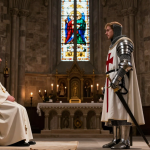
Chastity was another cornerstone of the Templar’s moral code. Knights were expected to abstain from marriage and sexual relations, dedicating themselves entirely to God and their order. This vow was seen as a way to achieve spiritual purity and to prevent any divided loyalties that could arise from family ties.
Obedience required the knights to submit fully to the commands of the order’s leadership, reflecting their commitment to the collective mission above individual will. This vow ensured a disciplined and united brotherhood, capable of acting with cohesion and without hesitation in both spiritual and military matters. Together, these vows and the overarching moral code defined the spiritual duties of the Knights Templar, forging a life of devotion, sacrifice, and unwavering faith.
Rules of Conduct and Military Discipline
The Knights Templar were renowned not only for their devout spirituality but also for their strict military discipline, which was foundational to their effectiveness and cohesion on the battlefield. The code of conduct among the Templar knights disciplined every aspect of their military behavior, ensuring that each member acted with honor, obedience, and rigor in combat and everyday duties. This military discipline was enforced through clear and unwavering combat rules that all knights were required to follow.
Combat rules dictated the engagement protocols to maintain order and maximize efficiency during battles. Knights were expected to fight bravely and strategically, always prioritizing the collective mission over personal glory. Acts of cowardice or disobedience could lead to penalties or expulsion from the order. The code of conduct emphasized respect towards fellow knights, demanding loyalty and mutual support to uphold the strength of the order’s ranks under pressure.
Beyond the battlefield, military discipline extended to maintaining a disciplined lifestyle, adherence to strict schedules, and obedience to commanders within the order’s hierarchy. This ensured that even in camp, discipline was preserved, fostering readiness for sudden combat situations. Strict silence during prayer, proper maintenance of weapons and armor, and decorum during official gatherings exemplified the holistic nature of the Knights’ military discipline, embedding the code of conduct in every aspect of their daily life.
Daily Life and Social Rules
The daily life of a Knight Templar was governed by a strict regimen designed to cultivate discipline, devotion, and unity among its members. Mornings typically began with prayers at dawn, followed by communal meals conducted in silence to promote contemplation. The Templar rules emphasized punctuality and order, ensuring all knights participated in assigned duties, whether related to maintenance, training, or religious observance.
Social conduct within the order was characterized by mutual respect, humility, and brotherhood. Interactions between knights were formal but warm, always reflecting the values of loyalty and service. The Templar code forbade unnecessary disputes and encouraged reconciliation when conflicts arose. Communication was often brief and purposeful, upholding the decorum expected in such a disciplined environment.
Rituals played a central role in reinforcing the spiritual commitment of the Templars. Daily prayers were complemented by regular participation in Mass, confession, and periods of fasting, aligning physical discipline with spiritual growth. Special ceremonies marking ranks and duties punctuated the year, enhancing a shared sense of identity and purpose. These practices helped maintain the moral fabric and cohesion critical to the order’s enduring legacy.
Legacy and Influence of the Knights Templar Code
The legacy of the Knights Templar’s rules and code extends far beyond their medieval origins, leaving a profound influence on later organizations, legal systems, and popular culture. Rooted in a rigorous set of principles that governed the conduct of the order’s members, their code has been studied and admired for centuries, often cited as an early example of structured medieval law that balanced spiritual devotion with martial discipline and ethical behavior.
One of the most significant ways the Knights Templar code impacted later organizations is through the establishment of framework and ideals that many chivalric and fraternal groups sought to emulate. The Templar’s emphasis on loyalty, secrecy, and brotherhood has inspired various secret societies and modern fraternal orders, which have adapted these tenets into their own rituals and ethical guidelines. This influence is evident in the codes of conduct and ceremonial practices of groups such as the Freemasons, who regard the Templars as a symbolic predecessor.
Moreover, the influence of the Templar code reverberates in the development of medieval law. Their rules were among the earliest attempts to codify behavior for a religious-military order, providing a model for later legal frameworks that governed knights and similar institutions. The Templars’ statutes emphasized discipline, justice, and the importance of upholding promises and oaths, values that echoed in the broader legal traditions of Europe. This laid foundational ideas that contributed to the evolution of both secular and ecclesiastical law throughout the Middle Ages and beyond.
In popular culture, the knights’ legendary status and their code have captured the imagination of writers, filmmakers, and artists. Their mysterious aura combined with a strict moral and ethical code makes for compelling storytelling, influencing everything from literature to movies and video games. The persistence of Templar symbolism in modern times speaks to the enduring cultural impact of their code, which continues to be a source of fascination and myth-making.
Ultimately, the legacy and influence of the Knights Templar code lies not only in its historical function but also in how it shaped the ideals of duty, honor, and justice that resonate in various domains today. Through their pioneering integration of rigorous moral and legal standards within a military order, the Templars left a lasting imprint that bridges the medieval past with the modern world.
Impact on Modern Chivalric Orders
The legacy of the Knights Templar continues to resonate strongly within modern orders that uphold the principles of chivalry. These contemporary groups often draw inspiration from the Templar code, which emphasized values such as honor, loyalty, and self-discipline. This influence is evident in how many modern orders structure their rituals, codes of conduct, and charitable activities.
Modern orders inspired by the Templar tradition frequently incorporate a blend of martial, religious, and ethical ideals, mirroring the original Templar emphasis on spiritual devotion combined with knightly duties. The Templar influence is particularly notable in fraternal organizations that adopt hierarchical ranks, ceremonial garb, and a strong commitment to brotherhood and service. These elements reflect the medieval Templar’s dedication to a strict moral and ethical framework.
Worldwide, the inspiration from the Templar rules has helped shape the identity of many organizations that promote chivalry today. From charitable endeavors to the preservation of historical heritage, these modern orders aim to embody the spirit of the Templars’ enduring code. In doing so, they keep alive the ideals that once defined one of history’s most renowned knightly orders, proving that the Templar influence on the concept of chivalry remains significant and relevant.
Representation in Popular Culture and Media
The Knights Templar rules and code have long fascinated creators and audiences alike, finding a prominent place in popular culture and media. Modern books, movies, and television series often portray the Templars through the lens of mystery and intrigue, blending historical facts with legend and speculation. These depictions frequently emphasize the Templar myths, such as secret rituals, hidden treasures, and covert missions, which are loosely based on their actual codes of conduct and organizational discipline.
In literature, the Templar code is sometimes depicted as a powerful source of moral and martial guidance, inspiring characters to uphold ideals of honor, bravery, and loyalty under often perilous circumstances. This portrayal helps keep the essence of the Templar rules alive, even if fictional narratives take creative liberties. Similarly, in movies and documentaries, the media portrayal tends to highlight the dramatic tension between the Templars’ strict rules and the external threats they faced, enhancing their legendary status as defenders of a hidden truth.
Despite the ample fictionalization, the continued interest in Knights Templar in popular culture reflects society’s fascination with secretive orders and the powerful codes that shaped them. The Templar myths embedded in modern media not only entertain but also provoke curiosity about the real historical principles and ethical frameworks that governed the knights’ lives.
Introduction to the Knights Templar Rules and Code
The Knights Templar, an esteemed medieval order, remain one of the most intriguing subjects in history due to their unique blend of military prowess, religious devotion, and strict internal governance. Founded in the early 12th century during the Crusades, the Templars were initially tasked with protecting Christian pilgrims traveling to the Holy Land. Over time, their role expanded, and so did their code of conduct, which became a cornerstone for their identity and operations.
The rules of the Knights Templar, often referred to as the Templar code, were not merely guidelines but a comprehensive moral and behavioral framework. Derived from monastic principles combined with the rigors of knighthood, these rules fostered discipline, loyalty, and a shared sense of purpose. The medieval code that governed their actions provided a strict regimen that ensured every member adhered to vows of poverty, chastity, and obedience, making them distinct from secular knights of the era.
Historically, the rules and code of the Knights Templar were drafted based on the Latin Rule, a set of precepts established to regulate their community life and battle conduct. The rules addressed aspects ranging from daily prayers and communal meals to the treatment of fellow brothers and the management of resources. This set of regulations was essential in creating a cohesive order that could operate effectively across various regions and cultures.
Understanding the history of Templars through their rules overview reveals much about medieval society’s values and the challenges faced by a military religious order. Their code not only reinforced spiritual devotion but also played a crucial role in shaping their remarkable reputation. The disciplined lifestyle and ethical standards codified in their rules helped the Knights Templar become a powerful and influential force during the Crusades and beyond, leaving a lasting legacy in both military and religious history.
Historical Background of the Templar Code
The origins of the Knights Templar’s rules are deeply rooted in the tumultuous historical context of the early 12th century. Founded around 1119, the order emerged shortly after the First Crusade, a period marked by religious fervor and the need for protective forces in the Holy Land. The Templars were a unique blend of monastic discipline and military prowess, designed to safeguard pilgrims traveling to Jerusalem while defending Christian territories from Muslim forces. This backdrop of conflict and devotion heavily influenced the development of the Templar code, which combined strict religious observance with a rigorous warrior ethic.
Templar history reflects the melding of medieval knights’ chivalric ideals with a new kind of spiritual military order. The code they followed was shaped by the need for absolute loyalty, piety, and obedience to the order’s hierarchy, underpinned by monastic rules adapted from the Cistercian tradition. These regulations were crafted to maintain discipline and unity among the knights, whose role was crucial during the volatile period of the Crusades.
The origins of the Templar code cannot be separated from the order’s broader mission and the societal influences of the medieval era. It was both a product of its time and a pioneering model for knightly conduct, setting the foundation for how military orders would operate in subsequent centuries. Understanding this historical background is essential to grasping the full significance of the Templar rules and their enduring legacy in Templar history and medieval knights’ culture.
Purpose and Importance of the Templar Code
The purpose of the Templar code was fundamental to maintaining the strict discipline required within the Order of the Knights Templar. This code of conduct was not merely a set of rules but a binding moral framework that ensured each member adhered to a high standard of behavior and responsibility. The importance of the code was evident in how it fostered unity among knights, creating a cohesive brotherhood committed to their sacred mission.
Templar discipline, as dictated by the code, was essential for the order’s operational effectiveness during medieval times. The knights faced harsh and challenging circumstances, from battle to daily monastic life, and the code provided clear guidance on honor, humility, and obedience. This consistency in conduct was crucial for maintaining order within the ranks and ensuring that personal ambitions did not disrupt the collective goals of the Templars.
Moreover, the Templar code was vital for the reputation of the order across Christian and Muslim worlds. The strict adherence to these rules projected an image of unwavering faith, courage, and ethical behavior. Such a reputation helped the Templars gain trust and support from rulers, pilgrims, and the church, all of which were critical for their survival and influence in medieval society. Without this code, the unity and esteemed standing of the Knights Templar would have been impossible to maintain.
Core Principles and Rules of the Knights Templar
The core principles of the Knights Templar were deeply rooted in their unwavering commitment to faith, loyalty, and discipline. These principles formed the foundation for the Templar rules and the comprehensive code of conduct that every member was expected to uphold. Central to their beliefs was the vow of poverty, chastity, and obedience, which underscored their devotion not only to their religious mission but also to a strict moral and ethical framework. This adherence to medieval laws shaped every facet of their daily lives, from their spiritual duties to their interactions with one another and the external world.
On the History Hit channel, they cover this topic in depth, and you can watch it right here.
The Templar rules were meticulously designed to govern behavior, ensuring that each knight adhered to the highest standards of conduct. Members were required to live communally within their commanderies, sharing resources and responsibilities equally, which reinforced the principle of brotherhood and mutual support. Their code of conduct demanded rigorous discipline; knights had to participate in regular prayer, maintain their weapons and armor meticulously, and be ever-ready to defend Christendom. Respect, humility, and charity were virtues emphasized consistently across their laws, promoting a culture of compassion alongside their warrior duties.
Daily life under these medieval laws was strictly regulated. Knights followed a schedule balancing religious observance, training, and administrative duties. Meals were simple and often eaten in silence as a reflection of their ascetic principles. Silence and contemplation were highly valued, and breaches of conduct such as gossip or quarrels were met with penalties to maintain order. The Templars also followed precise rules around hospitality and the treatment of prisoners, showcasing their renowned discipline and honor even in times of conflict. These regulations exemplified their pursuit of spiritual purity combined with military efficiency.
Furthermore, the code of conduct extended to their outward missions, emphasizing protection of the weak, care for the sick, and defense of pilgrims traveling to the Holy Land. The core principles and Templar rules collectively fostered a resilient, loyal, and highly disciplined brotherhood. Their medieval laws were a distinctive blend of monastic austerity and martial valor, making the Knights Templar a unique and legendary order in history.
Religious and Moral Obligations
The Knights Templar were bound by a strict religious vows system that shaped their identity and actions. Central to their code were the vows of poverty, chastity, and obedience, which reflected their deep commitment to their spiritual duties and religious path. These vows were not merely symbolic but were rigorously observed to maintain the moral integrity and discipline of the order.
The vow of poverty required knights to renounce personal wealth and possessions, living a life of simplicity and communal sharing. This was intended to remove worldly distractions and ensure their full dedication to their mission. By embracing poverty, they aimed to mirror the humility exemplified by Christ and focus on serving the faith rather than personal gain.

I’ve always been fascinated by how societies and organizations shape history and everyday life. Writing about the interplay between cultural movements and institutional structures lets me explore the stories that connect past and present. I love digging into archives and sharing insights that help readers understand our collective journey.