Origins and Formation of the Knights Templar
The Knights Templar origin is deeply rooted in the turbulent era of the medieval knights and the Crusades. This iconic military order was founded during the early 12th century, a period marked by religious fervor and conflict centered around the Holy Land. The formation of the Templars was driven by the need to protect Christian pilgrims traveling to Jerusalem, which was considered sacred yet perilous due to frequent attacks by hostile forces. This unique blend of military prowess and religious dedication set the stage for the distinctive identity of the Knights Templar.
The Templar formation can be traced back to 1119, shortly after the First Crusade (1096–1099), which resulted in the capture of Jerusalem by Christian forces. A small group of knights, led by a nobleman named Hugues de Payens, made a solemn vow to safeguard pilgrims and the newly established Crusader states. They initially operated under the protection of Baldwin II, the King of Jerusalem, who granted them quarters on the Temple Mount—hence the name “Templar.”
Key figures like Hugues de Payens and Geoffrey de Saint-Omer were instrumental in the early development of the order, emphasizing a strict monastic and martial discipline under the rule of poverty, chastity, and obedience. Their efforts quickly gained recognition not only from the Church but also from other European nobility, which helped the Templars expand their influence and recruitment across Christendom.
The initial purpose of the Knights Templar was dual: to serve as both elite warriors defending Christian territories in the Holy Land and as a religious brotherhood bound to live the monastic ideals. This combination distinguished the Templars from other medieval knights, who were primarily feudal warriors. The order’s growing wealth, military skill, and devotion to their cause allowed them to establish a powerful presence in various Crusades and medieval military campaigns.
Thus, the origins and formation of the Knights Templar reflect a unique convergence of faith, military strategy, and social organization. Their foundation in the early 12th century laid a lasting legacy in the history of medieval knights, contributing significantly to the broader narrative of the Crusades and the medieval period.
Historical Context of the Crusades
The Crusades background is deeply rooted in the complex socio-political environment of medieval Europe. During this period, Europe was fragmented into numerous feudal states often engaged in conflicts over land and power. These medieval wars created an atmosphere of constant unrest and instability, which influenced both rulers and the populace. At the same time, the growing influence of the Catholic Church shaped the continent’s political landscape, intertwining religious authority with secular power.
Religious motivations played a critical role in sparking the Crusades, as they were perceived as holy wars sanctioned by the Church. The call to reclaim Jerusalem and other sacred sites from Muslim control resonated deeply with Christian Europe. The papacy framed the Crusades as a penitential act; fighting in them promised spiritual rewards such as the forgiveness of sins. This religious fervor united knights, nobles, and peasants alike, giving the Crusades a unique character compared to other medieval conflicts.
Additionally, economic and territorial ambitions were often masked by religious ideals, as the Crusades also provided an opportunity to expand influence and secure trade routes. The appeal of adventure and the possibility of gaining wealth attracted many participants. In summary, the Crusades emerged from a combination of religious zeal and the political and social realities of medieval Europe, making them remarkable examples of holy wars in history.
Founding Members and Early Mission
The Knights Templar were established in the early 12th century, around 1119, by a small group of knights who sought to protect Christian pilgrims traveling to the Holy Land. These Templar founders were initially led by Hugues de Payens, a French nobleman, who alongside a handful of fellow religious knights, embarked on a mission that would become legendary. Their primary goal was to ensure the safety and security of pilgrims navigating the dangerous routes beset by bandits and hostile forces in the aftermath of the First Crusade.
The early mission of the Knights Templar was rooted deeply in the concept of combining martial prowess with religious devotion. These knights took vows typical of monastic life—poverty, chastity, and obedience—while committing themselves to the defense of the Christian faith. Their unique role as warrior monks distinguished them from other Crusader groups, as they were both fierce fighters and deeply spiritual men dedicated to their cause.
From their humble beginnings guarding pilgrims in Jerusalem, the Knights Templar rapidly evolved into a powerful military order. Their reputation for discipline, bravery, and unwavering commitment to their religious mission allowed them to play a critical role during the Crusades. They built fortified castles, developed innovative battle tactics, and accumulated wealth and influence, all aimed at sustaining their early mission to protect the Holy Land and those who journeyed there.
Role of the Knights Templar in the Crusades
The Knights Templar played a pivotal military and political role during the Crusades, fundamentally shaping the course and outcome of many Crusades battles. As one of the most renowned military orders of the medieval period, the Templars were more than just warriors; they were a disciplined and organized force whose influence extended beyond the battlefield into political and financial spheres of the Crusader states.
Militarily, the Templars were elite fighters who took vows of poverty, chastity, and obedience, dedicating their lives to protecting Christian pilgrims and defending the Holy Land. Their strict training, advanced tactics, and fierce discipline made them formidable opponents and a reliable military order in the harsh conditions of Crusades warfare. The Templar role included guarding key fortresses, leading aggressive attacks, and providing escort services along dangerous pilgrimage routes. Their presence on the battlefield often turned the tide in favor of the Crusaders, as they combined skillful cavalry charges with well-coordinated infantry operations.
Beyond their battlefield prowess, the Knights Templar held significant political influence. They acted as advisors to Crusader kings and maintained strong connections with European monarchies and the Papacy. This political capital enabled them to secure resources and reinforcements crucial to sustaining Crusader positions. The Templar’s banking system also facilitated the flow of funds from Europe to the Holy Land, bolstering the Crusades’ military campaigns. This integration of military might and economic power established the Templars as a unique force within the Crusader states, able to shape policies and strategies that affected the entire region’s stability.
The intertwined military and political roles of the Templars were evident during major Crusades battles where their disciplined troops held key positions and their leaders influenced strategic decisions. Their ability to coordinate between political and military spheres helped in organizing large-scale campaigns, negotiating alliances, and managing territorial conquests. As a result, the Templar role was crucial not only in direct combat but also in sustaining the Crusader presence in the Holy Land over extended periods.
In conclusion, the Knights Templar were indispensable to the Crusades, blending their exceptional military skills with a savvy political presence. Their contribution as a military order went beyond mere battlefield heroism, shaping the conflicts through strategic influence and economic support. This combination ensured their lasting legacy as a central force during the Crusades and a model for future military orders.
Military Contributions and Key Battles
The Knights Templar played a pivotal role in several significant battles during the Crusades, showcasing their prowess and innovative military strategies. Their discipline, well-trained cavalry, and strategic use of fortified positions often tilted the balance in favor of the Crusaders. One notable Templar battle was the Siege of Acre in 1191, where their coordination with other Crusader factions was crucial in reclaiming the city from Muslim forces. Their ability to hold critical defensive lines and launch swift, decisive counterattacks demonstrated advanced combat tactics at the time.
Another key engagement was the Battle of Hattin in 1187, where despite the overall defeat, the Templars fought fiercely and utilized their heavy cavalry charges effectively against superior numbers. Their tenacity highlighted their commitment to the Crusades and helped shape future military doctrines. The Templar knights also excelled in securing supply routes and protecting pilgrim caravans, which were vital for sustaining the Crusader states.
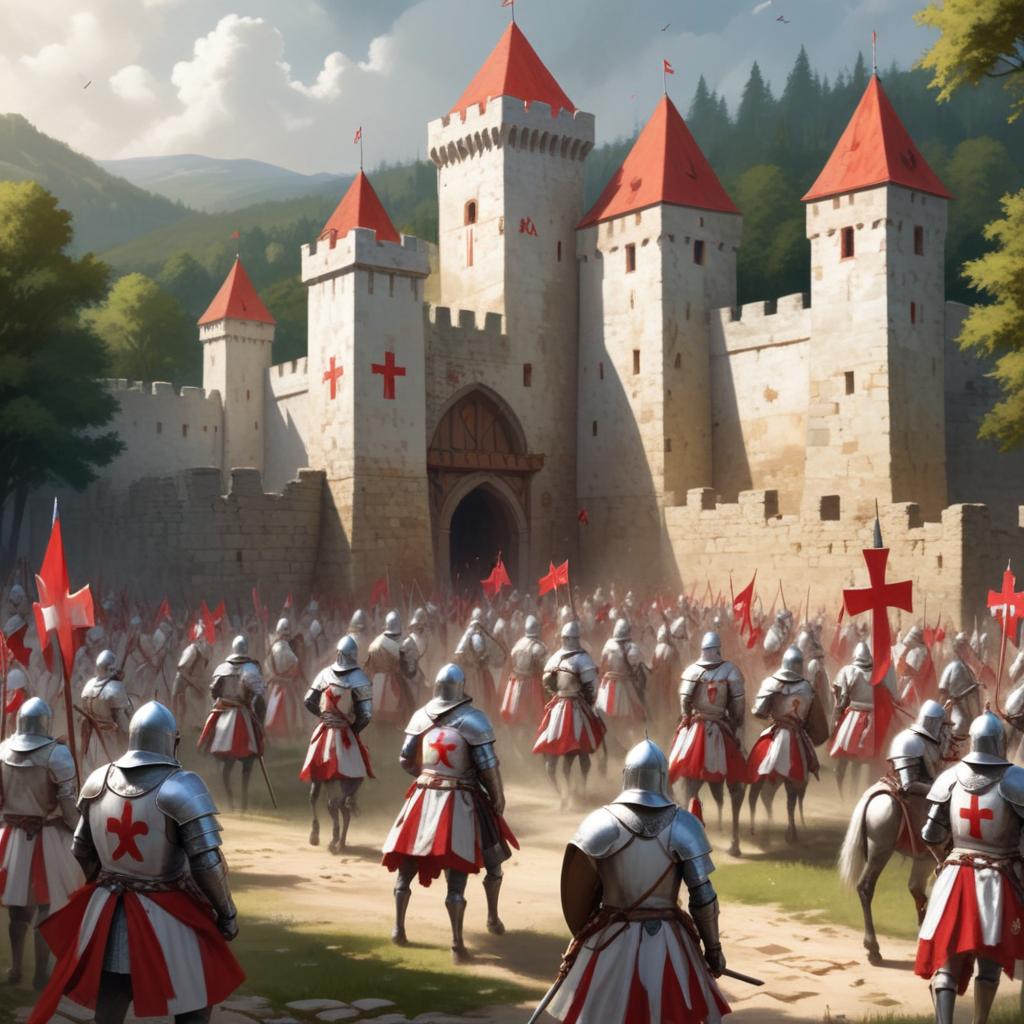
Their military strategies often combined fortified encampments with aggressive frontline tactics, ensuring control over key territories. In combat, the Templars were known for their chainmail armor, distinctive white mantles with red crosses, and a combination of heavy weapons that suited both offense and defense. Their contributions to Crusades combat were not only in battle but also in their role as warrior-monks, embodying the fusion of religious zeal and martial skill.
Political Influence and Alliances
The Knights Templar rapidly established themselves as a key political force during the Crusades, leveraging their unique position as both a military and religious order. Their influence extended beyond the battlefield into the realm of medieval diplomacy, where their strategic alliances played a crucial role in shaping Crusader and European politics. Through adept negotiation and their extensive network of fortresses and commanderies, the Templars secured powerful patrons and forged alliances with monarchs, nobles, and the Papacy.
Templar politics were characterized by their ability to maintain independence while serving multiple political masters simultaneously. This autonomy allowed them to act as intermediaries in delicate diplomatic matters. Their wealth and military prowess afforded them leverage in influencing decisions related to the Crusades alliances and territorial disputes. Their close ties with leading royal houses, combined with their reputation for loyalty and discipline, enabled the Templars to negotiate treaties and military support that directly affected the success of Crusader states and European power dynamics.
Moreover, the Templars’ diplomatic activities contributed to the broader tapestry of medieval diplomacy, as they balanced the interests of various factions and sought to maintain unity in the Christian world against the Muslim forces. Their intricate web of alliances not only secured their position as a formidable force in Crusader politics but also influenced the geopolitical landscape of medieval Europe, leaving a lasting legacy on the era’s political affairs.
Decline and Legacy of the Knights Templar
On the Real Crusades History channel, they cover the major medieval military campaigns, and you can watch their full documentary right here.
The decline of the Knights Templar was a complex process influenced by various political, economic, and social factors. By the early 14th century, the Templar decline became apparent as their military role diminished following the loss of the Crusader states in the Holy Land. The decrease in their battlefield significance also led to a waning of support from monarchs and the Church, which had been instrumental in their rise.
One of the pivotal moments in the Templar decline was the sudden arrest and suppression of the order beginning in 1307. King Philip IV of France, deeply indebted to the Templars, sought to dismantle the powerful order and confiscate their considerable wealth. With the cooperation of Pope Clement V, who was under pressure from Philip, a campaign was launched to charge the Templars with heresy, blasphemy, and other crimes. Under severe torture, many admitted to false confessions, which were later used as justification for the papal suppression of the order in 1312.
The suppression did not mark the end of the Templar legacy; instead, it transformed the order into a legendary symbol embedded in history and culture. The mystique surrounding the Templars grew over centuries, fueled by tales of secret knowledge, hidden treasures, and a purported connection to holy relics such as the Holy Grail. Their fall is often interpreted as a clash between emerging centralized royal power and the independent military-religious orders of the medieval era.
Historically, the Templar legacy has had a lasting impact on both religious and secular institutions. They pioneered financial innovations, including early forms of banking, which influenced economic practices in Europe. Culturally, the image of the Templars continues to inspire literature, films, and conspiracy theories, keeping their story alive in the public imagination. The history impact of the Templar decline serves as a reminder of how powerful institutions can rapidly transform or disappear under changing political and social pressures.
In summary, the Templar decline was driven by changing military needs, political intrigue, and royal ambitions, culminating in their suppression by the Church and monarchy. Yet, the Templar legacy endures as a profound chapter in medieval history, symbolizing courage, mystery, and the complex interplay between faith, power, and economics.
Reasons Behind the Suppression
The fall of the Knights Templar was influenced heavily by a blend of political and economic factors, with key figures like King Philip IV of France and Pope Clement V playing pivotal roles. King Philip IV, deeply indebted to the Templars due to their extensive financial dealings and military prowess, sought to eliminate his debts and consolidate power by targeting the Order. His increasing financial troubles and desire to control the vast wealth accumulated by the Templars made their suppression highly advantageous.
In 1307, Philip IV orchestrated a series of arrests against the Templars, accusing them of heresy, blasphemy, and various other crimes. These charges, widely regarded as fabricated, provided Philip with justification to seize the Order’s assets across his realm. Pope Clement V, under immense pressure from Philip, reluctantly endorsed the suppression, marking a political decision to placate the French crown and avoid conflict with the monarchy. This alliance between the king and the pope was crucial for legitimizing the crackdown on the Templars.
The controversy surrounding the Templar fall included secret trials and forced confessions achieved through torture, further casting doubt on the legitimacy of the accusations. The suppression was as much about neutralizing a powerful, wealthy organization as it was about silencing a potential threat to royal authority. Ultimately, the political machinations of King Philip IV and the concessions made by Pope Clement V sealed the fate of the Knights Templar, ending their influential presence in the medieval world.
Cultural and Historical Impact
The Knights Templar have left a lasting imprint on modern popular culture, inspiring a wide array of myths and fictional narratives that continue to captivate audiences worldwide. Their enigmatic history and secretive reputation have fueled conspiracy theories, from hidden treasures to alleged secret societies, embedding the Templar myths deeply into contemporary storytelling. These legends have been popularized in books, movies, and video games, where the Templars are often depicted as guardians of ancient knowledge or mystical artifacts.
Beyond popular culture, the historical significance of the Knights Templar has also maintained a pivotal role in academic studies related to the Crusades and medieval military orders. Scholars examine the Templars not only for their martial prowess during the Crusades but also for their pioneering financial innovations and organizational structure, which influenced later banking systems and religious orders. This dual legacy enhances the modern influence of the Templars, bridging the gap between myth and tangible historical impact.
Overall, the Knights Templar continue to evoke fascination, blending their real historical contributions with an enduring mythology that shapes popular imagination and scholarly research alike. Their role in history serves as a foundation for ongoing exploration of medieval chivalry and religious warfare, while their legendary status keeps their story alive in the cultural consciousness.

I’ve always been fascinated by how societies and organizations shape history and everyday life. Writing about the interplay between cultural movements and institutional structures lets me explore the stories that connect past and present. I love digging into archives and sharing insights that help readers understand our collective journey.