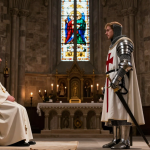
The monastic lifestyle of the Knights Templar was modeled on the Rule of Saint Benedict, which prescribed a balanced life of work, prayer, and community living. Their commitment to religious devotion was expressed not only through personal prayer but also through communal worship in their chapels. This spiritual foundation distinguished the Templars from other military orders by underscoring their role as warrior monks, combining both martial and religious obligations.
Moreover, their spiritual practices extended beyond structured prayer rituals to include meditation on the Passion of Christ and frequent participation in the Eucharist, which were seen as sources of grace and spiritual renewal. The Templars’ intense focus on religious observance reinforced their unity and resolve, providing an anchor amidst the challenges they faced both on and off the battlefield.
In sum, the religious devotion and spiritual disciplines of the Knights Templar were fundamental to their identity. Their monastic vows, prayer rituals, and adherence to a spiritual lifestyle nurtured a profound sense of purpose and cohesion within the order, illustrating how their faith was inseparable from their role as protectors of Christendom.
Monastic Vows and Daily Rituals
The Knights Templar were bound by strict monastic vows that shaped their spiritual and daily lives. These vows included poverty, chastity, and obedience, reflecting their commitment to the religious ideals of their order. By embracing poverty, Templars renounced personal wealth, dedicating themselves wholly to their mission. Chastity ensured they remained spiritually pure, while obedience to their superiors and the Church underscored their disciplined way of life.
Central to their existence was their prayer routine, which punctuated every day. The knights followed a rigorous schedule of canonical hours, beginning before dawn with Matins and Lauds, moving through Terce, Sext, and None during the day, and concluding with Vespers and Compline at night. These prayers were not only acts of devotion but also moments of reflection and renewal, reinforcing their spiritual resolve.
Discipline was crucial in maintaining the balance between their martial duties and religious obligations. Religious duties extended beyond prayer, including communal worship, attendance at Mass, and confession, fostering a deep personal and communal connection to their faith. This structured blend of spiritual practices and monastic vows distinguished the Knights Templar, fortifying their identity as warrior monks devoted to their sacred cause.
Symbolism and Religious Iconography
The Knights Templar were renowned not only for their martial prowess but also for their deep spiritual devotion, which was profoundly expressed through their use of symbolism and religious iconography. Central to their visual identity was the Templar cross emblem, a distinctive red cross that adorned their white mantles and armor. This cross emblem was more than just a badge of honor; it symbolized their commitment to Christ and their role as defenders of the Christian faith. The red cross, often associated with martyrdom, underscored the Templars’ readiness to sacrifice their lives for their spiritual mission.
Beyond the cross emblem, the Templars employed various religious symbols that conveyed their mystical and sacred purpose. Spiritual symbols such as the lamb, the palm, and the crown frequently appeared in their seals and artifacts, each carrying layered meanings connected to purity, victory, and eternal life. These icons reinforced the perception of the Templars as holy warriors chosen to uphold divine law and serve as a bridge between the earthly and the heavenly realms.
Their religious iconography was also a powerful tool for communication and identity within the complex spiritual landscape of the medieval Church. It served to inspire faith among their followers and assert their integral place within the broader Christian community. Thus, the Templar symbols were not mere decorations but profound expressions of their religious devotion, embodying the ideals of sacrifice, faith, and divine protection that were central to the order’s enduring legacy.
Legacy of the Knights Templar’s Religious Influence
The Knights Templar were not only fierce warriors of the medieval period but also profound exemplars of religious devotion, whose influence extended well beyond their era. The Templar legacy is deeply intertwined with their commitment to medieval spirituality, which significantly shaped subsequent religious orders and the broader scope of Christian religious life. Their pioneering fusion of monastic discipline with military rigor created a distinctive model that ecclesiastical and chivalric organizations sought to emulate for centuries.
One of the most enduring impacts of the Templar religious influence is evident in the way later orders adopted their spiritual frameworks and organizational structures. The templar emphasis on vows, communal living, and devotion to the protection of pilgrims set a precedent that became a template for other military-religious orders such as the Knights Hospitaller and the Teutonic Knights. These groups inherited not only the martial and practical aspects but also the deep religious fervor that the Templars lived by, perpetuating their medieval spirituality through new contexts and challenges.
Moreover, the Templars’ religious dedication left a lasting imprint on the concept of piety within the medieval Church. Their public displays of faith, endurance under trial, and absolute obedience to ecclesiastical authority helped cement ideals of Christian discipline and sanctity that inspired both clergy and laity. In many ways, the historical impact of the Templars was as much about transforming spiritual expectations as it was about their military exploits.
The legacy of the Knights Templar’s religious influence also extends to cultural and symbolic realms. Their iconography, rituals, and legends have permeated Christian heritage and popular imagination, continually reminding subsequent generations of a model of religious zeal combined with service. This legacy continues to invite interest and reverence, highlighting the sustained influence the Templars have had on discussions of faith, duty, and spiritual devotion in history.
In conclusion, the Templar legacy is a profound testament to how religious devotion can shape institutions and inspire enduring cultural memory. Their melding of medieval spirituality with active service not only influenced subsequent religious orders but also reinforced the transformative power of faith in historical contexts. Understanding this legacy allows us to appreciate the Knights Templar not just as warriors, but as pivotal figures in the spiritual history of the medieval world.
Impact on Later Religious and Military Orders
The legacy of the Knights Templar profoundly shaped the development of later military orders and monastic institutions throughout Europe. Their unique blend of monastic devotion with military discipline established a model for successive knightly orders who sought to combine religious influence with martial purpose. The Templar successors, such as the Order of the Hospitallers and the Teutonic Knights, inherited not only the Templars’ dedication to protecting pilgrims and fighting in the Crusades but also their rigorous organizational frameworks and spiritual ethos.
Many monastic orders that followed adopted elements of the Templar rule, emphasizing both religious devotion and a strict communal lifestyle centered on obedience and poverty. The military orders legacy is evident in their continued missions that aligned with both ecclesiastical objectives and martial responsibilities, reinforcing the church’s influence in political and military arenas across medieval Europe. This interplay of faith and force pioneered by the Knights Templar created a lasting religious influence.
Moreover, the Templars’ pioneering use of banking and resource management set a precedent that benefited these later orders, enabling them to sustain their religious and military functions over extended campaigns. Ultimately, the Templars’ combination of spiritual commitment and battlefield prowess carved a historical path embraced and adapted by numerous religious and military groups, whose legacy continued to shape European Christendom long after the Templar order itself was disbanded.
Modern Interpretations and Popular Culture
The Knights Templar’s religious devotion continues to captivate modern audiences, but much of this fascination is shrouded in Templar myths that blur historical facts with fantasy. These myths often depict the Templars as secret keepers of hidden knowledge or mystical powers, reinforcing their allure in modern spirituality movements. Today, some groups interpret the Templars as symbols of spiritual purity and guardianship, adapting their medieval ethos to contemporary religious and spiritual practices.
In popular culture, the Knights Templar appear frequently in books, movies, and video games, where their image is often romanticized or sensationalized. This portrayal contributes to a widespread misunderstanding of their actual religious devotion, which was rooted deeply in the orthodox Christian faith of their time. Instead, these cultural references tend to focus on conspiracy theories or fictional adventures, which dilute the historical reality of the Templars’ spiritual commitment and mission.
Religious misconceptions surrounding the Templars persist, often fueled by their dramatic dissolution and the mysterious legends that followed. While these stories enhance their mystique, they also overshadow the genuine religious motivations that initially defined the order. Understanding the difference between myth and reality is essential to appreciating the true nature of the Knights Templar’s enduring spiritual legacy.
Historical Background of the Knights Templar
The Knights Templar, a prominent and highly influential religious order, originated during the medieval period, specifically in the early 12th century amid the fervor of the Crusades. Their inception was deeply intertwined with the broader context of medieval knights banding together for religious and military purposes in a time of intense faith and conflict. The order was founded around 1119 AD, shortly after the First Crusade, with the primary mission to protect Christian pilgrims traveling to the Holy Land, which had been recently captured from Muslim rule.
The formation of the Knights Templar marked a significant development among religious orders of the period, as they combined militaristic prowess with monastic ideals. Unlike traditional knights who were primarily warriors, members of the Knights Templar took solemn religious vows, blending their role as fierce fighters with a deep sense of spiritual devotion. This dual nature made them unique in the landscape of medieval knights and religious orders, as they pledged to defend Christianity while living a disciplined, ascetic lifestyle similar to monks.
The historical context of the Knights Templar is inseparable from the Crusades, a series of religious wars initiated to reclaim Jerusalem and other sacred territories. As the Crusades progressed, the Knights Templar grew in numbers and influence, gaining endorsement and support from the papacy as well as European monarchs. Their reputation as elite warriors and protectors of pilgrims soon expanded into roles involving fortress construction, banking, and diplomacy, which further entrenched their position in medieval society.
Throughout their history, the Knights Templar embodied the ideals and complexities of medieval knights dedicated to religious causes. Their distinct attire, bearing the iconic red cross on a white mantle, and their strict code of conduct set them apart as a model of chivalry and religious devotion. The order’s enduring legacy highlights the profound connection between military service and spiritual commitment during a pivotal era marked by religious fervor and geopolitical struggles across Europe and the Near East.
Foundation and Purpose
The Knights Templar were founded in the early 12th century, emerging as a unique order of military monks whose primary mission was to protect Christian pilgrims traveling to the Holy Land. Established around 1119, the Templar foundation was deeply rooted in the turbulent context of the Crusades, a series of religious wars aimed at reclaiming Jerusalem and sacred territories from Muslim control. The original purpose of the Templars was not only spiritual but also practical: they served as formidable Crusade protectors, ensuring the safety of pilgrims on perilous journeys across hostile lands.
These military monks combined monastic life with martial discipline, living according to strict religious vows while donning armor and wielding weapons in defense of the Christian cause. The Templars quickly gained recognition for their courage and effectiveness on the battlefield, playing a significant role in many Crusader campaigns. Their strategic military presence in the Holy Land helped maintain crucial Christian strongholds and facilitated safer passage for pilgrims, reinforcing their importance as both warriors and caretakers.
Over time, the Knights Templar expanded their influence beyond their initial mission. They became skilled financiers and landowners, but their reputation as dedicated Crusade protectors endured as a central aspect of their identity. The Templar foundation thus represents a unique fusion of religious devotion and military commitment, embodying the spirit of the Crusades and the complex historical dynamics of the medieval Holy Land.
Role in the Crusades
The Knights Templar played a pivotal role in the Crusades, distinguished as one of the most formidable military orders of the medieval period. Their Crusades role extended beyond mere combat, as they were instrumental in protecting pilgrims traveling to the Holy Land and fortifying key strongholds. The Templars’ martial prowess was demonstrated in numerous Templar battles that cemented their reputation as elite warriors dedicated to the cause of holy war.
Established to safeguard Christian interests, the Knights Templar were deeply involved in the military campaigns aimed at reclaiming and defending Jerusalem and other sacred territories. Their organizational structure and military discipline set them apart from other forces, enabling them to execute strategic operations with precision. Throughout the Crusades, the Templars not only fought on the front lines but also managed logistics, supplies, and fortifications, making them invaluable contributors to the Christian war effort.
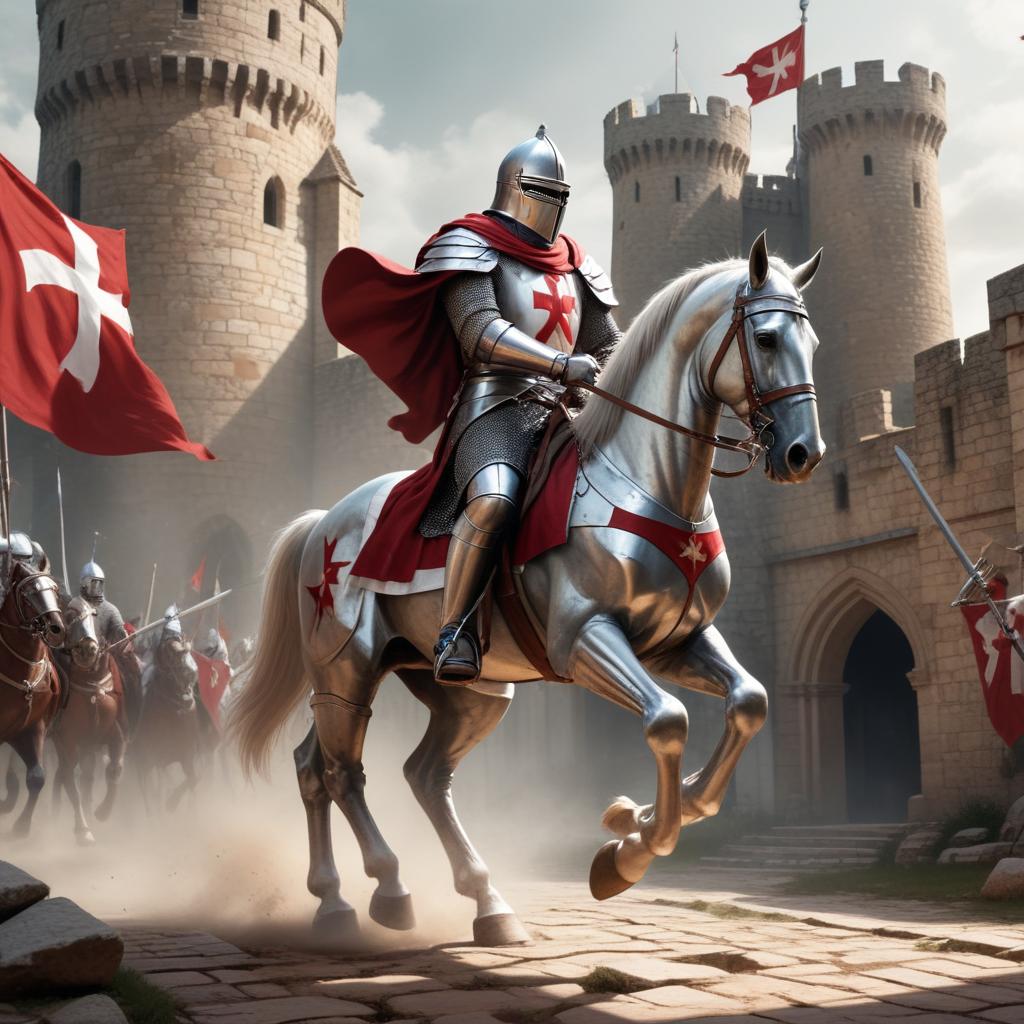
Moreover, the Templars’ presence in the Crusades symbolized the fusion of religious devotion and military might. Their distinctive white mantles adorned with a red cross became an emblem of the holy war against the perceived enemies of Christendom. This combination of spiritual commitment and battlefield effectiveness ensured the Knights Templar remained a dominant influence throughout the Crusades, shaping the military and religious landscape of the era.
Religious Devotion and Spiritual Practices of the Knights Templar
The Knights Templar were not merely warriors but were deeply committed to a life of religious devotion and spiritual discipline. Their spirituality was rooted in a unique blend of military prowess and monastic austerity, embodying the ideals of Christian knighthood. Central to their identity was the practice of strict monastic vows, which included poverty, chastity, and obedience, binding them to a life of humility and dedication to God.
Templar spirituality emphasized a rigorous daily routine of prayer rituals, reflecting their dedication to maintaining constant communication with the divine. The Templars followed the canonical hours, a set schedule of prayers said at specific times throughout the day and night, which helped foster a disciplined spiritual life amidst the hardships of crusading and military campaigns. This practice was vital in reinforcing their sense of mission and providing spiritual strength.

I’ve always been fascinated by how societies and organizations shape history and everyday life. Writing about the interplay between cultural movements and institutional structures lets me explore the stories that connect past and present. I love digging into archives and sharing insights that help readers understand our collective journey.