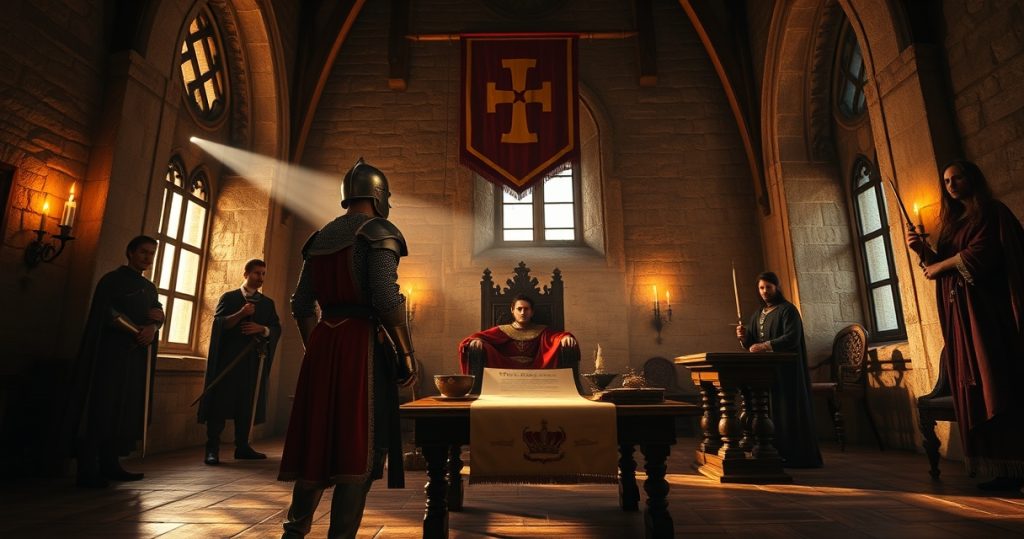
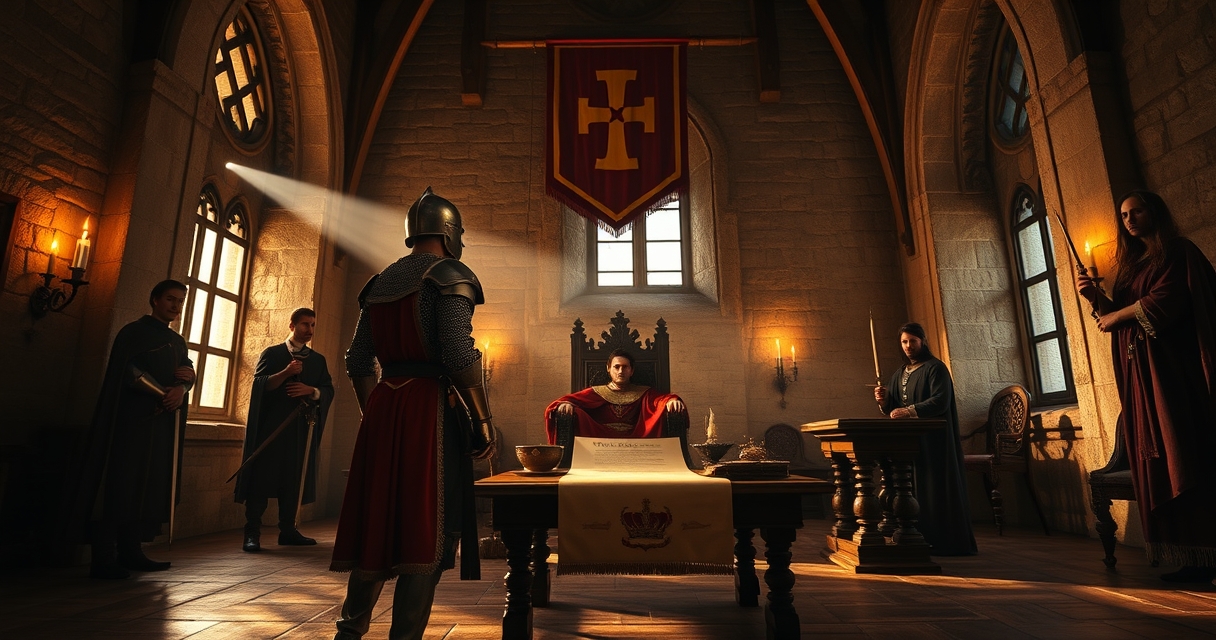
The bond between the Knights Templar and European monarchs was always pragmatic rather than purely pious. Rulers like Philip IV of France exploited the order’s vast banking network to fund their wars and palaces. Templar seals served as the ultimate credit guarantee in a cash poor economy, yet this financial power made the knights targets. The kings eventually realized that destroying the order was easier than repaying their massive debts. This betrayal on Friday the thirteenth marked the end of their independence.
Royal Patronage of the Knights Templar in France
The French crown played a pivotal role in establishing the Knights Templar Order as a legitimate military force within Christendom. King Louis VII of France became a fervent supporter early on, largely influenced by the preaching of Bernard of Clairvaux who championed the Order’s cause. This royal endorsement culminated at the Council of Troyes in 1129, where the Templar Rule was formally approved, granting the knights official recognition within the Church. By granting them land and specific privileges, the king ensured the Order had a secure base of operations in the Île-de-France region. One significant gift was the original Temple compound in Paris, which eventually became the Order’s European headquarters and a potent symbol of their power. This early support was not merely symbolic but provided the territorial and legal foundations necessary for their rapid expansion across the continent.
As the Order’s wealth grew, subsequent French monarchs relied heavily on the Templars for financial administration and secure storage of royal treasures. The Temple in Paris effectively functioned as the royal treasury, a relationship that proved dangerous when King Philip IV, known as Philip the Fair, sought to fund his expensive wars against England and Flanders. Desperate for cash and resentful of the Order’s independence, Philip orchestrated a ruthless suppression to seize their assets and erase his debts. On Friday, October 13, 1307, he ordered the simultaneous arrest of all Templars in France, effectively destroying the institution that had served his predecessors for nearly two centuries. This calculated move shifted the dynamic from patronage to predation, marking a violent end to the alliance.
Papal and Monarchic Power Struggles over Templar Assets
King Philip IV of France viewed the Knights Templar not as holy defenders of the faith, but as a massive bail-out fund for his bankrupt monarchy. Facing severe financial deficits after his wars with England, he orchestrated the mass arrests on Friday the 13th of October 1307 to seize the order’s liquid gold and land portfolios. This calculated move deliberately ignored the fact that the Templars answered exclusively to the Pope, effectively shattering the long-standing immunity of ecclesiastical institutions from secular interference. Philip knew that merely arresting the brothers was insufficient, so he bullied Pope Clement V for years to ensure the church would not demand the return of these confiscated fortunes.

The eventual papal bull Vox in excelso in 1312 officially dissolved the Templars and theoretically transferred their assets to the rival Knights Hospitaller, yet the reality on the ground was far messier. While the Pope intended this transfer to preserve the wealth for crusading purposes, Philip IV successfully intercepted the majority of the French treasury before the Hospitallers could lay a hand on it. The French King justified this theft by deducting exaggerated expenses for the trials and the maintenance of the prisoners, leaving the new beneficiaries with hollow titles and empty coffers. Across the rest of Europe, kings like Edward II of England followed a similar playbook, seizing Templar properties immediately and only reluctantly handing them over years later when papal pressure became too great to ignore.
Templar Military Contributions to the Crusader States under Monarchic Command
The Templars provided the Crusader states with a highly disciplined professional military core that operated under the strategic direction of the monarchy, reflecting the Knights Templar organizational structure, though they maintained their own internal chain of command. Kings like Baldwin IV relied heavily on this standing force to offset the often unreliable numbers of feudal levies that arrived from Europe only seasonally. At the Battle of Montgisard in 1177, a massive Templar charge led by Grand Master Odo de St Amand proved decisive against Saladin’s superior forces, effectively rescuing the kingdom from total collapse. Their ability to act as a rapid reaction force allowed the monarch to project power far beyond the walls of Jerusalem. This integration of religious zeal with royal strategy created a formidable military partnership that defined the Latin East’s survival for decades.
Beyond the battlefield, Templar military contributions extended to the critical defense of frontier castles and supply lines, serving as the kingdom’s permanent border guards. They constructed and manned massive fortifications like Gaza and Safed, effectively relieving the monarch of the financial and logistical burden of staffing these remote outposts. This network of strongholds allowed the King of Jerusalem to concentrate his resources on field campaigns while the Templars held the line against constant Muslim incursions. Their expertise in siege warfare and logistics ensured that coastal cities remained supplied even when inland territories were threatened. By securing these strategic chokepoints, the order acted as the literal shield of the realm, absorbing the first shock of invasion before royal forces could mobilize.
The Dissolution of the Order: Philip IV’s Role in the Arrest of the Templars
Philip the Fair viewed the Knights Templar primarily as a financial reservoir that could refill his depleted royal coffers. He had borrowed heavily from the Order to fund his wars against the English and found the debt impossible to repay. Since the Templars answered only to the Pope, they were legally beyond his reach, a fact that infuriated his absolutist sensibilities. To circumvent this protection, he fabricated charges of heresy and sodomy to turn public opinion against them. On Friday, October 13, 1307, his agents arrested hundreds of knights in a swift, coordinated operation across France. This preemptive strike caught the Vatican completely off guard and effectively neutralized the military power of the Order before any defense could be mounted.
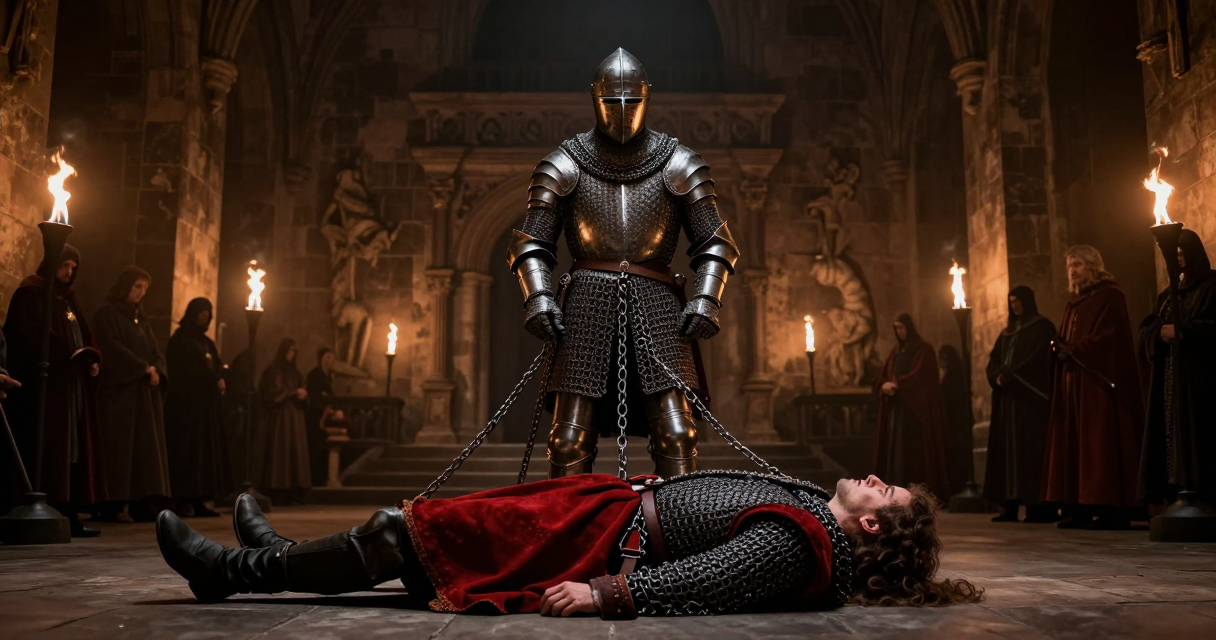
The subsequent show trials relied almost entirely on torture to extract the confessions necessary to justify the seizure of assets. Philip bullied Pope Clement V, who resided in Avignon under French influence, into suppressing the Order permanently. Despite the lack of genuine evidence, the Pope formally enacted the dissolution of the Knights Templar at the Council of Vienne in 1312 to placate the aggressive French monarch. Philip transferred the Templar wealth to the Crown and his allies, though the vast treasury was never fully accounted for. The final act of this tragedy occurred when Grand Master Jacques de Molay was slowly burned at the stake in Paris in 1314. This brutal purge demonstrated that royal ambition could easily dismantle even the most sacred institutions of medieval Christendom.

I’ve always been fascinated by how societies and organizations shape history and everyday life. Writing about the interplay between cultural movements and institutional structures lets me explore the stories that connect past and present. I love digging into archives and sharing insights that help readers understand our collective journey.