Overview of Knights Templar Commanderies
The Knights Templar were a medieval order renowned for their military prowess, religious devotion, and extensive network of commanderies across Europe and the Holy Land. These commanderies were the backbone of the Templar organization, serving as administrative centers, supply depots, and training grounds. Established during the 12th century, the commanderies were vital for maintaining the operational and financial strength of the Knights Templar throughout their history.
Originating from the need to support and protect pilgrims traveling to the Holy Land, the Knights Templar evolved into a powerful order with a complex infrastructure. Commanderies played a crucial role in this evolution, as they enabled the order to manage land holdings, collect revenues, and provide resources for military campaigns. Each commandery was typically led by a Commander who oversaw both the secular and religious duties within the property, ensuring that the mission of the Knights Templar was effectively carried out.
The commanderies also functioned as spiritual centers where members of the order could practice their faith and uphold their religious commitments. This dual role as both military and religious institutions underscored the unique position of the Templars in medieval society. As hubs of Templar history, these commanderies facilitated the growth and influence of the order, allowing it to expand its reach well beyond the battlefield.
Historically, the commanderies were significant not only for their strategic and administrative functions but also as symbols of the Knights Templar’s power and prestige. The assets managed through these establishments funded crusades and supported the order’s charitable activities. Moreover, the commanderies became a network of fortified sites that helped secure key territories, thereby ensuring the safety and continuity of the Templar mission during tumultuous times.
In summary, the Knights Templar commanderies were essential to the structure and success of the medieval order. They combined military strategy, religious devotion, and economic management into cohesive units that allowed the Templars to thrive and leave a lasting imprint on Templar history and medieval society as a whole.
Definition and Purpose of Commanderies
Commanderies were essential organizational units within the Knights Templar structure, serving as local administrative and operational centers. These commanderies acted as hubs for managing the estates, resources, and personnel of the Templar order. Strategically spread across various regions, they formed the backbone of the Templar infrastructure, supporting both their military and economic activities.
The primary purpose of commanderies was to oversee and coordinate the Templar holdings, including agricultural lands, vineyards, mills, and other economic assets that funded the order’s missions. Economically, commanderies ensured the efficient collection of revenues and logistics management, which were vital for sustaining the order’s extensive operations throughout Europe and the Holy Land.
Militarily, commanderies functioned as local recruitment and training centers for Templar knights and sergeants. They also served as defensive strongholds or staging points for missions, playing a crucial role in the Templars’ ability to project power and maintain security in contested regions. This dual role underlined the commanderies’ importance as both economic engines and military outposts within the larger network of military orders.
Geographical Distribution
The Knights Templar established commanderies across a vast geographic area encompassing much of Europe and parts of the Middle East. These commanderies locations served as pivotal centers for administration, training, and resource management. Key regions with significant Templar sites include France, England, Spain, Portugal, Italy, and the Holy Land. In France, commanderies were particularly numerous, reflecting the order’s origins and strong national support. England also hosted many commanderies, functioning as strategic medieval fortifications and logistical hubs to support their military campaigns.
In the Iberian Peninsula, the Templars played a vital role during the Reconquista, with commanderies located in Spain and Portugal that helped facilitate the gradual Christian reclamation of territory. Italy housed important commanderies as well, particularly in central and southern regions, linking European Templars with the broader Mediterranean network. The Holy Land, notably in areas like Jerusalem and Acre, was critical for the order, where commanderies not only served military and religious purposes but also helped maintain a presence in the Crusader states.
Overall, the Europe commanderies were strategically positioned to ensure the order’s influence extended across key trade routes and military frontiers. These medieval fortifications and commanderies locations underscore the Templars’ role as both warriors and guardians of economic and spiritual interests in medieval Christendom, reflecting their enduring legacy across continents.
Structure and Functions of Commanderies
The commandery structure of the Knights Templar was a sophisticated system designed to maintain the order’s Templar hierarchy while efficiently managing both economic functions and military roles. At the core of this structure was the commandery, a territorial unit overseen by a commander who reported directly to higher Templar authorities. This hierarchical arrangement ensured robust governance and strict discipline within the order, facilitating coordinated efforts across far-flung regions.
Internally, a commandery operated like a mini-monastic community combined with a military outpost. It included knights, sergeants, chaplains, and lay brothers, each playing distinct roles within the Templar hierarchy. Knights were primarily responsible for commanding and engaging in military campaigns, while the sergeants supported them as infantry or skilled craftsmen. Chaplains managed the spiritual needs of the community, and lay brothers tended to agricultural and economic activities essential to the commandery’s sustainment.
The economic functions of a commandery were vital for the order’s sustainability and expansion. Commanderies typically controlled extensive lands, farms, mills, and other production facilities. The revenues generated were channeled back into financing military campaigns and supporting the poor and pilgrims. This economic base allowed the Knights Templar to maintain a well-equipped and highly mobile fighting force. Commandery estates were managed meticulously, with account books and detailed records to ensure transparency and efficiency in resource allocation.
From a military perspective, commanderies served as recruitment and training centers where knights prepared for crusades and regional defense. They were strategically positioned to protect key routes and fortresses. The commandery also functioned as a logistical hub, organizing the provisioning and movement of troops and resources. It was here that arms, horses, and supplies were stored and distributed, enabling swift deployment in times of conflict.
In essence, the commandery structure formed the backbone of the Templar organization, balancing its dual role of managing economic assets and supporting military operations. The seamless integration of these functions under the Templar hierarchy ensured that commanderies could effectively contribute to the order’s broader mission across Europe and the Holy Land.
Administrative and Military Roles
Within the commanderies of the Knights Templar, administration was a structured and vital aspect of maintaining order and efficiency. Commanderies operated as small administrative units within the larger order hierarchy, ensuring that resources were managed and directives from higher authorities were implemented correctly. The administration within these commanderies was generally overseen by an appointed official, often called the commander, who held responsibility for both the day-to-day management and the supervision of the knights under his command.
The Templar knights themselves were not only warriors but also part of a disciplined organizational system. Their roles included military command duties where they trained, strategized, and led forces in defense of the order’s interests. Alongside the knights, various officials assisted with administrative tasks such as financial management, record keeping, and logistics, ensuring the smooth functioning of the commandery. These roles were crucial because they allowed the knights to focus on their primary military responsibilities without administrative distractions.
The military command within the commanderies was tightly integrated into the broader order hierarchy. Knights followed a chain of command that emphasized discipline and coordination across different regions. This hierarchical structure ensured that orders could be executed swiftly, whether in battle or during the management of the order’s extensive properties and holdings. Overall, the commanderies were essential hubs where administration and military command converged to support the Templar knights’ mission and uphold the order’s values in both peace and war.
Economic and Agricultural Activities
The Knights Templar commanderies were not only military and religious centers but also vital economic hubs. They generated income primarily through extensive economic activities centered on agriculture, land management, and control of valuable resources. These activities were essential for funding the order’s numerous operations, including military campaigns, charitable works, and the upkeep of their infrastructure.
One of the main sources of income was farming. Commanderies often managed large estates where crops such as wheat, barley, and vineyards were cultivated. The Templars introduced advanced agricultural techniques, which enhanced productivity and sustained the local communities. Livestock farming was also significant, providing wool, meat, and dairy products for both trade and internal use.
Land management was a critical part of ensuring ongoing profitability. The Templars exercised meticulous control over their estates, including leasing land to tenant farmers and overseeing the maintenance of irrigation systems and infrastructure. This careful stewardship minimized waste and maximized yields, securing a steady flow of resources and income.
Additionally, the commanderies controlled valuable resources such as mills, forests, and fisheries, which added to their economic strength. These resources were not only used to meet the order’s needs but also generated surplus goods for sale or trade. This diverse economic base was fundamental to the Templar wealth, enabling them to support their expansive network and sustain their influential role throughout medieval society.
Legacy and Influence of Knights Templar Commanderies
The legacy of the Knights Templar commanderies extends far beyond their medieval origins, leaving a significant mark on architecture, culture, and historical memory. These fortified complexes, initially established as centers for military operations, administration, and economic management, have influenced numerous aspects of modern heritage. The Templar legacy is not just confined to the ruins or the historical texts but continues to shape cultural narratives and architectural inspiration centuries after their dissolution.
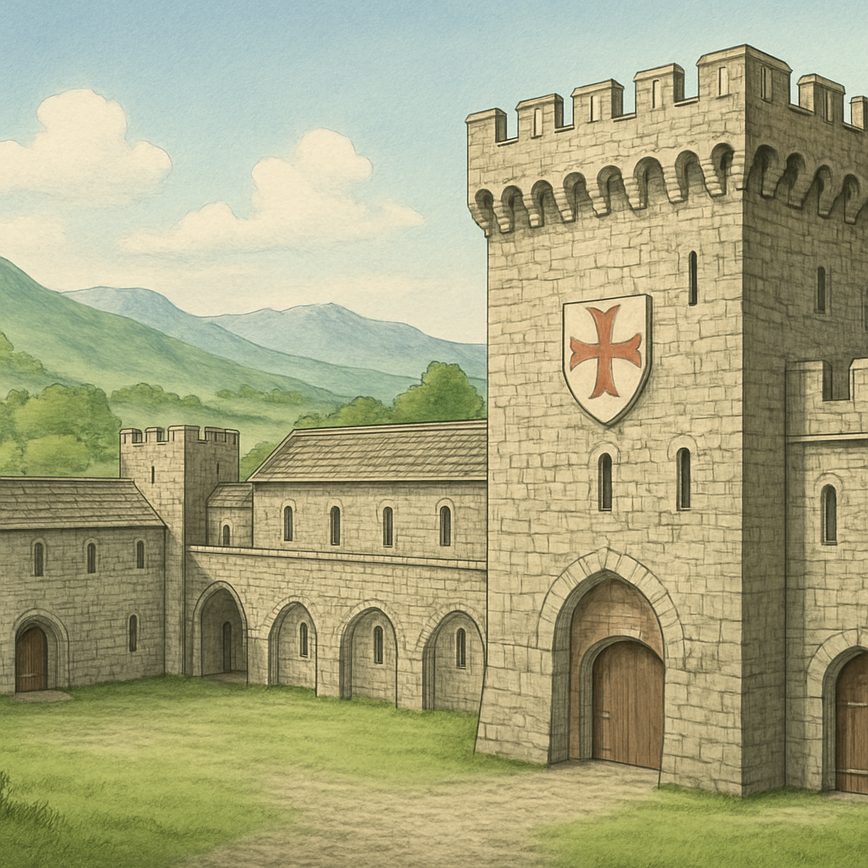
Architecturally, the commanderies played a pivotal role in the development of fortification designs that influenced the construction of castles and strongholds across Europe. Their innovative use of defensive elements—such as fortified enclosures, towers, and chapels—introduced new standards of security and spiritual symbolism. Many surviving structures exhibit characteristics that have been studied and replicated in later medieval and even modern architecture, underscoring the lasting impact the Templars had on building techniques and styles.
Culturally, the commanderies were hubs of not only religious and military activity but also economic and social interaction. The Templars managed vast estates and storefronts, facilitating trade and agricultural development during the medieval period. This economic influence helped establish a model of organization that affected later medieval orders and Christian institutions. Their disciplined lifestyle and dedication to their cause have inspired various cultural movements and perpetuated a romanticized image of chivalry and knightly virtue, which remains prevalent in historical influence studies and popular culture alike.
In terms of historical memory, the commanderies symbolize the broader impact of medieval orders on European heritage. The Knights Templar’s complex history—marked by both reverence and controversy—continues to captivate historians and enthusiasts. Their commanderies serve as tangible reminders of the medieval period’s religious, social, and military dynamics, fostering a deeper understanding of how these elements shaped modern Western society. This rich historical influence contributes to the ongoing preservation efforts and scholarly research dedicated to medieval orders.
Ultimately, the modern heritage of the Knights Templar commanderies reflects a profound intertwining of architecture, culture, and historical consciousness. Their enduring presence, whether in the form of physical ruins or cultural symbolism, illustrates the significant medieval orders’ impact on subsequent generations. The Templar legacy continues to inspire and inform a variety of disciplines, ensuring that their influence remains a vital part of the historical landscape.
Architectural and Archaeological Remains
The surviving structures of Knights Templar commanderies provide invaluable insights into medieval architecture and archaeology. These Templar buildings, often fortified and strategically located, stand as crucial historical sites that reveal the functional and symbolic aspects of the order’s presence across Europe and beyond. Archaeological studies at these sites have uncovered foundations, chapels, halls, and living quarters, allowing experts to reconstruct the layout and architectural styles employed by the Templars.
Many commanderies exhibit a unique blend of Romanesque and early Gothic architectural elements, reflecting the evolving tastes and technological innovations of the medieval period. The robustness and simplicity of these structures underscore their dual role as both monastic centers and military strongholds. Archaeology plays a pivotal role in uncovering buried artifacts and structural details that written records alone cannot provide, thereby enriching our understanding of Templar life and their operational logistics.
These architectural and archaeological remains are not only important for historical research, but they also serve as cultural heritage sites attracting scholars and visitors alike. Preservation efforts ensure that these remnants of the Templar legacy continue to offer a tangible connection to the past, highlighting the significance of Templar commanderies in the broader context of medieval history and architecture.
Cultural and Historical Influence
The Knights Templar commanderies played a pivotal role in shaping cultural narratives and magnifying the historical significance of the order. As centers of administration, training, and worship, these commanderies became focal points for the dissemination of the Templars’ values and ideals across medieval Europe. Their presence inspired numerous legends and contributed heavily to the cultural impact the Templars had on society, both in their time and in later centuries.
These fortified monastic complexes were not just strategic military outposts; they also served as symbols of the order’s power, discipline, and piety. The architectural grandeur and the mysterious aura surrounding the commanderies fueled the proliferation of Templar myths. Tales of hidden treasures, secret knowledge, and clandestine rituals often have their roots in the mystique that commanderies projected, intertwining fact with folklore and embedding the Templars deeply into medieval history and popular imagination.
Moreover, the commanderies’ influence extended beyond military and religious functions. They acted as hubs for economic activity and social interaction, thus embedding themselves into the cultural fabric of the regions they inhabited. This multifaceted role made the commanderies critical to understanding the broader cultural impact and historical relevance of the Knights Templar, helping to perpetuate their legacy through historical records and mythic storytelling alike.

I’ve always been fascinated by how societies and organizations shape history and everyday life. Writing about the interplay between cultural movements and institutional structures lets me explore the stories that connect past and present. I love digging into archives and sharing insights that help readers understand our collective journey.