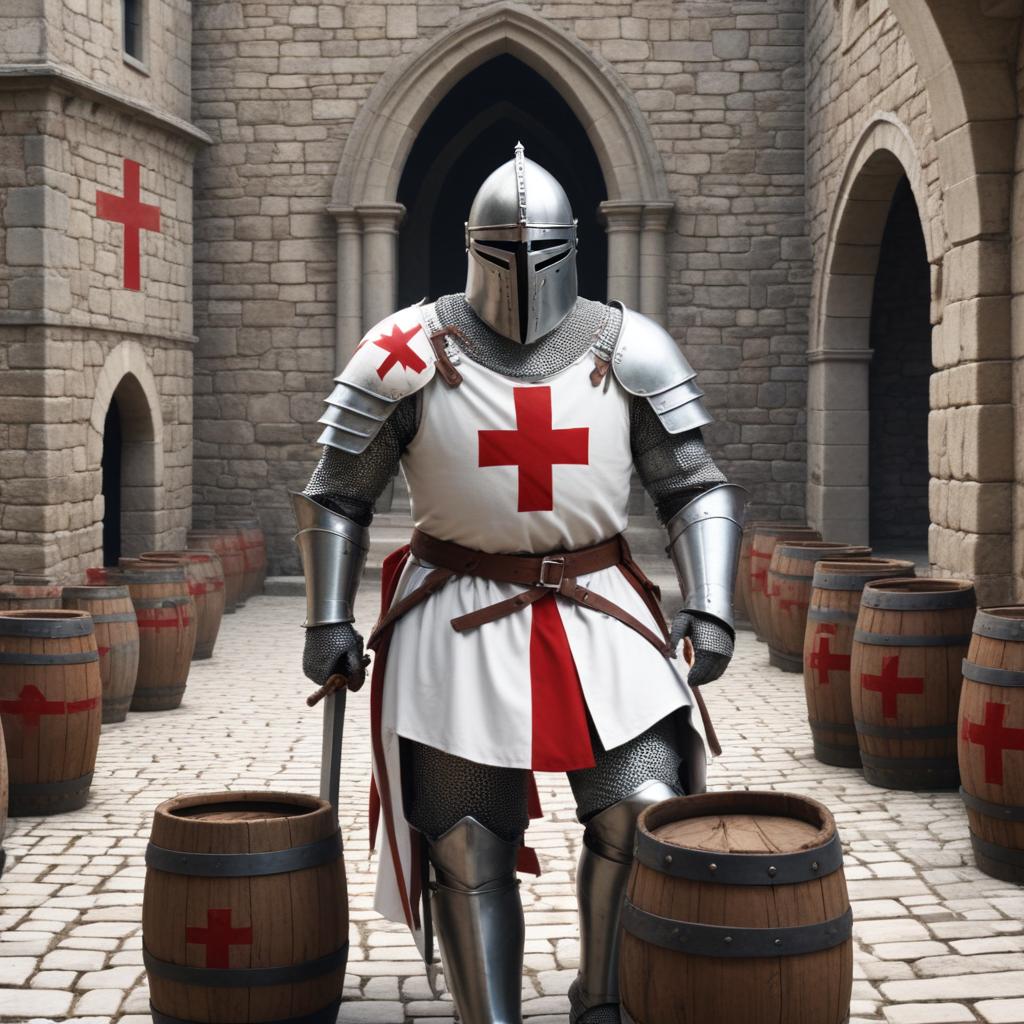
Origins and History of the Knights Templar
The roots of the Knights Templar trace back to the early 12th century, a period characterized by strong religious passion and a vigorous spirit of crusade in medieval Europe. Established around 1119 AD by a handful of knights under the leadership of Hugh de Payens, the order was created mainly to safeguard Christian pilgrims journeying to the Holy Land after the First Crusade. This era was defined by fierce struggles between Christian and Muslim powers vying for dominion over holy lands, which highlighted the necessity for a committed military-religious organization.

The history of the Templars shows that these medieval knights were more than just fighters; they were also dedicated monks who committed to vows of poverty, chastity, and obedience. Initially, their responsibilities went beyond simply protecting pilgrims; they emerged as essential defenders of the Crusader states, engaging in combat and strengthening vital fortifications throughout the Levant. This combination of being both a soldier and a monk set them apart and enhanced their reputation as disciplined and powerful knights who merged spiritual commitment with military skill.
Over the following decades, the Knights Templar amassed considerable wealth and power, thanks to contributions from European nobles who admired their commitment and efficiency. This expansion enabled them to create a vast system of commanderies throughout Europe and the Holy Land, enhancing both their military efforts and financial dealings. In fact, these medieval warriors were among the first to develop early banking practices, further entrenching their role in the socio-political landscape of the medieval era.
Grasping the Knights Templar origins and the historical backdrop provides insight into their ascent to significance and lasting influence. Serving as protectors of Christendom and pioneers in monastic military structure, their narrative illustrates the broader intricacies of the medieval knights’ functions throughout the Crusades. This groundwork laid the basis for their later legendary reputation and the intrigue that still envelops Templar history today.
Founding and Early Purpose
The Knights Templar emerged in the early 12th century, approximately in 1119, driven by a mission shaped by the chaotic era of the Crusades. Their primary goal was to safeguard Christian pilgrims journeying to the Holy Land, a path perilous due to threats from bandits and adversarial groups. This honorable endeavor was initiated following the First Crusade, which had successfully recaptured Jerusalem, yet left pilgrims exposed in the newly formed crusader territories.
The establishment of the Templars was initiated by a select group of knights under the leadership of Hugues de Payens, who aimed to gain the backing of King Baldwin II of Jerusalem and the Church to form a specialized military order. Initially, their efforts concentrated on safeguarding pilgrims, serving as protectors of the routes and secure locations. This function was vital in ensuring ongoing Christian access to sacred sites, enhancing morale and motivating more devotees to undertake the dangerous pilgrimage.
As time passed, the Knights Templar increased in both membership and power, yet their core identity continued to be linked to safeguarding pilgrims. Their dedication to this cause bolstered their standing as formidable fighters with a divine obligation, merging spiritual commitment with military prowess. This initial mission paved the way for their growth into wider military and financial positions in medieval society.
Growth and Influence in Medieval Society
The growth of the Templars in the medieval era represented a notable change in the order’s influence and visibility throughout Europe. Originally founded to safeguard pilgrims, the Knights Templar quickly broadened their influence, emerging as a formidable power both in military conflicts and in political and economic arenas. This surge in power was a result of their distinctive status as both fighting monks and affluent landholders, enabling them to exert significant sway over medieval society.
The Templars forged strong relationships with kings and the Church, frequently serving as reliable advisors and military leaders. Their increasing power allowed them to secure special privileges, exemptions, and land allocations that enhanced their independence and position within the feudal system. This close connection to influential figures bolstered their ability to influence both local and, at times, broader policies.
The Templars established a vast system of estates, farms, and businesses that contributed significantly to the economy. They were innovators in early banking, providing services like the protection of valuables and loan offerings, which boosted trade and commerce during the medieval period. Their financial strength not only backed military efforts but also allowed them to preserve their independence, rendering them crucial to both secular and religious authorities.
The order evolved into a distinguished military unit celebrated for its discipline, structure, and fighting skills. Their involvement in the Crusades reinforced their standing and broadened their territorial dominance in the Holy Land and elsewhere. This diverse expansion—political, economic, and military—solidified the Templars’ role as a fundamental element of the power dynamics within medieval society.
The Role of the Knights Templar in Medieval Society
The Knights Templar occupied a distinctive and complex role in medieval society, contributing significantly in ways that went beyond their renowned military endeavors. They had a notable influence in multiple areas, including military, economic, and religious sectors, establishing themselves as key players during the Middle Ages.
In military terms, the Templars primarily served as elite fighters during the Crusades. They gained fame for their rigorous training, exceptional combat abilities, and steadfast dedication to safeguarding Christian pilgrims on their journeys to the Holy Land. Their strength in battle not only allowed them to capture vital regions but also solidified their reputation as a formidable and esteemed military power throughout Europe and the Levant. Their capacity to swiftly organize troops and resources made them crucial allies for both medieval kings and popes.
Yet, their influence went far beyond the battlefield. The Knights Templar were also clever economic actors in medieval society. They established a wide-ranging network of financial and agricultural ventures throughout Europe. By overseeing their commanderies, they controlled large estates, farms, and production facilities, which played a vital role in the local economies. Their introduction of an early banking system, allowing pilgrims and nobles to safely deposit money and withdraw it elsewhere, was groundbreaking. This financial advancement had a profound impact on the evolution of European banking frameworks and trade.
The Templars were a religious monastic order dedicated to vows of poverty, chastity, and obedience. Their devotion to spirituality influenced their deeds and legitimized the distinct military and financial advantages bestowed upon them by the Church. They served as defenders of Christian locations and maintained the religious principles that were vital to medieval belief. Their chapels and churches, frequently linked to their fortifications and commanderies, functioned as centers for worship, community interaction, and spiritual direction.
In summary, the Templar role in medieval society was multifaceted and essential. They connected the domains of combat, finance, and spirituality, influencing the political and economic environments while reflecting the religious zeal of their time. Their legacy as both formidable fighters and innovative economic players underscores the varied influence the Knights Templar exerted on medieval society.
Military Contributions and Crusades
The Knights Templar played a crucial role in the Crusades, celebrated for their remarkable combat skills and tactical intelligence. They served as elite warriors in numerous crusading efforts, frequently leading attacks and steadfastly protecting vital locations. The Templar forces were organized under a rigid hierarchy, enabling them to function effectively in combat by integrating powerful cavalry charges with synchronized infantry backup.
During the Crusades, the Templars played crucial roles in battle, such as defending fortifications, guiding pilgrims, and initiating attacks against adversaries. Their renown for courage and efficiency rendered them essential partners in the Holy Land. A key tactic they employed was deploying heavily armored knights capable of shattering enemy formations through fierce charges, which were often succeeded by strategic withdrawals that drew foes into traps laid by Templar foot soldiers.
In addition, the military importance of the Knights Templar went far beyond just fighting. They built and upheld critical fortifications, safeguarded supply lines, and served as a stabilizing influence during the chaotic times of the Crusades. Their fusion of fervent faith and combat expertise epitomized their distinct identity as warrior monks, merging spiritual commitment with impressive prowess on the battlefield, ensuring that their impact on medieval military history remains both remarkable and lasting.
Economic Power and Banking Influence
The Knights Templar held considerable economic influence during the medieval era, transforming the management and movement of wealth throughout Europe. In an age when long-distance financial dealings were often risky and complicated, the Templars pioneered new banking methods that set the stage for contemporary finance. Their system of commanderies and fortresses along vital trade routes enabled them to provide safe storage for valuables and streamline the transfer of money using letters of credit, essentially serving as early financial institutions.
Templar banking catered not only to the requirements of their order and pilgrims journeying to the Holy Land but also drew in nobles and kings who placed their riches in the hands of the knights. This confidence bolstered the Templars’ financial influence, allowing them to finance military efforts, develop infrastructure, and promote trade. Their involvement in medieval finance went further than simple asset protection; they offered loans, issued credit letters, and oversaw estates, becoming crucial figures in the economic framework of the Middle Ages.
This groundbreaking position in wealth management established the Knights Templar as one of the first and most powerful financial entities of their era. Their financial impact helped boost trade and commerce, while also aiding in the stabilization and growth of medieval European economies. The effects of their banking advancements persisted long after their disbandment, highlighting a significant period in the narrative of economic progress.
Religious and Social Functions
The Knights Templar were crucial to the religious dynamics of medieval times, acting both as military protectors of Christendom and as fervent guardians of religious obligations. Their religious mission was closely connected to their dedication to safeguarding pilgrims on their journey to the Holy Land, embodying a wider spiritual endeavor focused on defending Christianity. This sincere purpose enhanced their standing in medieval society, intertwining their combat skills with a sacred duty.
In addition to their spiritual duties, the Knights Templar played a crucial role in shaping the social landscape of the medieval period. As a formidable and affluent organization, they served as financiers, landholders, and benefactors of the church, enabling them to influence the economic and social systems of various European communities. Their properties created jobs and encouraged local progress, while their societal contributions included the establishment of essential services like hospitals and inns. This positioned the Templars as vital players in social welfare at a time when such assistance was essential for the survival of communities.
Additionally, the Templars’ rigorous ethical guidelines and shared lifestyle exemplified principles of discipline, devotion, and collaborative support, which struck a chord in the wider medieval community. Their activities and existence bolstered the established hierarchies, emphasizing the importance of allegiance to both religion and feudal systems. Ultimately, the Knights Templar’s spiritual function was intertwined with their societal impact, as they influenced medieval life through their commitment to faith and effective administration in their domains of authority.
Decline and Legacy of the Knights Templar
The fall of the Knights Templar is a story filled with political maneuvering, jealousy, and evolving power struggles in medieval Europe. Previously regarded as a formidable military and financial institution, the decline of the Templars started in the early 14th century, reaching its peak with the order’s disbandment in 1312 under Pope Clement V. A variety of factors played a role in this demise, including their vast wealth and power as well as the shifting interests of European rulers.

The Templars amassed considerable wealth due to their large land possessions, banking operations, and military exploits during the Crusades. This wealth drew envy and mistrust, especially from King Philip IV of France, who aimed to strengthen his authority and alleviate his financial struggles. In 1307, Philip commanded the capture of numerous Templars on accusations that included heresy and corruption—claims widely regarded as concocted to legitimize the appropriation of the order’s resources.
The later trials, coerced admissions, and significant pressure from the French monarchy resulted in Pope Clement V officially disbanding the Knights Templar via the papal bull Vox in excelso in 1312. This event signified the official conclusion of the medieval order, with its assets being either taken over by other religious organizations or confiscated by lay authorities.
Even after facing repression, the legacy of the Templars continued to thrive in various forms. Their impact played a crucial role in shaping military and financial methods during the medieval period, aiding in the emergence of initial banking frameworks and defensive strategies. Additionally, the fascination with the Knights Templar has remained strong, inspiring myths, conspiracy theories, and representations in popular culture that have lasted for hundreds of years.
Throughout history, the Templars are recognized not just for their combat skills and religious commitment, but also as a representation of the intricate interplay between power, belief, and politics in the medieval era. Their narrative acts as a warning about trust, treachery, and the fleeting essence of even the mightiest organizations. The order’s influence still intrigues historians, scholars, and fans alike, solidifying the Knights Templar as a lasting topic of interest in both academic research and popular culture.
Causes of the Suppression
The decline of the Knights Templar was influenced by a complicated mix of political and religious dynamics in the early 14th century. King Philip IV of France was instrumental in the collapse of the Templar organization. Confronted with financial struggles stemming from wars and outstanding debts to the Templars, Philip seized the chance to erase his financial obligations and strengthen his authority by charging the order with heresy and various offenses. His campaign against the knights was brutal, marked by arrests, torture, and coerced confessions.
A significant factor that contributed to the downfall of the Templars was the release of a Papal decree by Pope Clement V. Although he was initially hesitant, Pope Clement ultimately yielded to the political influence exerted by King Philip and the broader Church. The decree formally dissolved the order, banned any assistance to the Templars, and allocated their extensive assets and properties to other religious organizations. This action served not just as a religious decision but also as a strategic political move that aligned the Church with the French crown.
The suppression of the Templars emerged from a combination of royal ambition and church power. King Philip IV’s determined campaign against the Templars, along with the Church’s readiness to validate the accusations via a Papal decree, led to the disbanding of one of the most formidable military and religious organizations of the medieval era. This incident highlighted the fragile interplay between political influence and religious control in medieval Europe.
Enduring Myths and Modern Interpretations
The Knights Templar have intrigued historians, authors, and the public for centuries, leading to a complex array of myths that still engage contemporary audiences. Grounded in aspects of medieval history and folklore, these tales frequently depict the Templars as custodians of hidden wisdom, defenders of holy artifacts, or significant figures in clandestine plots. Their disbandment in the early 14th century further intensified these narratives, enabling conspiracy theories to thrive, including assertions of missing treasures and alleged links to secret organizations such as the Freemasons.
The Templars have emerged as lasting icons of enigma and strength in popular culture. They often show up in literature, movies, TV shows, and video games, where their historical essence is intertwined with imaginative storytelling to craft engaging plots. For instance, these knights are central to popular novels and film adaptations that integrate their history into stories filled with suspense and excitement, solidifying their contemporary image as mysterious warriors with enduring charm.
This intrigue surrounding the Templars highlights a wider cultural yearning to engage with an enigmatic history and investigate the conflict between reality and myth. Via tales, conspiracy narratives, and engaging narratives in various forms of media, the Knights Templar persist in sparking interest and discussion, guaranteeing their relevance in modern society long after their medieval era.

I’ve always been fascinated by how societies and organizations shape history and everyday life. Writing about the interplay between cultural movements and institutional structures lets me explore the stories that connect past and present. I love digging into archives and sharing insights that help readers understand our collective journey.